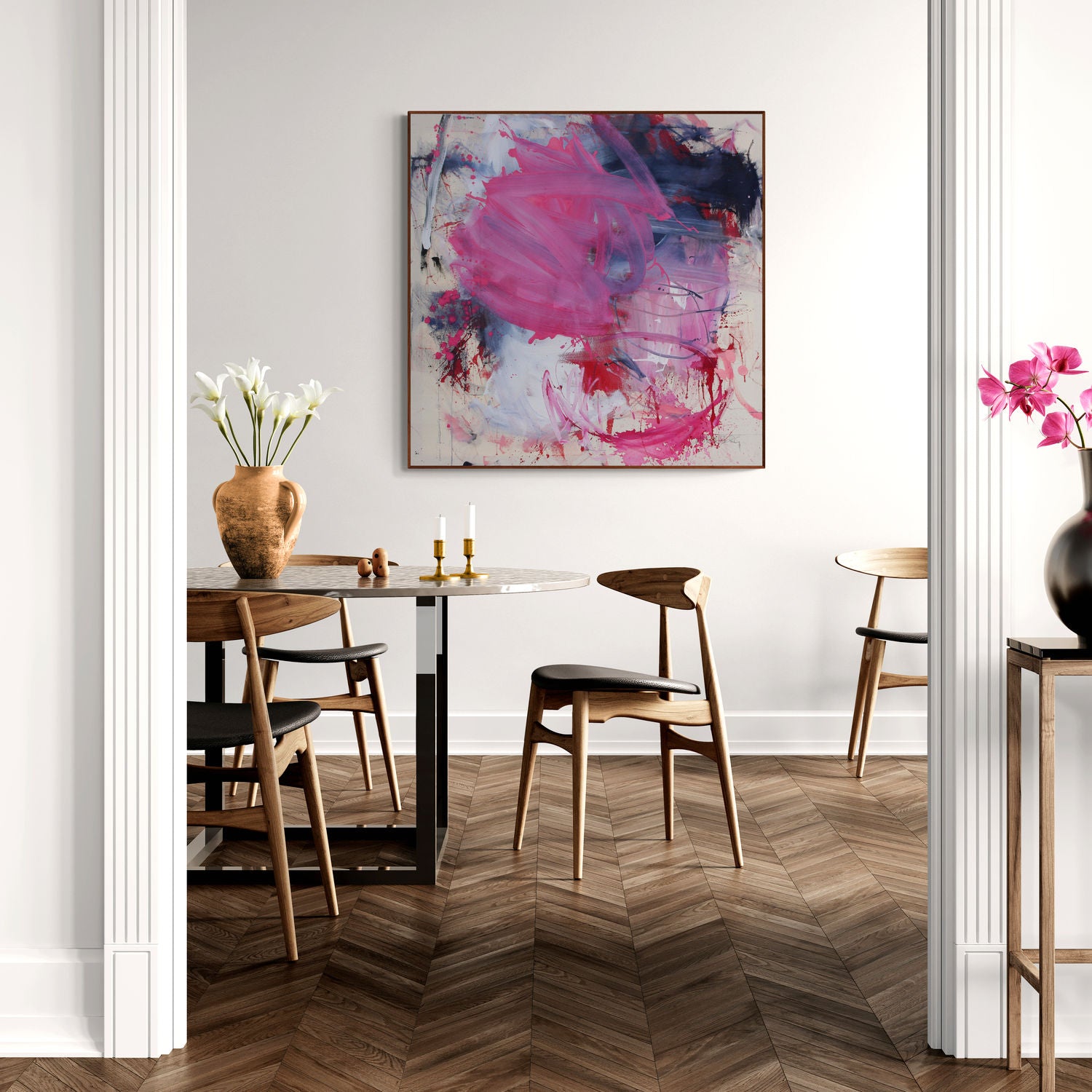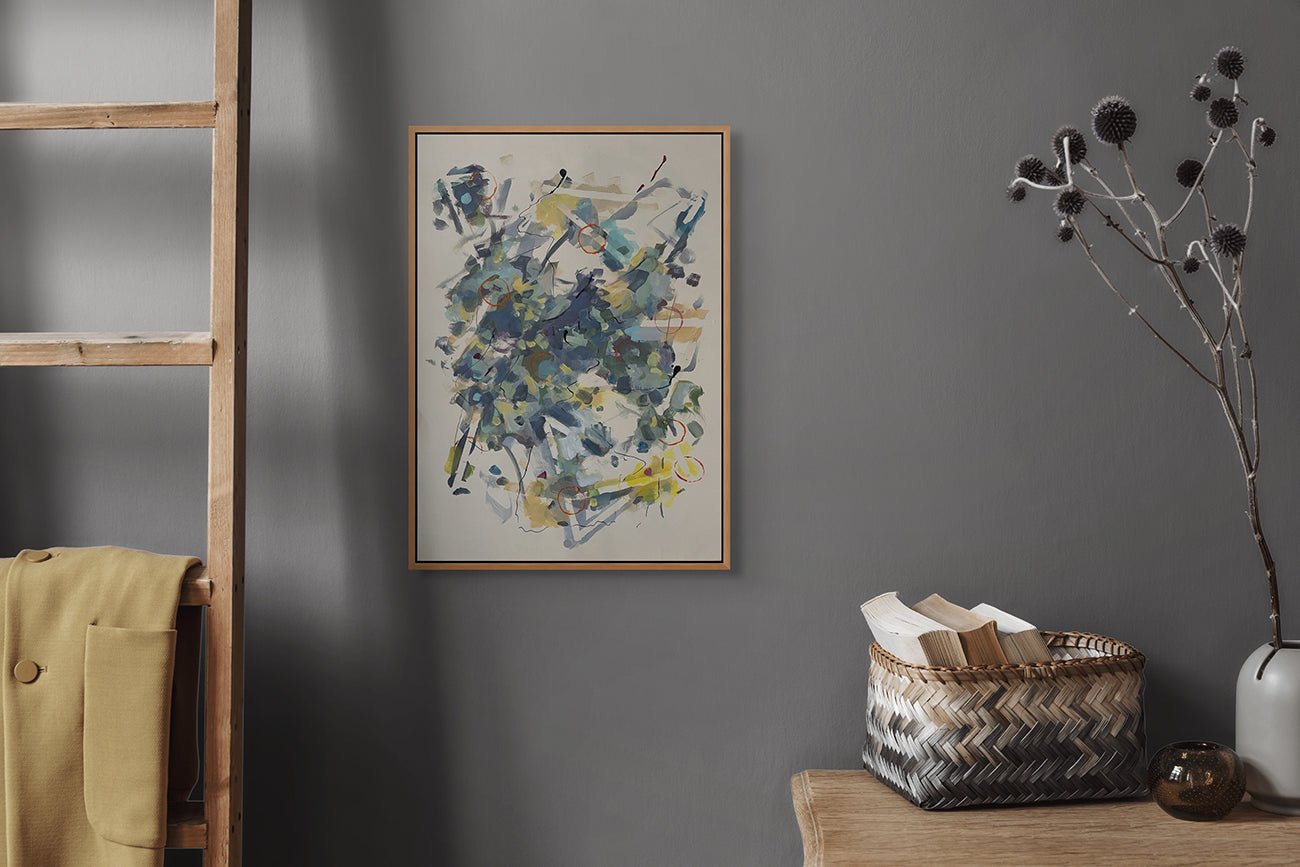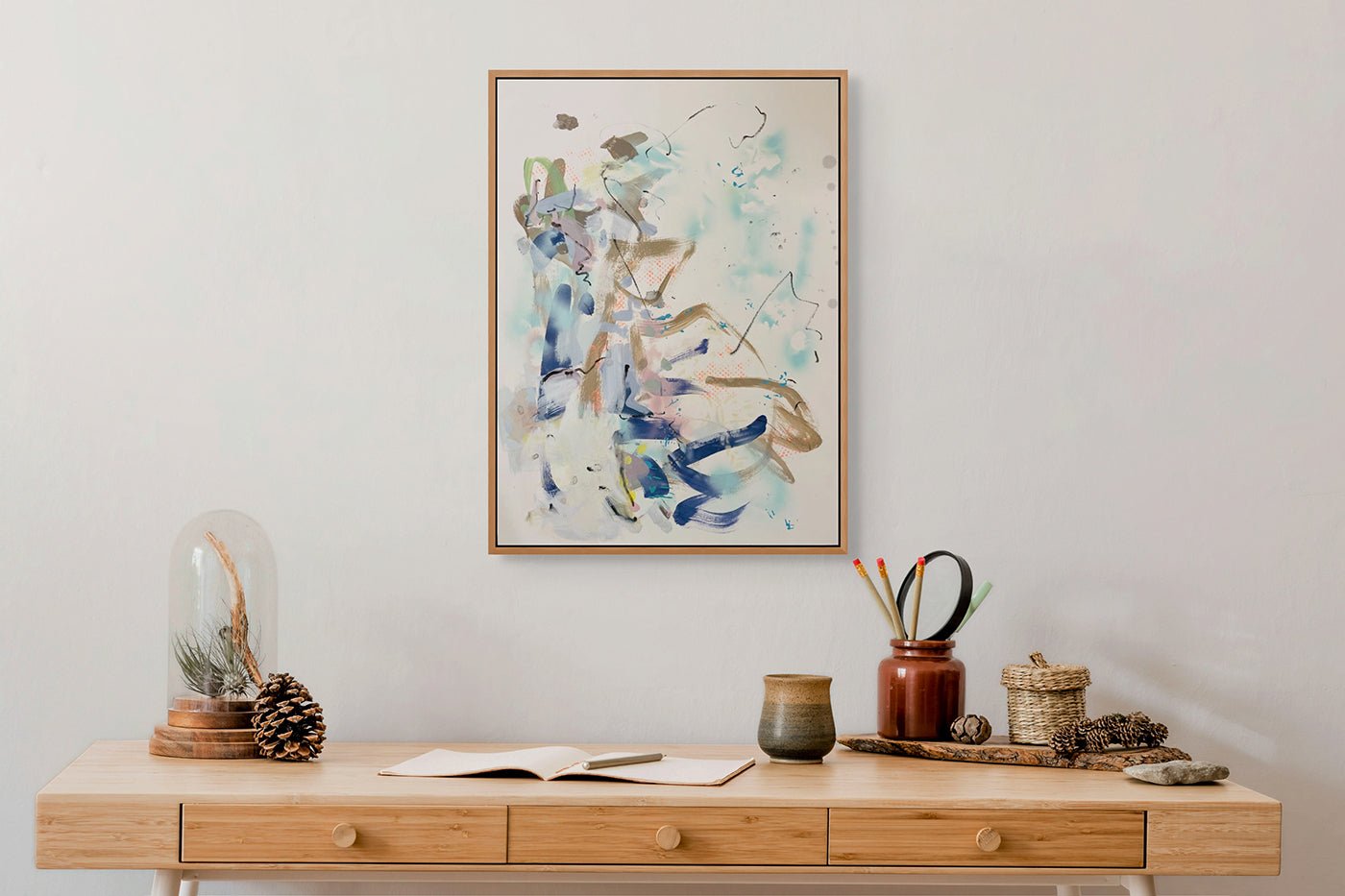

Lyrical Abstraction: The Art That Refuses to Be Cold
Tokyo, 1957. Georges Mathieu, barefoot, wrapped in a kimono, his long body coiled like a spring about to release, stands before an eight-metre canvas. He has been invited by Jiro Yoshihara of the Gutai Art Association, the avant-garde group that preaches art as pure material encounter. The audience watches. Mathieu does not sketch, does not plan, does not hesitate. He reaches for the tube of paint. He squeezes it directly onto the surface. His arm sweeps. A calligraphic vortex erupts. Within minutes, La Bataille de Hakata exists. He will paint twenty more canvases before he boards his flight home. Bienvenue à l'abstraction lyrique.

Georges Mathieu painting la Bataille de Bouvines - 25 avril 1954 - ©Robert Descharnes
If that scene speaks to you, the risk, the sweat, the paint that cannot be untouched, then you are already inside the argument of this essay. For readers interested in key facts about lyrical abstraction, our very detailed FAQ at the bottom has you covered.
Born Twice, Always in Opposition
Lyrical abstraction did not emerge from nowhere. It was born from a specific, bodily revulsion against coldness. The first birth happened in Paris, 1947, a city still bleeding from the Nazi Occupation. The critic Jean José Marchand and the painter Georges Mathieu coined the term Abstraction Lyrique to describe the works shown in "L'Imaginaire" at the Galerie du Luxembourg: paintings that displayed, as Marchand observed, a lyricism detached from all servitude. No servitude to geometry. No servitude to the rational grid that had, in its most perverse political incarnation, just tried to murder Europe. The gesture was an act of survival: the brush mark as proof of continued human presence.
The second birth came in New York, 1969, and the enemy had changed, but it was still cold. American critic and collector Larry Aldrich published "Young Lyrical Painters" in Art in America, naming a generation of painters who had grown exhausted by the icy perfectionism of Minimalism and the calculated irony of Pop Art. The Whitney Museum would codify the movement with a full exhibition in 1971. Again: warmth rising against a system. Each time lyrical abstraction has emerged, it has done so not as a style, but as a refusal: a refusal to let painting become a concept without a body, a form without a pulse.
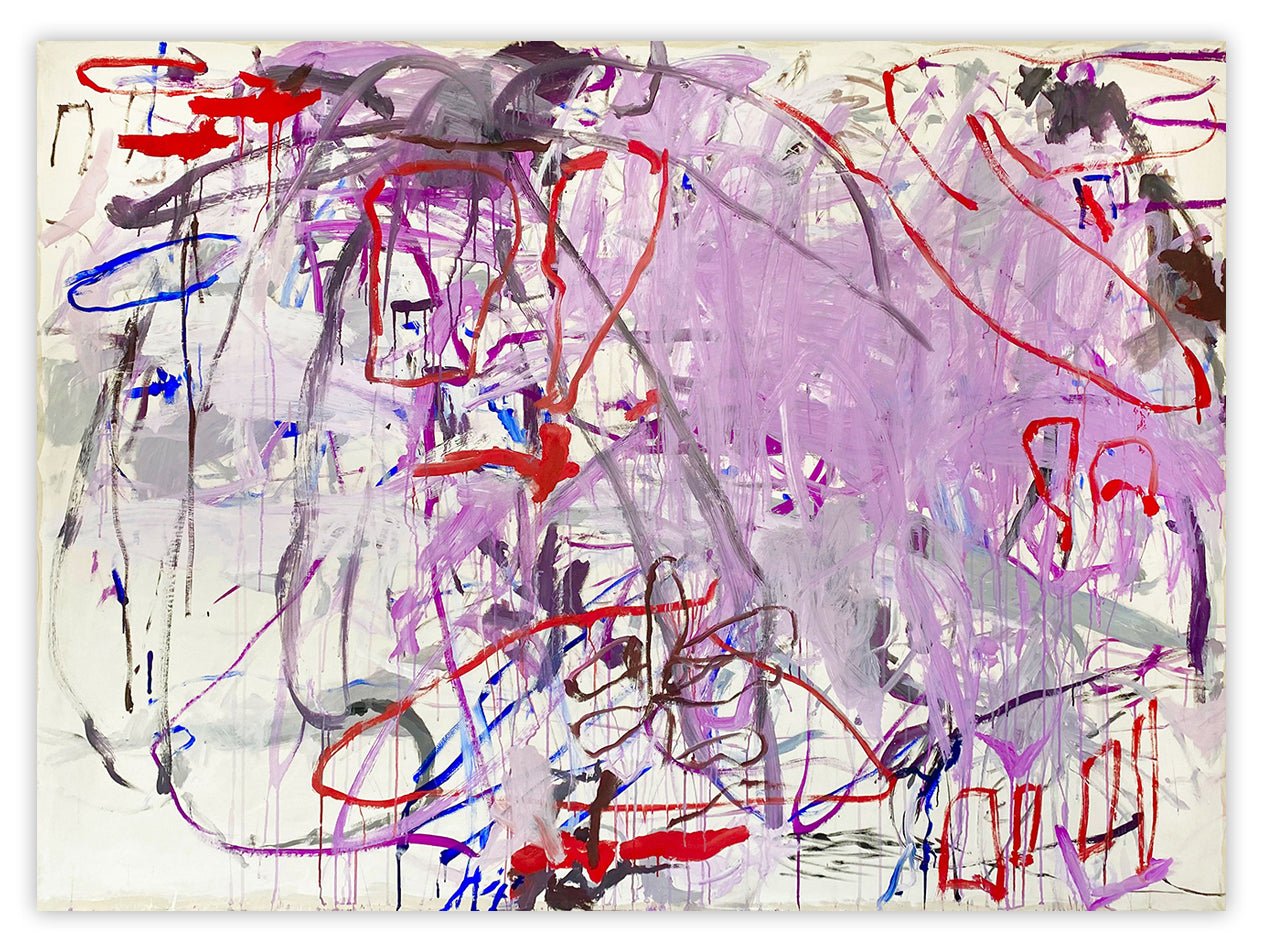
This double genealogy (Paris 1947 / New York 1969) is more than historical trivia. It reveals something structural about what lyrical abstraction is. It is a movement that defines itself against something else, which means its identity is perpetually alive, perpetually reactive. Consider Martin Reyna, an Argentine-born painter who has lived and worked in Paris for decades. His encres and diluted acrylics are simultaneously composed and released: Reyna establishes a structure: a territory, a rhythm, a set of conditions, and then allows colour to move within it according to its own logic, the final surface belonging equally to the artist's decisions and to the paint's. Looking at a Reyna's canvas, you feel the resistance, not to any particular historical movement, but to the very idea of the painting as a closed, decided thing. He is, in this sense, a direct heir to the Paris refusal of 1947.
 Martin Reyna - L'Ile - 2023
What the Body Knows
Here is what separates lyrical abstraction from other forms of expressive painting: process is not a means, it is the message.
Mathieu's "Tubism" (squeezing paint directly from the tube at speed) was not a technical shortcut. It was a philosophical declaration: no mediation between impulse and surface. Jean-Paul Riopelle, the Canadian member of the Art Informel circle in Paris, abolished the brush entirely, working only with the palette knife, building up thick mosaic impastos of colour that feel stubbornly, materially present. Helen Frankenthaler went in the opposite direction: her soak-stain technique poured pigment onto raw, unprimed canvas so that paint became absorbed rather than applied, the boundary between painting and support collapsing entirely. Each of these is a different wager against control, a different way of letting the body speak before the mind can edit.
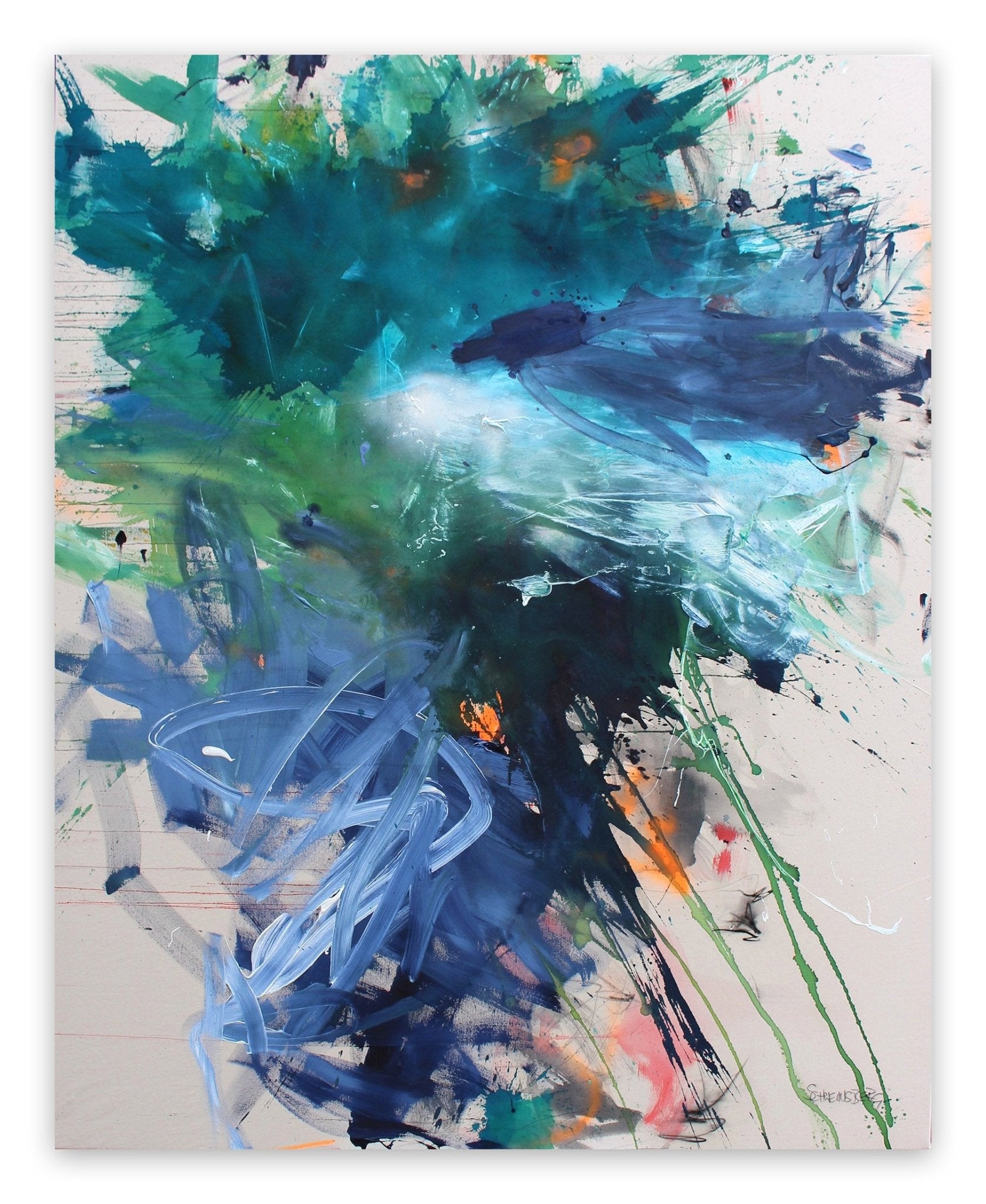
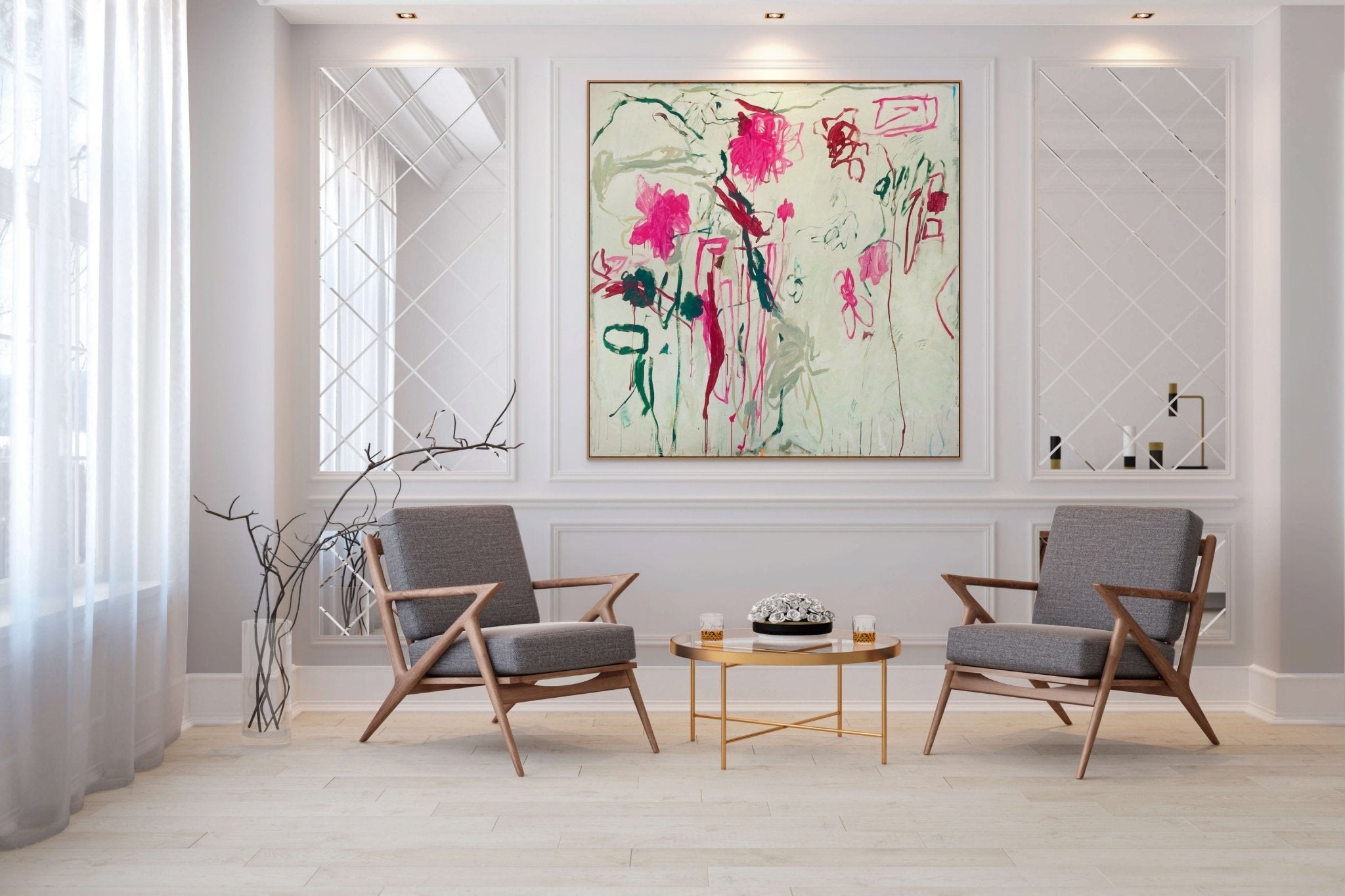
This body-centred logic is exactly what you see and feel in the work of Macha Poynder, the Paris-based painter who builds her canvases through performative gestures, automatic drawing, and intuitive colour choices that she describes as expressions of the unconscious rather than the intellect. Her surfaces blend areas of apparent randomness, where paint has been splashed or dripped, with zones of deliberate precision applied by a trained hand, and the tension between those two states is the painting. Poynder likens her process to the creation of music: not composed in advance, but discovered in the doing. Her work is held in the permanent collections of the Centre Pompidou and the Rijksmuseum, which suggests that institutions, too, can feel the difference between a painting that was performed and one that was merely made.

Macha Poynder - Far Away - 2026
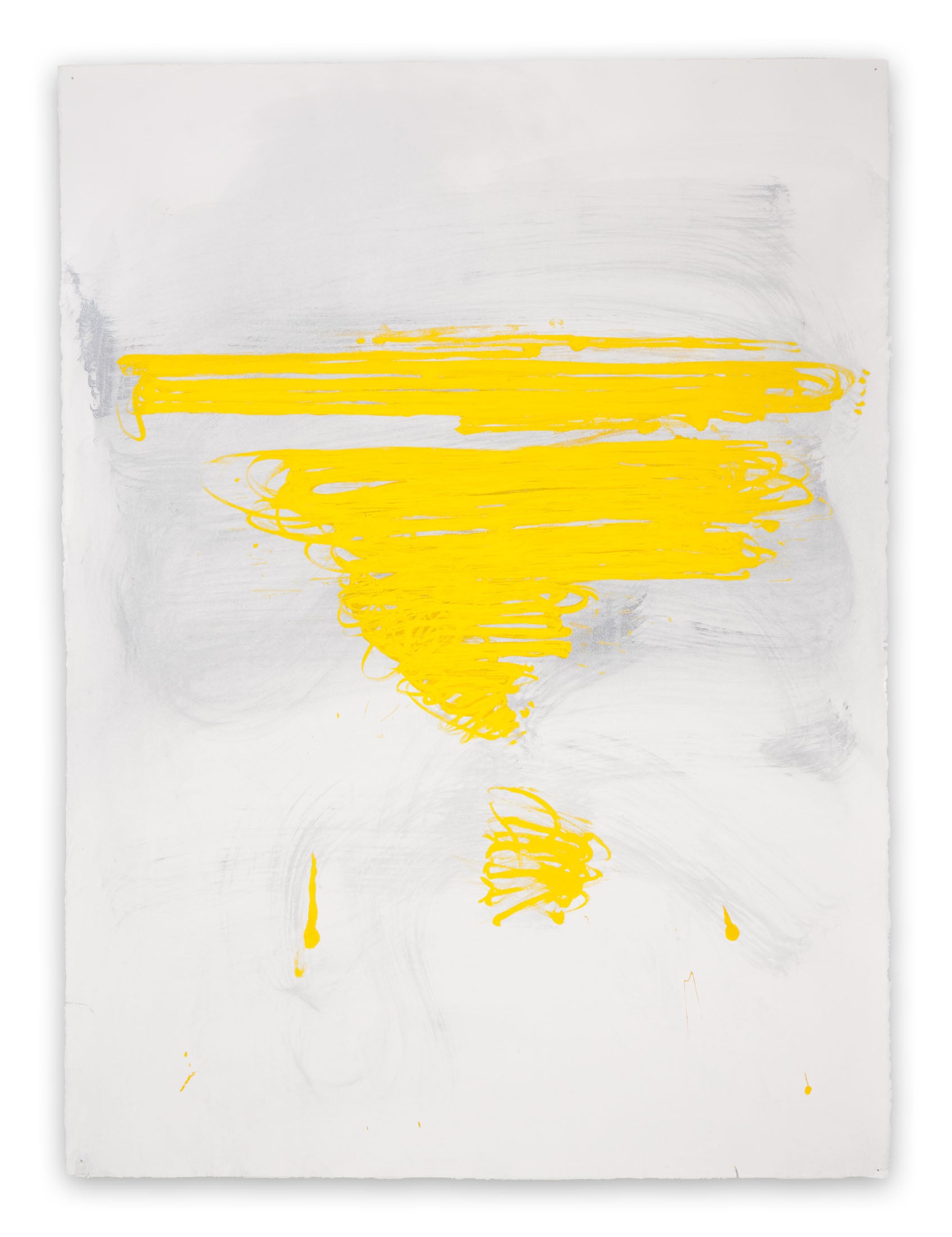
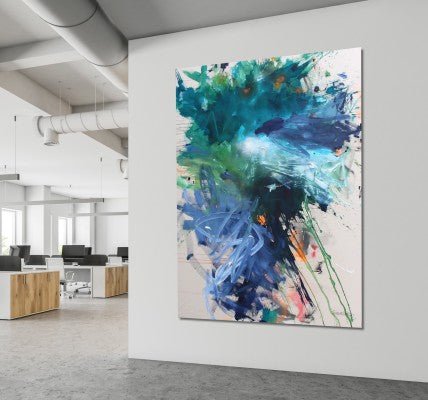
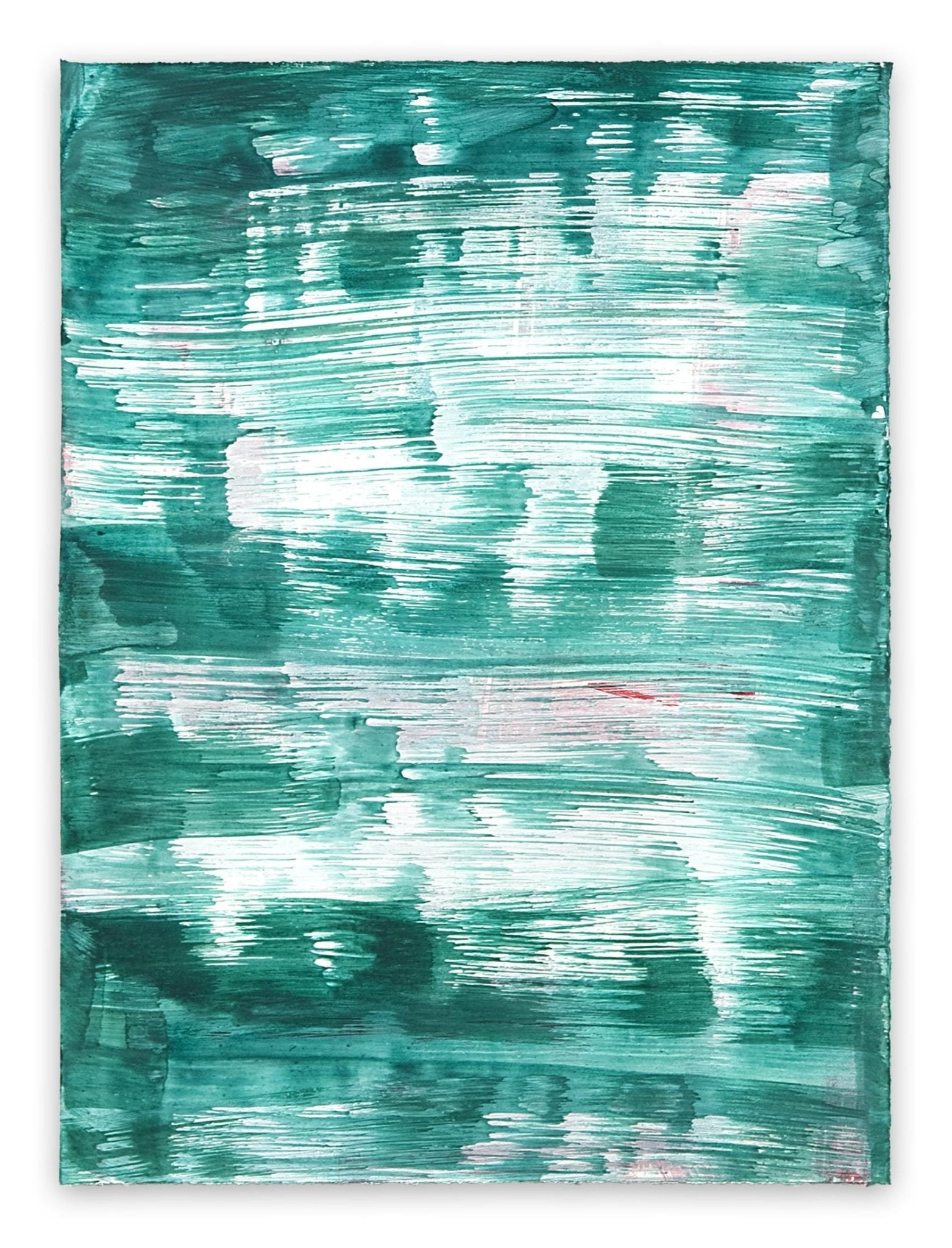
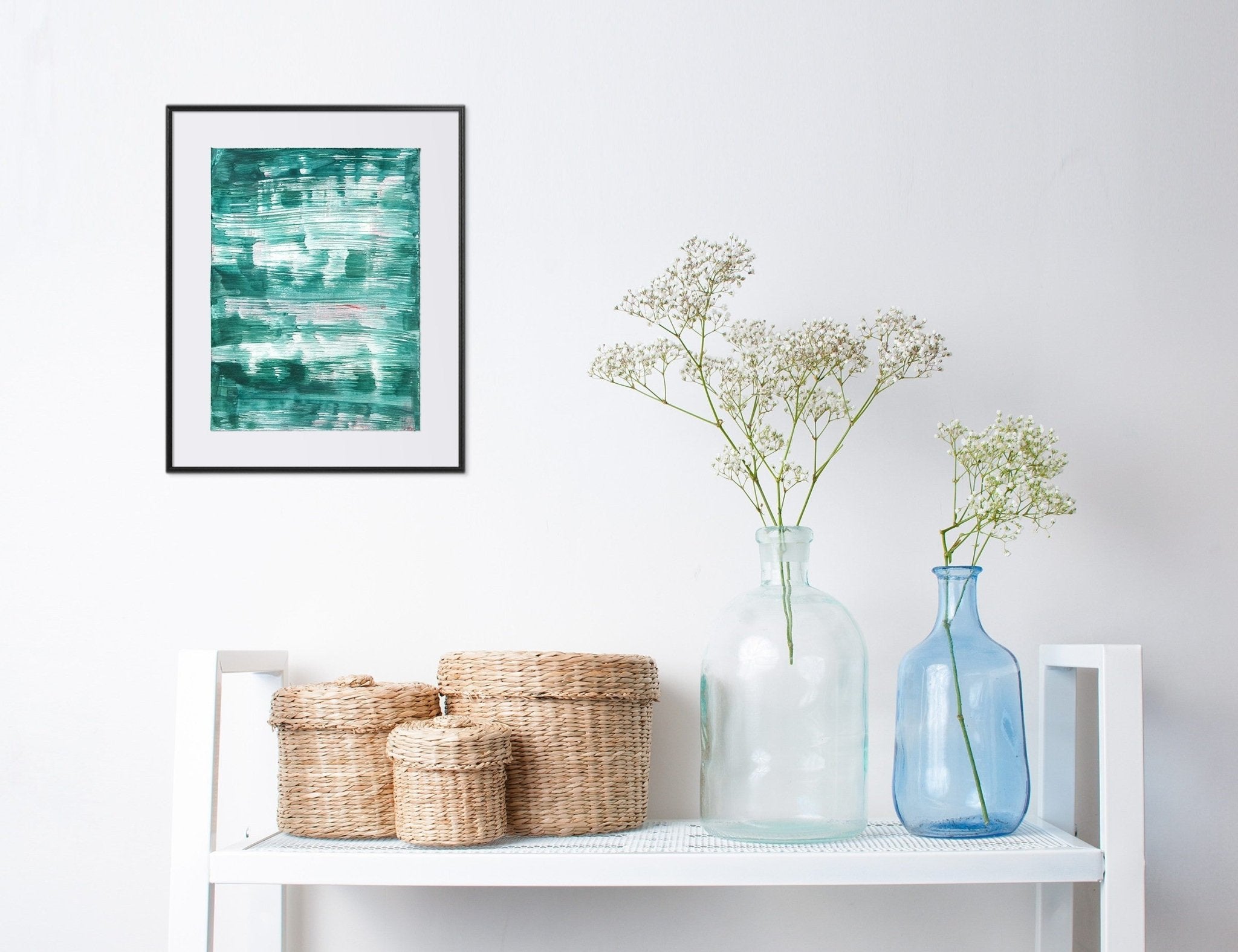
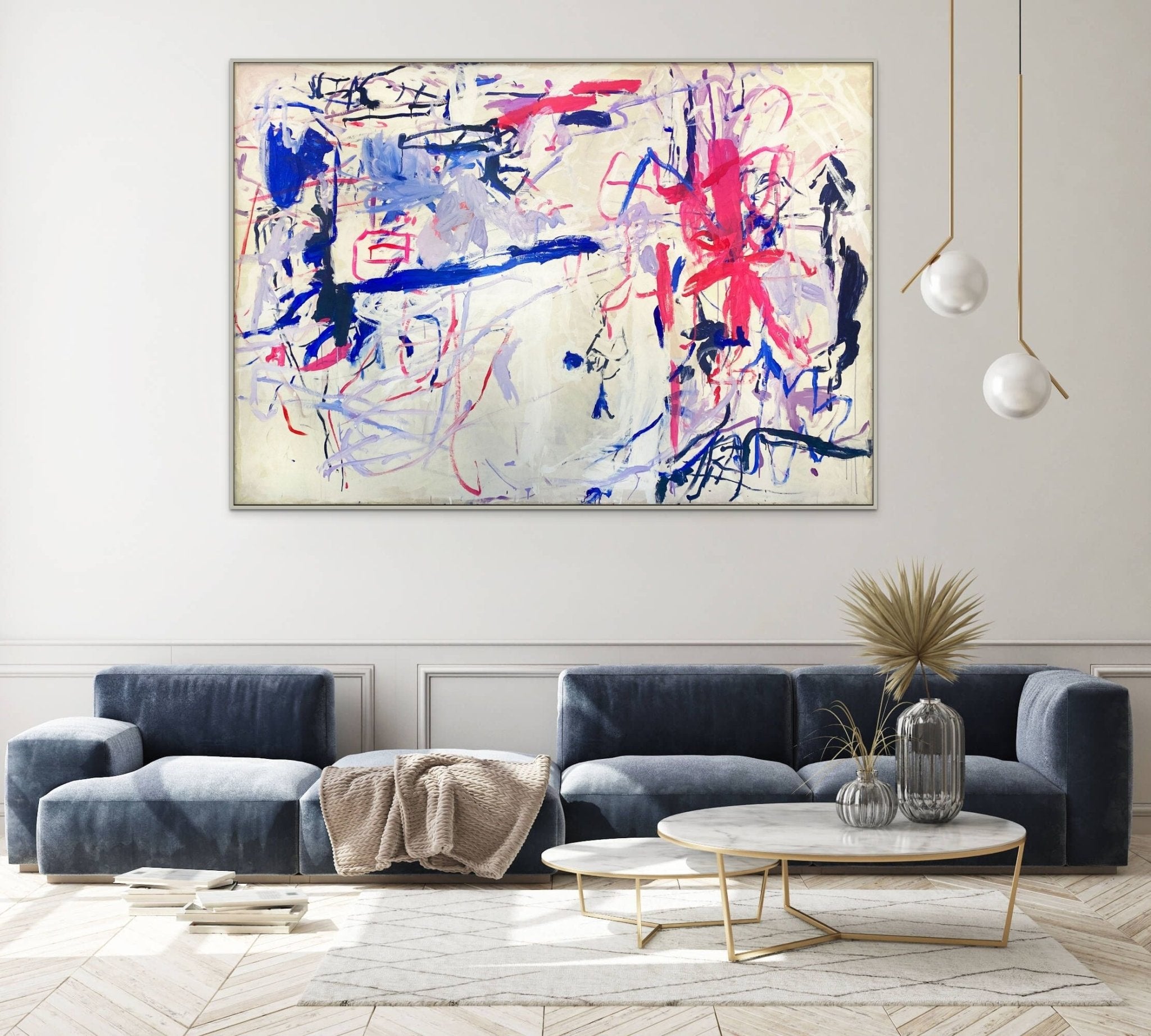
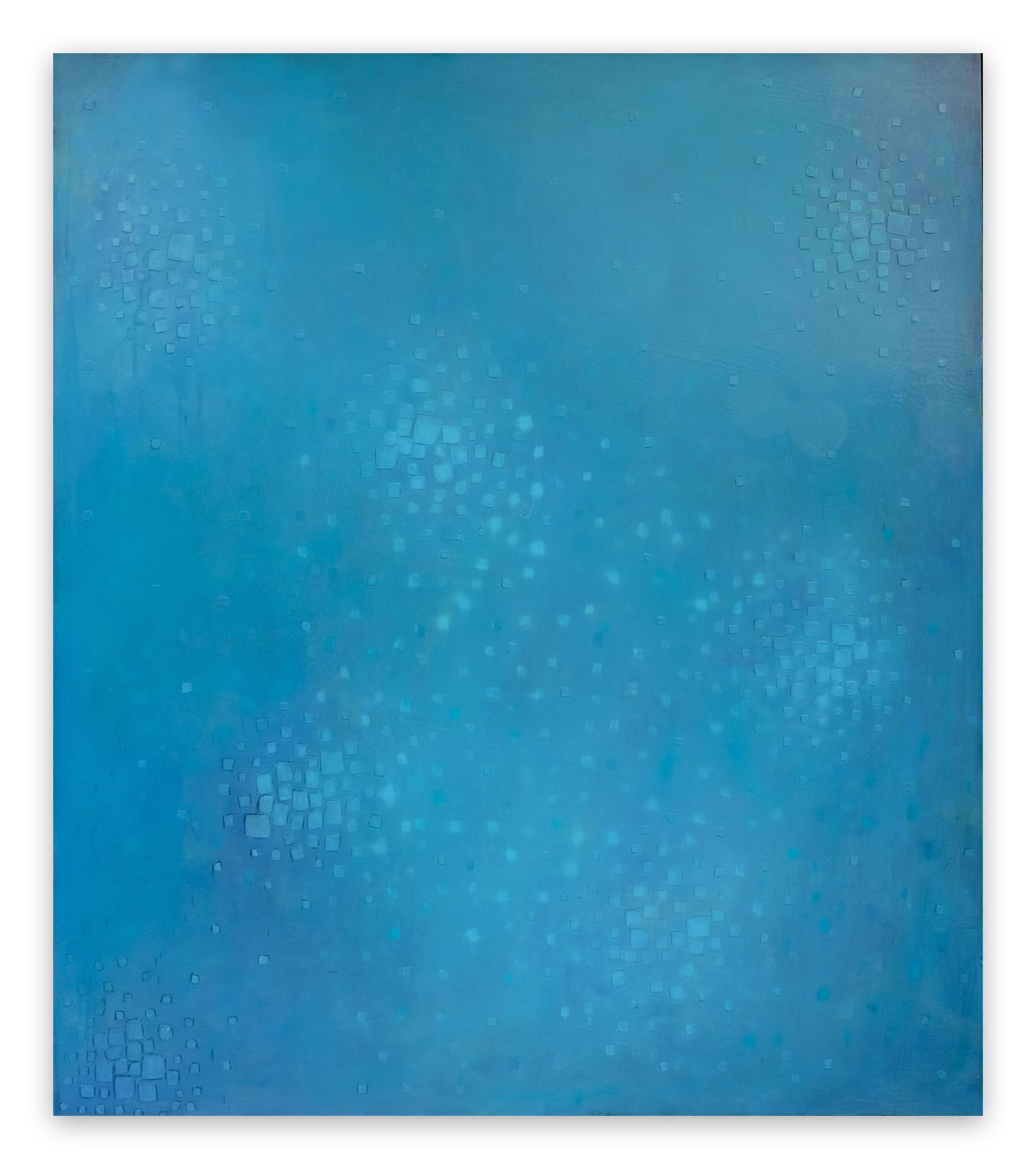
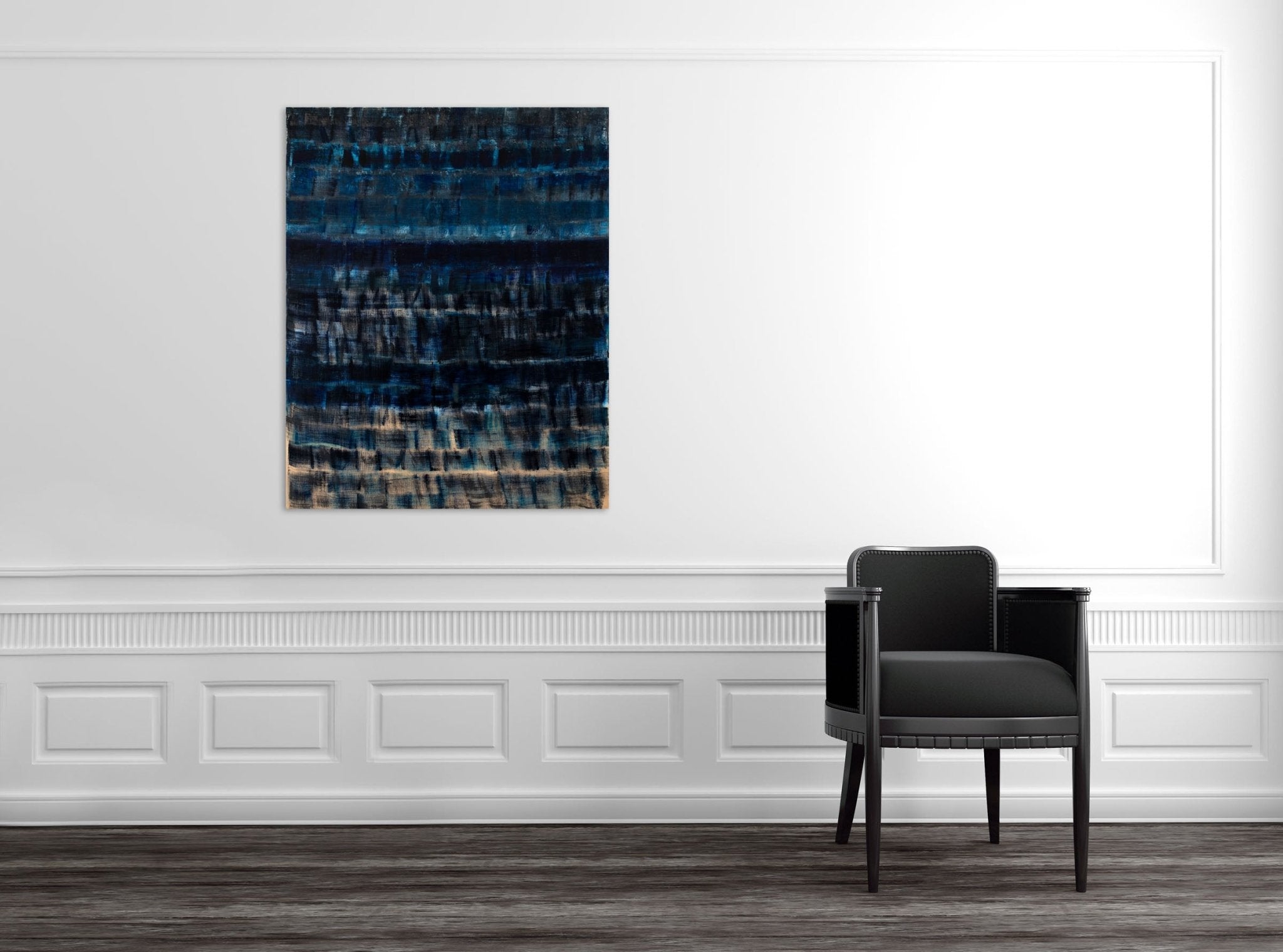
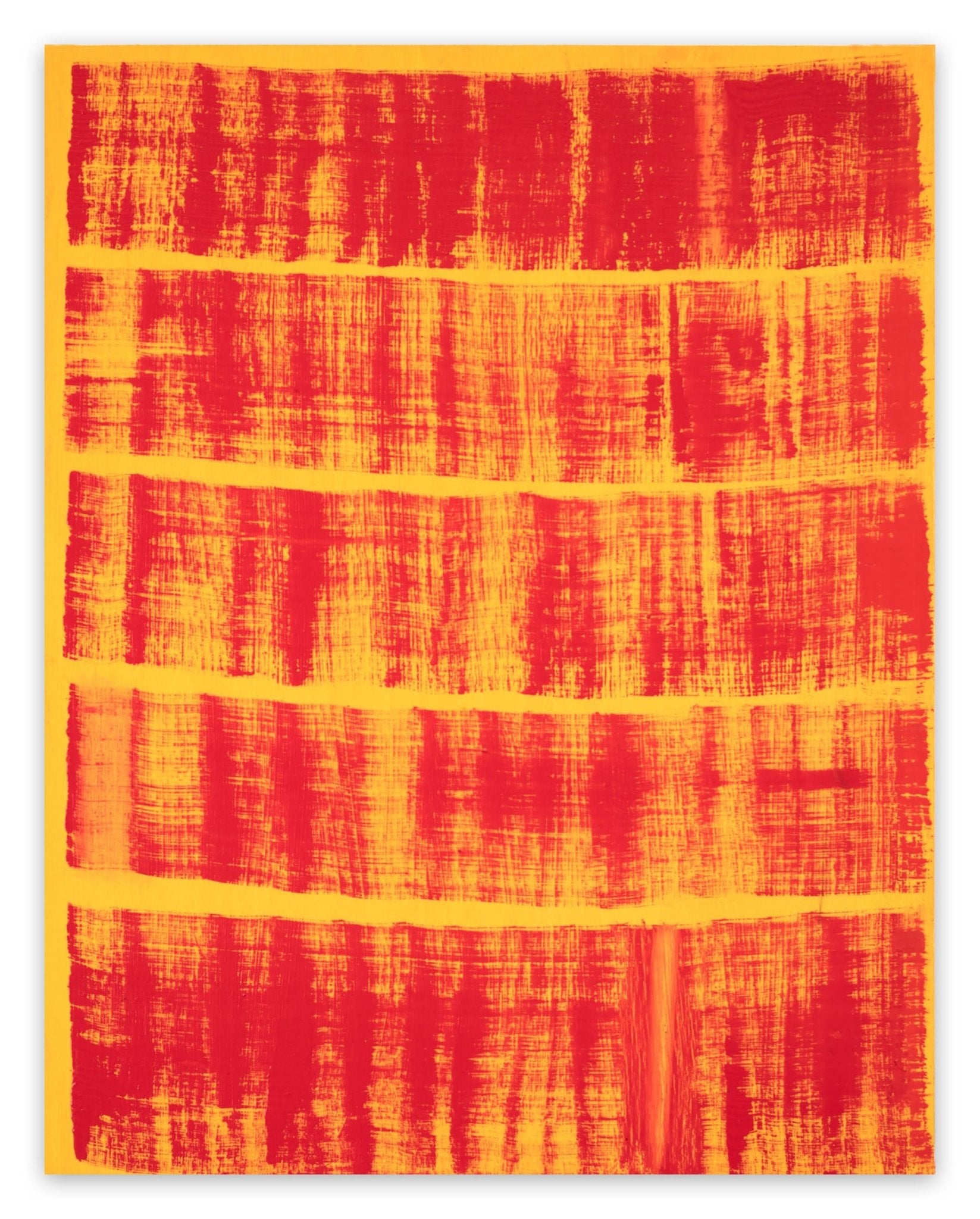
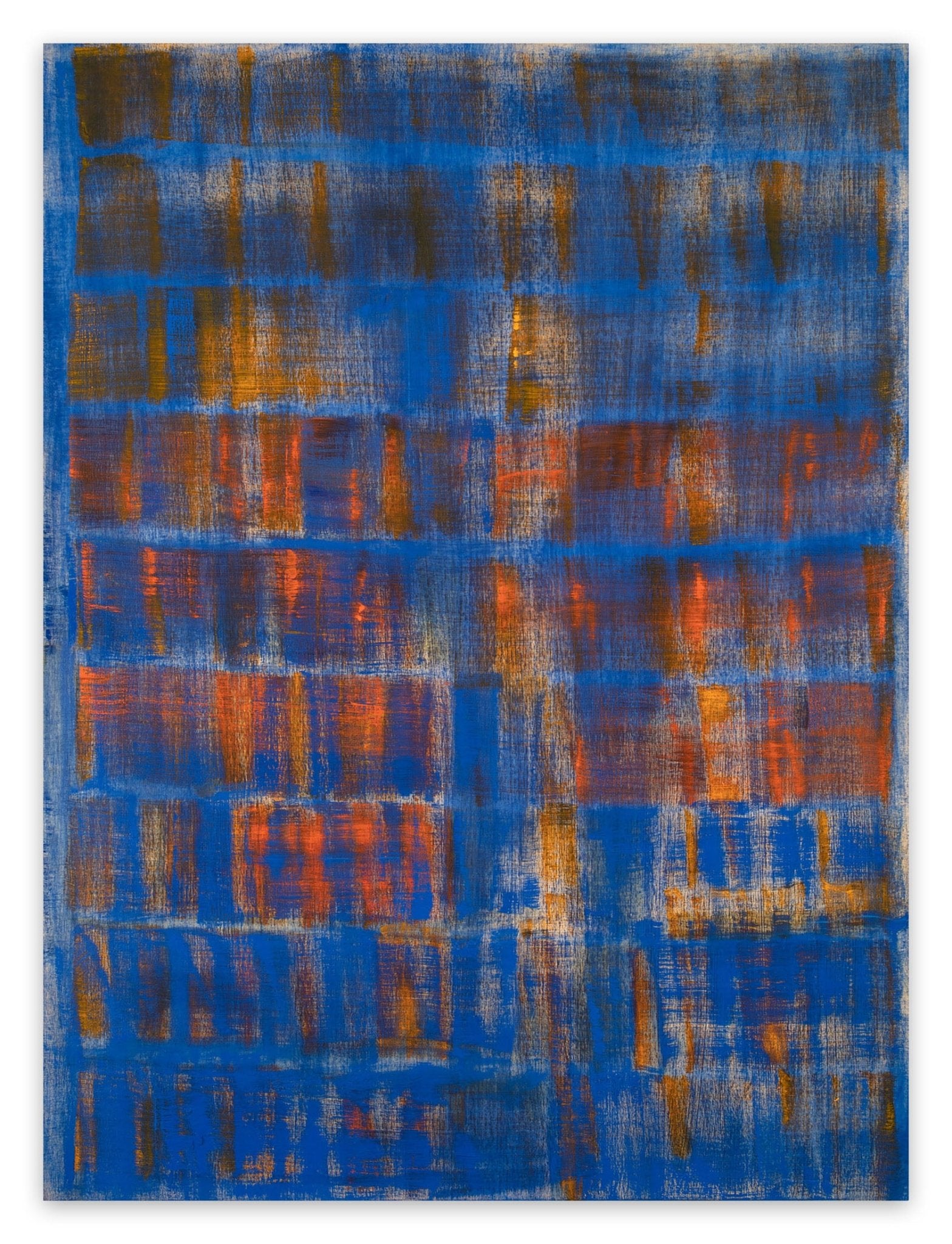
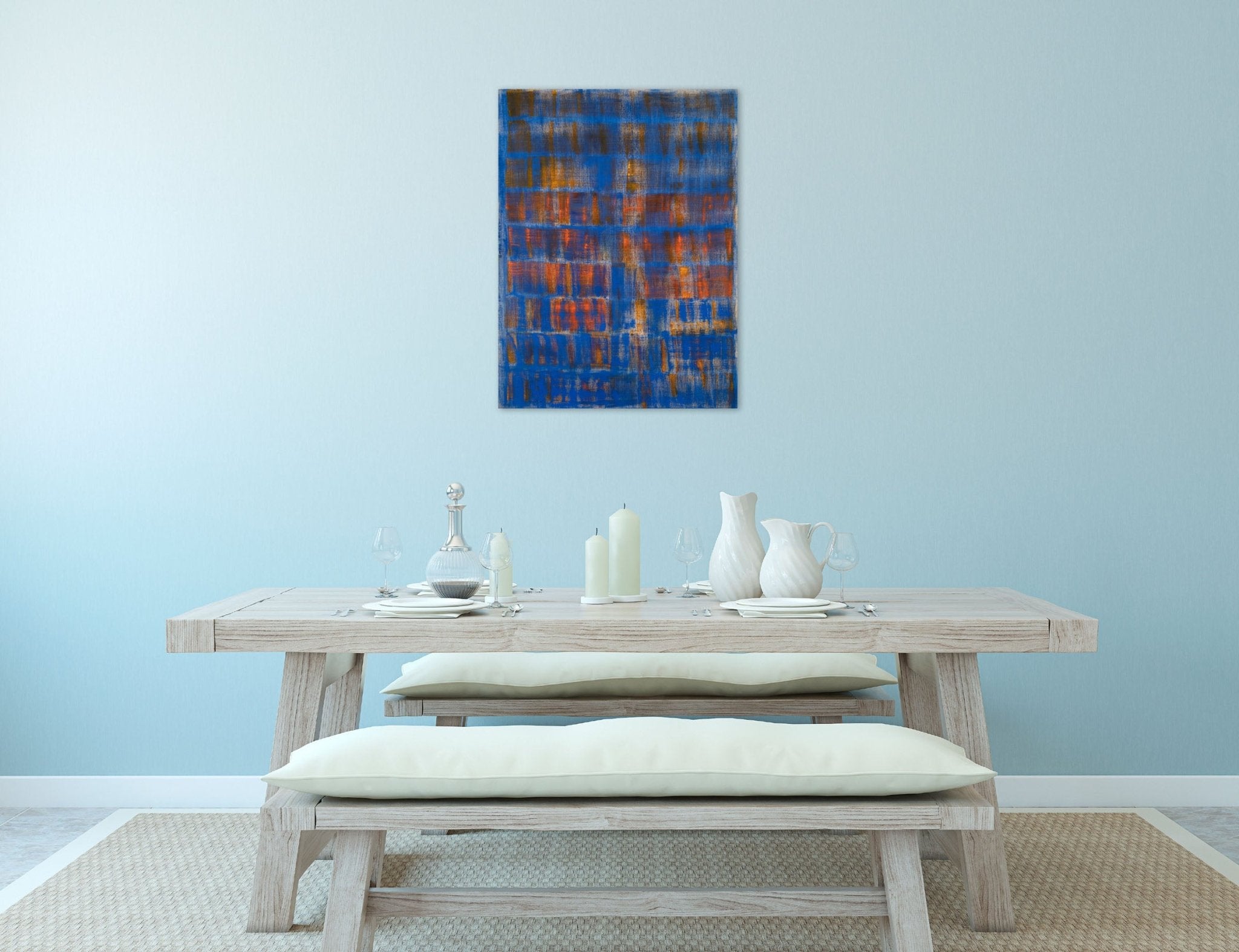
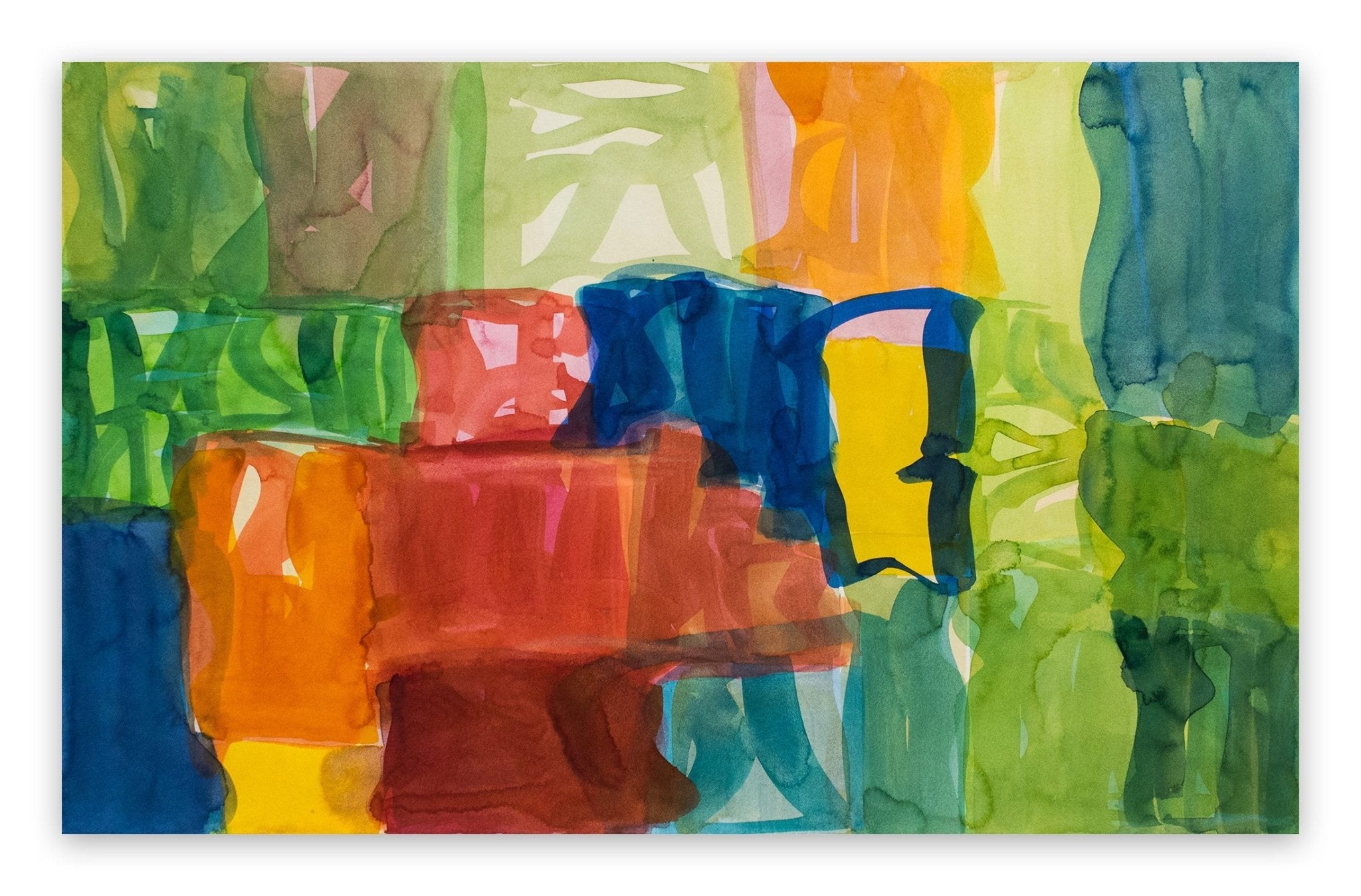
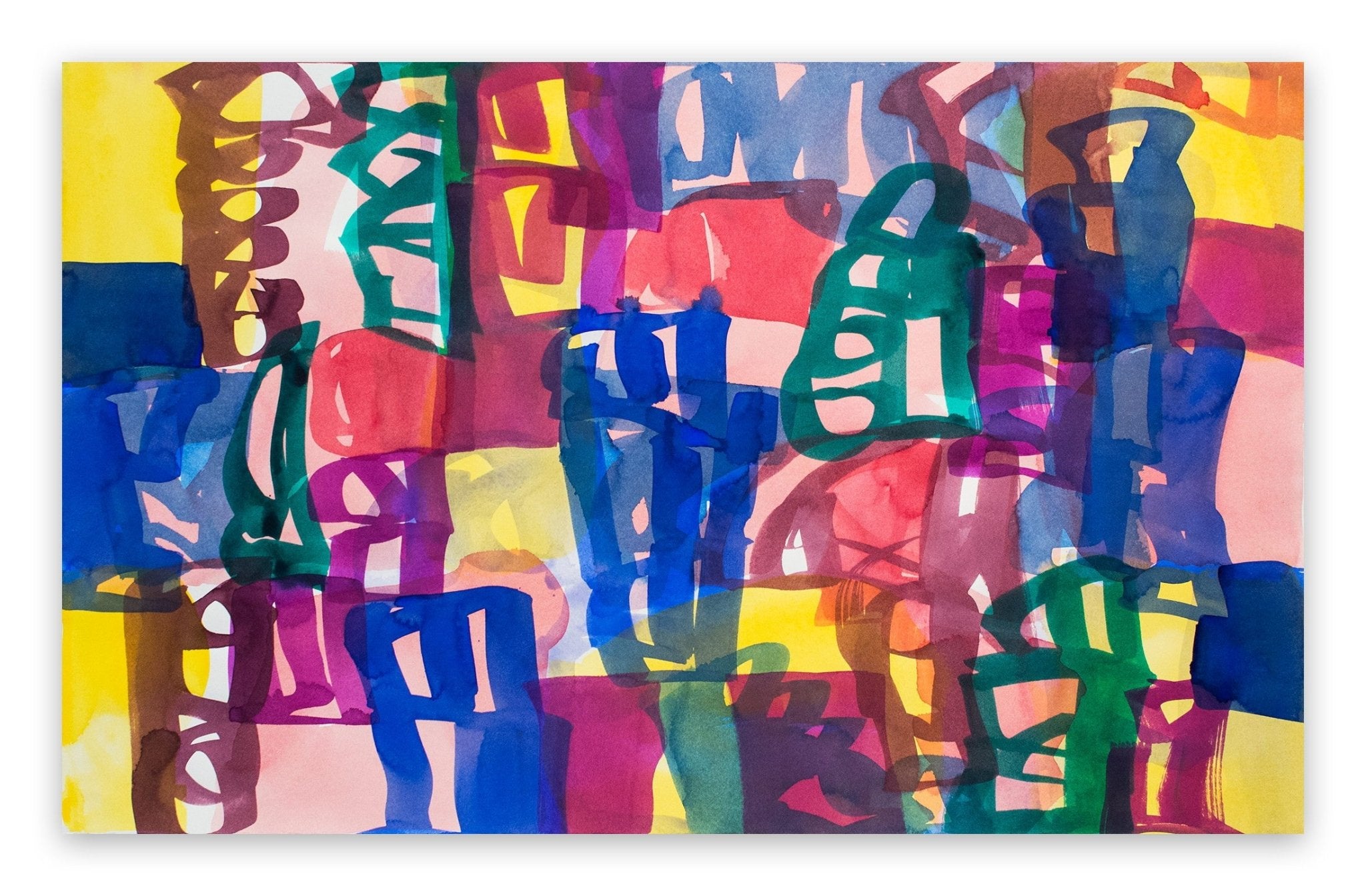
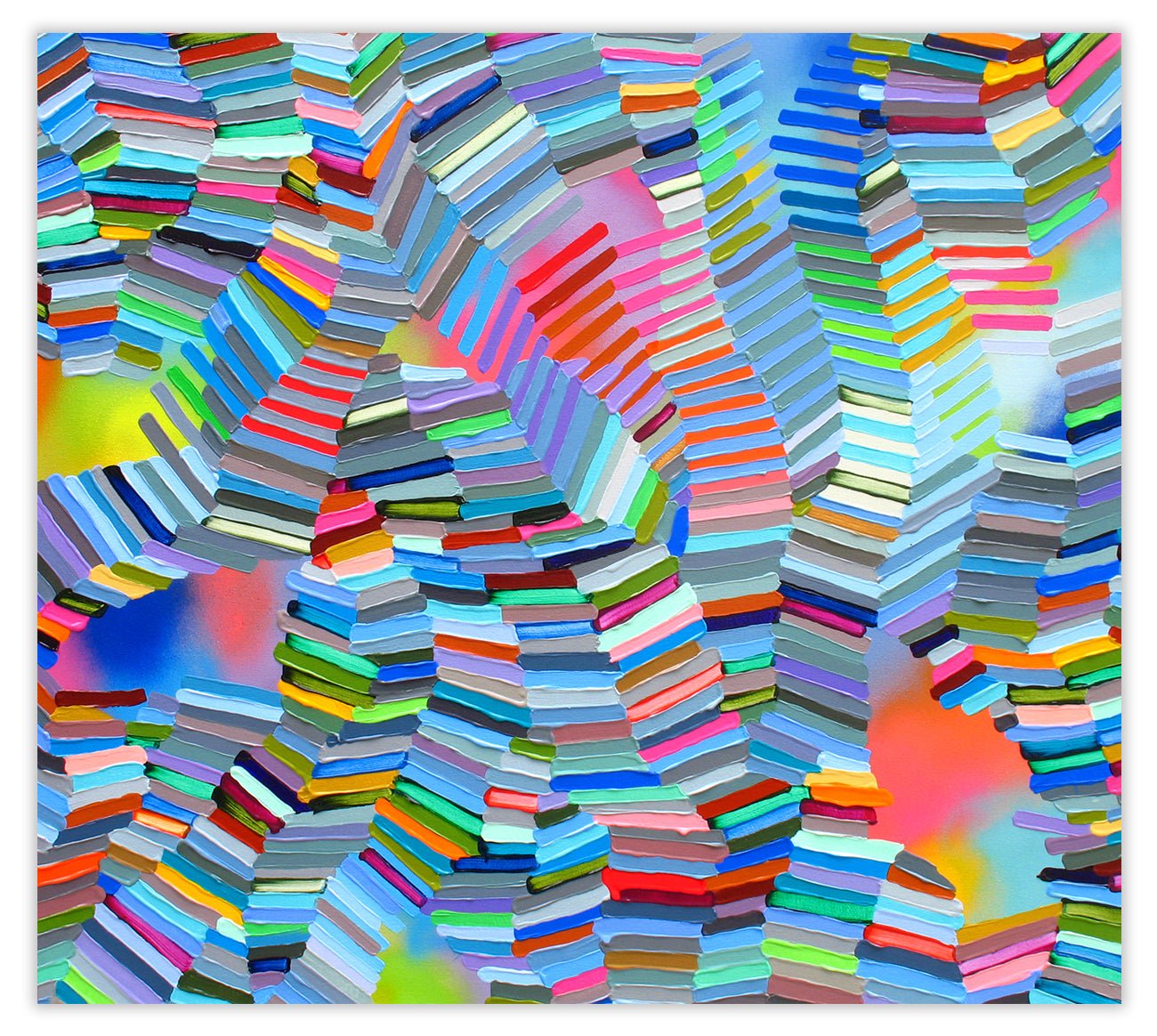
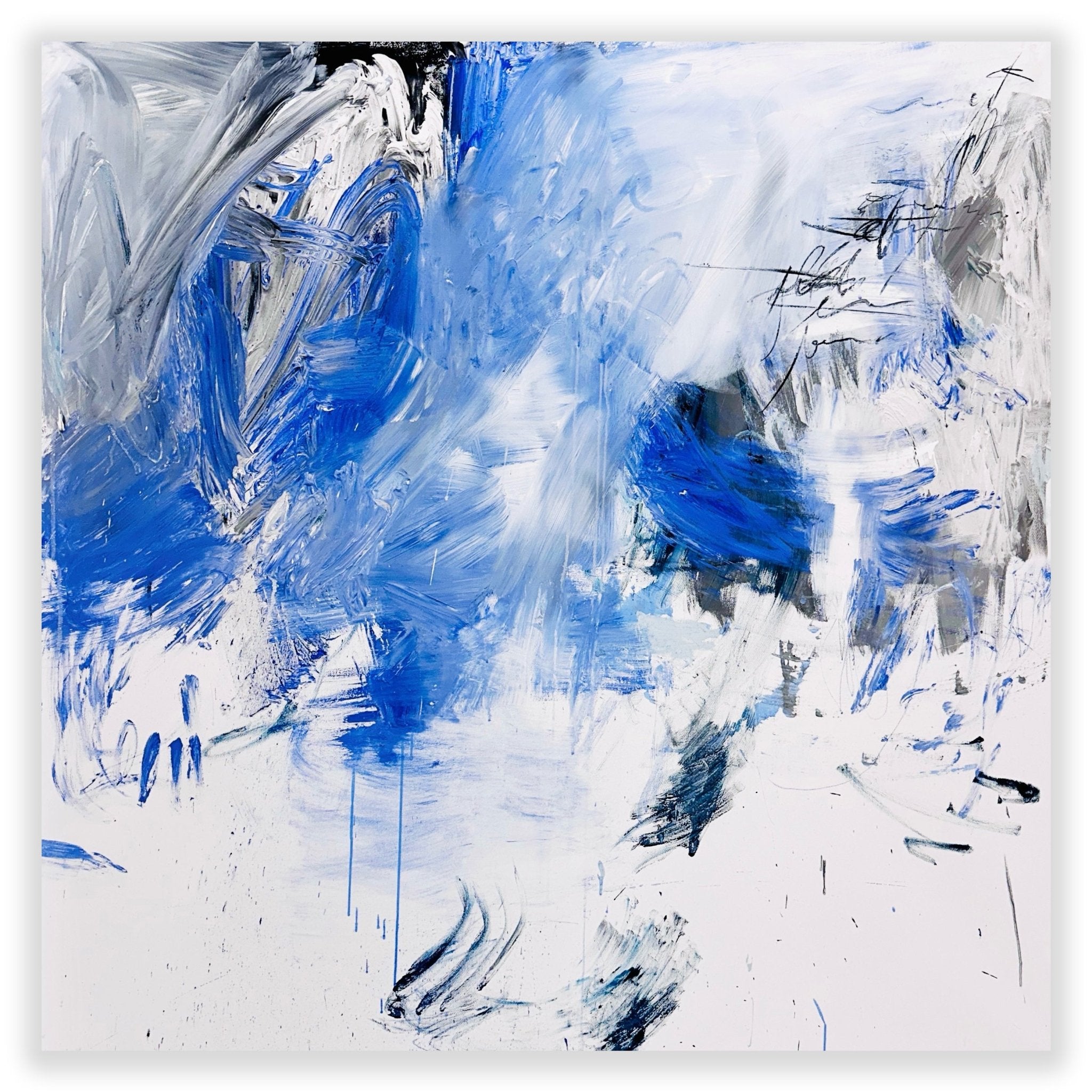
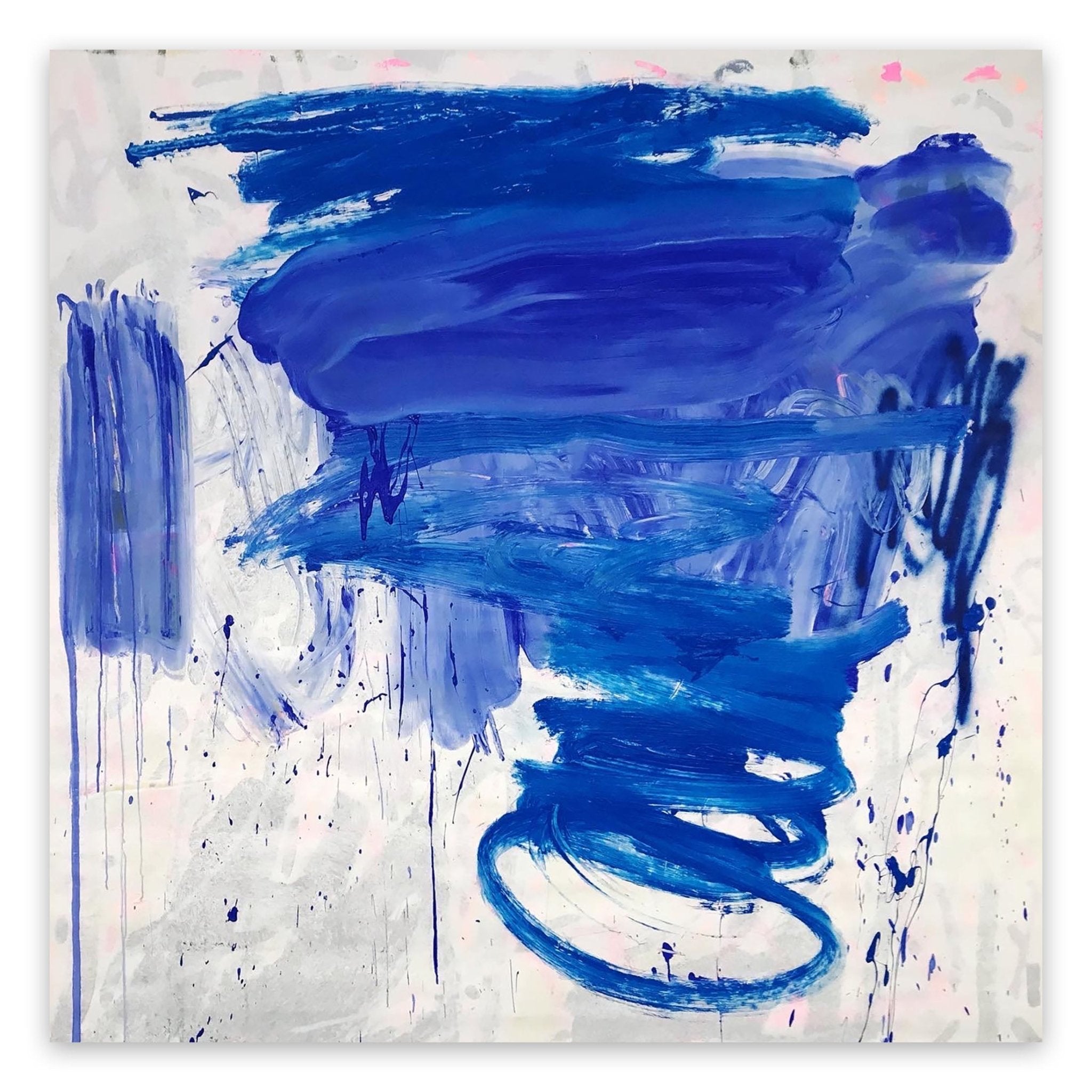
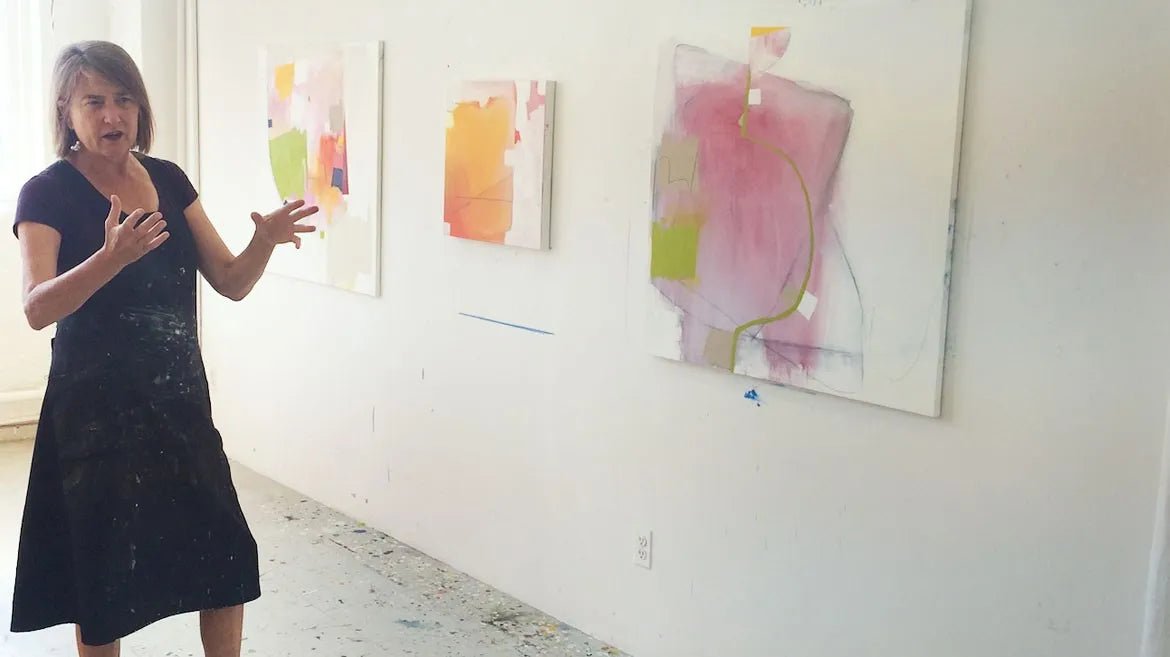
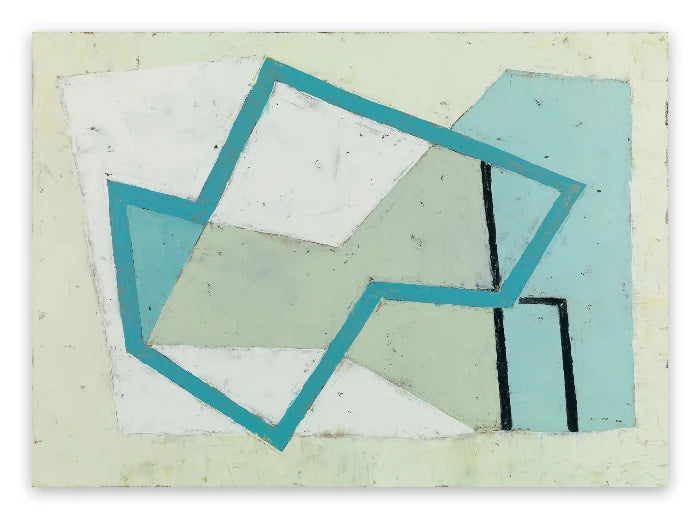
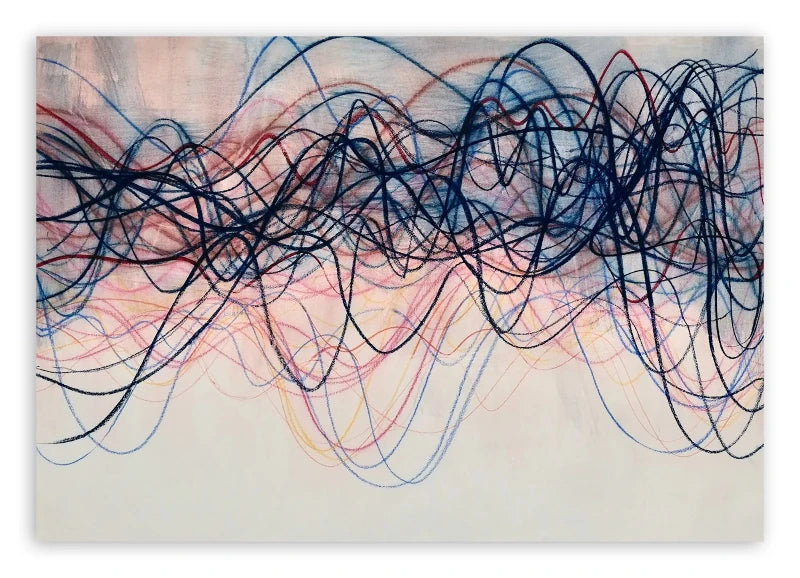
Janise Yntema, working in Brussels with encaustic wax (beeswax applied and fused with a blowtorch) occupies a similarly charged zone between control and release. The wax behaves: up to a point. Then the heat arrives, and what had been placed becomes what it becomes. Each semi-transparent layer traps light differently, so that looking into a Yntema canvas is like looking into something illuminated from within. The moment between direction and accident is not a problem she is trying to solve; it is the entire subject. And in Brooklyn, Emily Berger works on wooden panels (See hero image) with oil paint in broad horizontal gestures that engage her full arm (scraping, scumbling, dragging) so that every mark is unambiguously the record of a physical commitment. Her surfaces, Berger has said, celebrate the hand of the artist. In an era that often prefers the hand to be invisible, this is not an aesthetic preference. It is a position.

Janise Yntema - Montauk - 2015
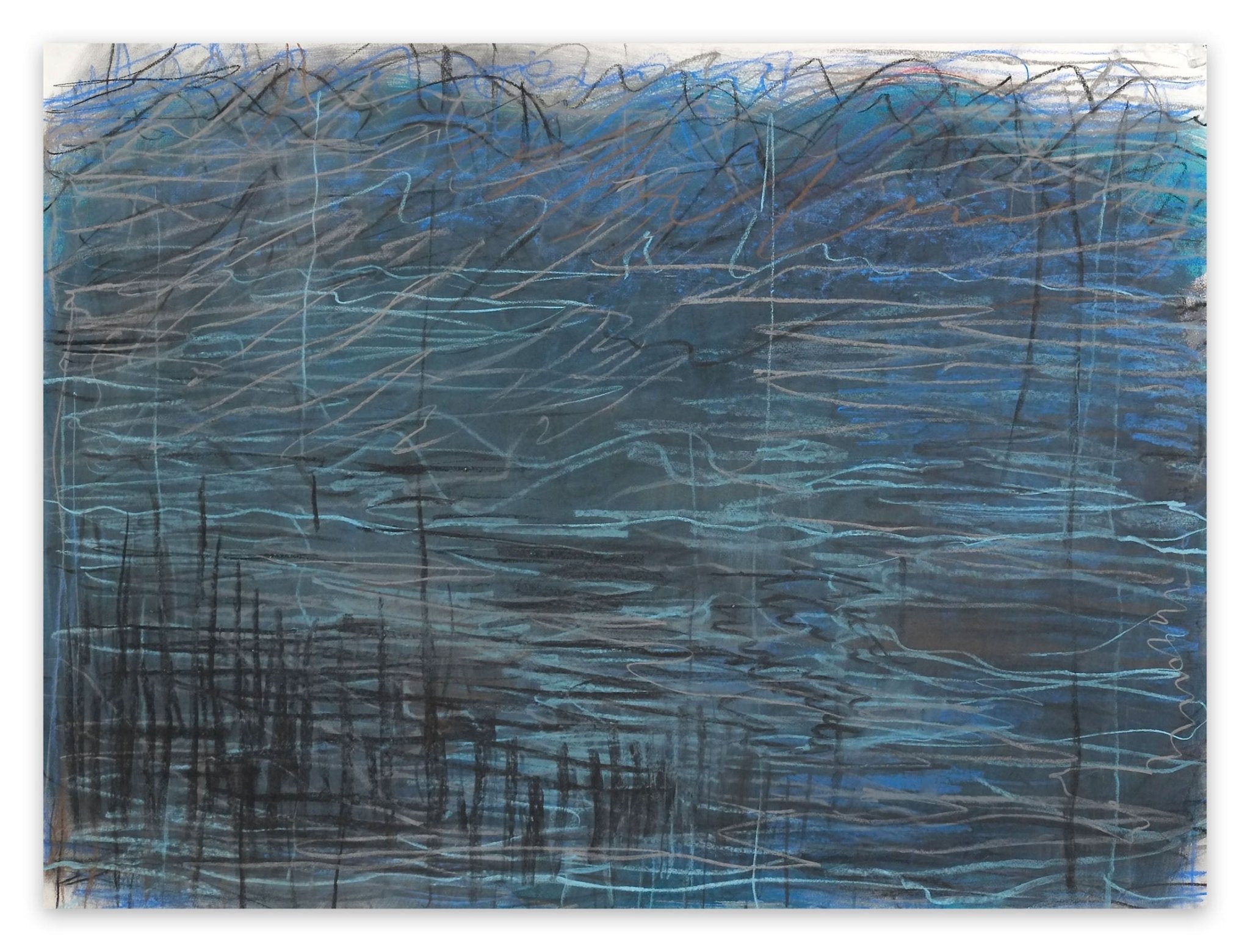
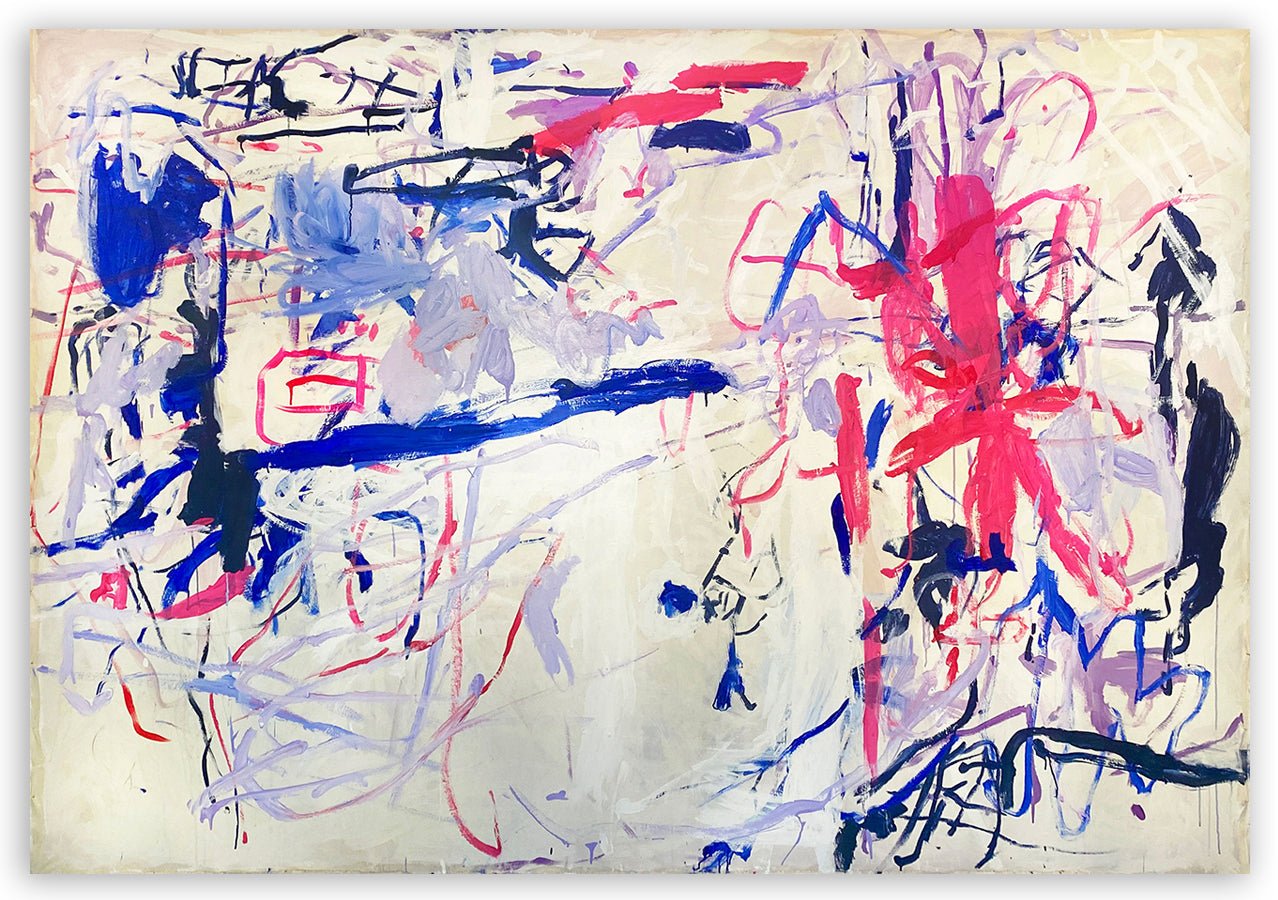
Paul Landauer, an Austrian-born painter based in Belgrade, brings yet another inflection to this question of body and process. His paintings move across registers, from precise, almost architectural drawing to broad atmospheric fields of colour, but in every mode the mark is considered without being calculated, the surface arrived at through genuine physical engagement rather than predetermined plan. Landauer describes his practice as a process of excavation: moving to Belgrade gave him the distance to question familiar things, and that questioning shows in surfaces that feel both constructed and discovered.
 Paul Landauer - Movement - 2023
The World Did Not Wait for Paris or New York
One of the persistent myths of art history is that movements originate in one place and "spread" elsewhere, as if culture were a kind of contagion. Lyrical abstraction complicates this model considerably. The Gutai group in Japan was not a satellite of French Art Informel: it was a parallel invention, driven by its own post-war urgency, its own encounter with matter and performance. Kazuo Shiraga painted with his feet, suspended from ropes above the canvas. When Mathieu arrived in Tokyo in 1957, the encounter was between two equally fully-formed sensibilities, not a teacher and his pupils.
Zao Wou-Ki, the Chinese-born painter who settled in Paris after studying in Hangzhou, synthesised the spontaneous energy of Oriental ink practice with the spatial ambitions of European Art Informel in a way that neither tradition alone could have produced. His large-scale canvases are simultaneously calligraphic and atmospheric, a kind of painting that has no precedent because it required exactly his biography, exactly his crossroads. In Canada, Riopelle and the Automatistes published their Refus Global manifesto in 1948, rejecting provincial clerical authority in favour of an experimental, secular vision of art, another cold system refused, another gesture of warmth asserted.
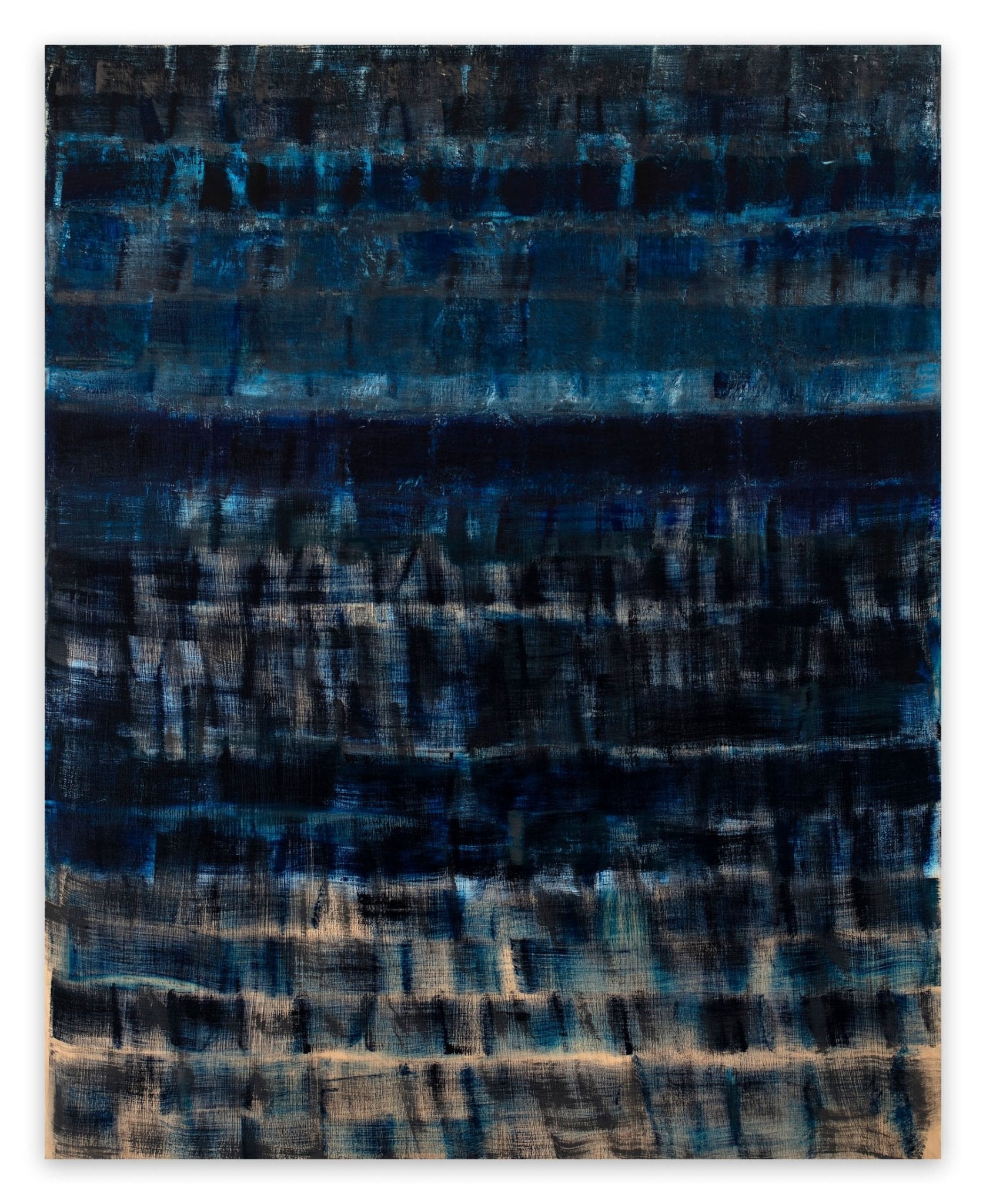
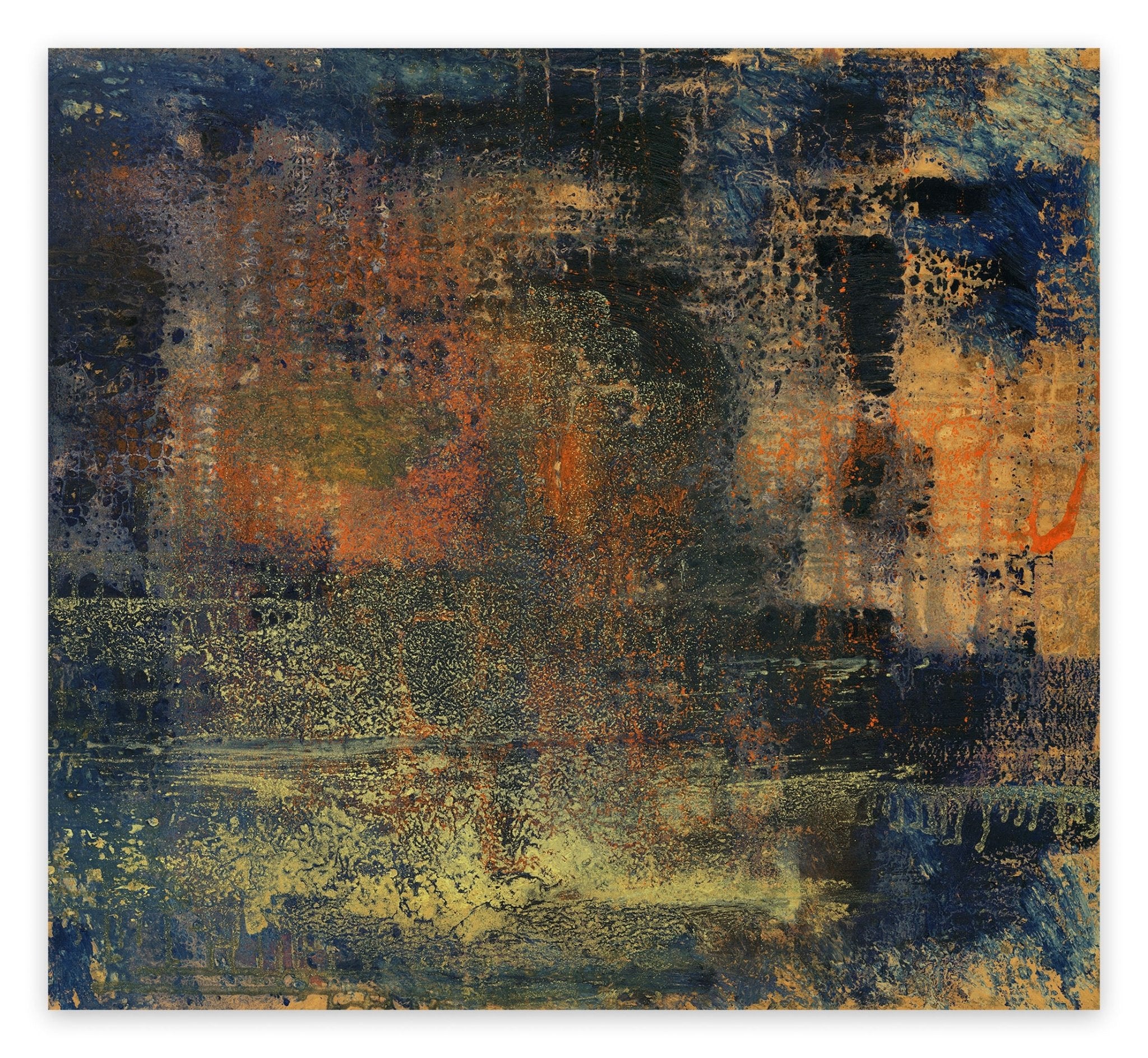
Today, Yari Ostovany, born in Teheran and now working in San Francisco, carries this global synthesis forward. His paintings build up pigments in dense, atmospheric layers, then wash them back, scrape them down, dissolve and reconstitute surfaces until they carry something that feels ancient without being archaeological. Ostovany speaks of Persian poetry as a formative influence, and that influence is legible in the surfaces he makes: depths that open and close, colours that appear and then withdraw, a surface that never quite resolves into stillness. His work is neither American Color Field nor Iranian miniature nor anything in between: it is precisely itself, a sensibility that only global confluence could have produced.

Yari Ostovany - Night Pilgrim 25 - 2022
The Third Cold: Lyrical Abstraction and the Contemporary World
In the contemporary art world of the early twenty-first century, lyrical abstraction faces its third cold. The first was the rationalist grid. The second was Minimalism's reductive logic. The third is the algorithmic image, technically flawless, instantaneously produced, generated from statistical distributions of what human visual culture has already made. The AI-generated image is the coldest thing yet: it carries no risk, no commitment, no body. It cannot fail. Which means it cannot, in any meaningful sense, succeed.
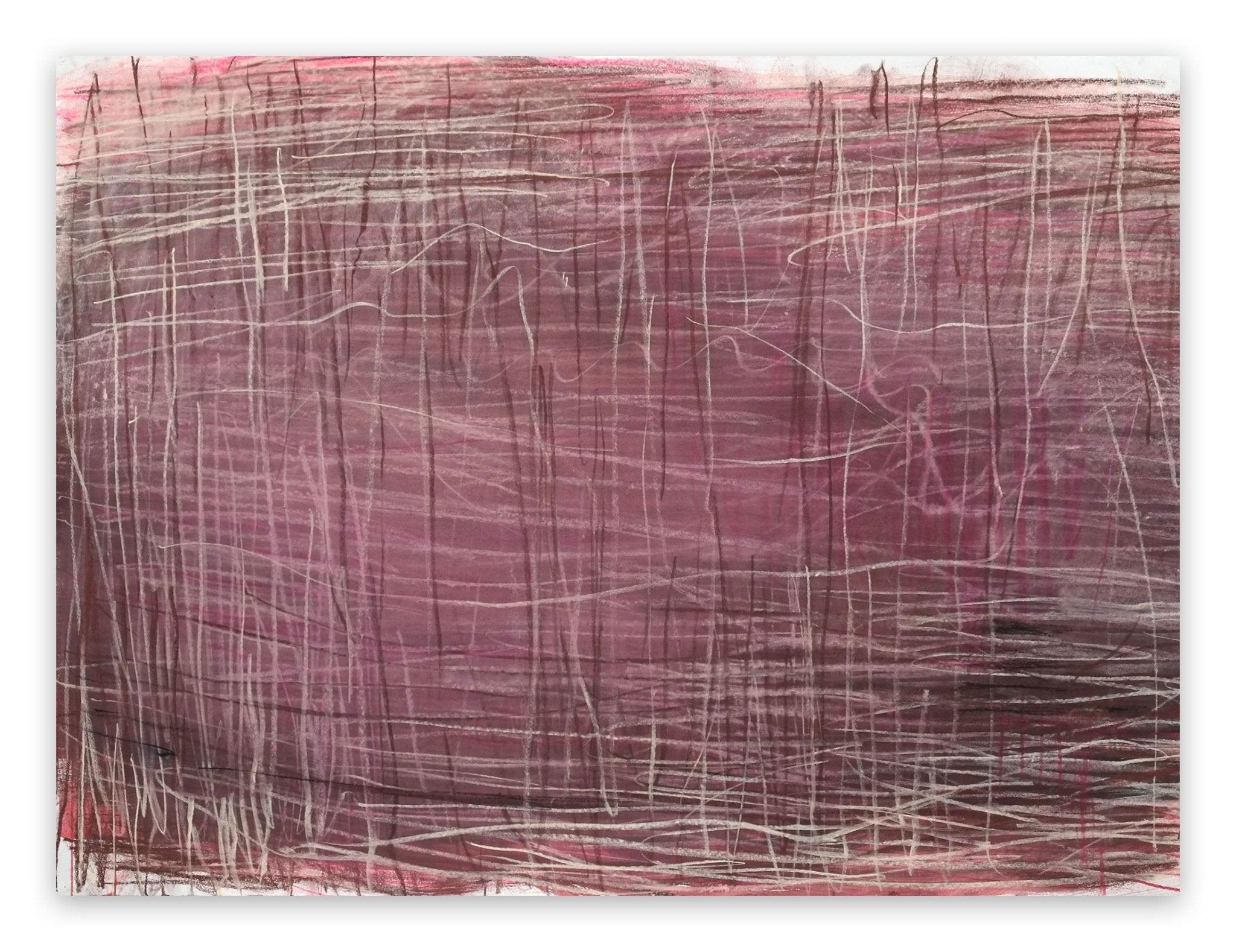
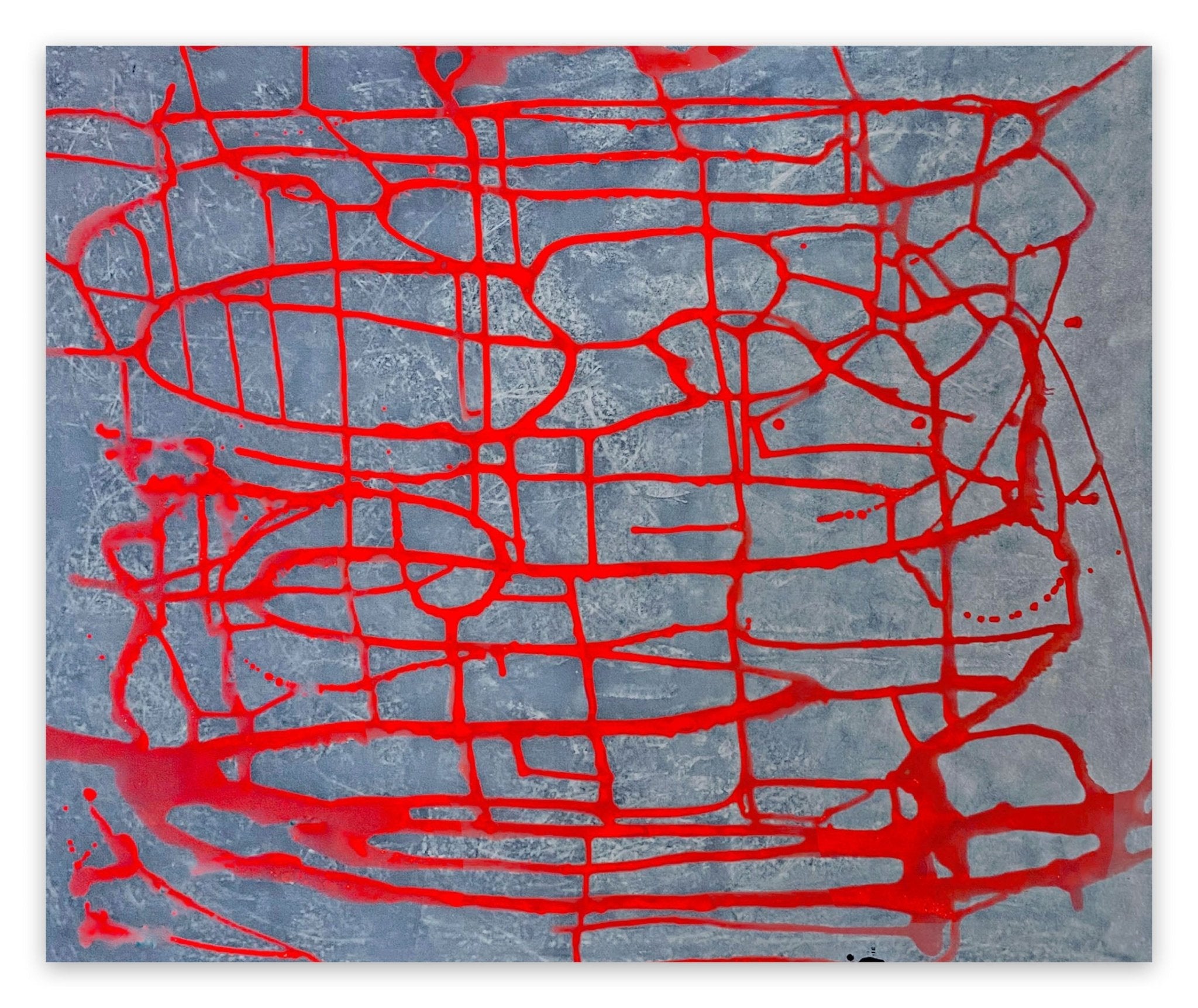
A canvas by Poynder carries the record of a gesture made at a specific moment, in a specific state of body and mind, that cannot be repeated. A Landauer painting holds the biometric trace of gestures counted and made in a particular body's particular time. A work by Jill Moser, whose lyrical, calligraphic marks navigate the space between painting and written language, between image and the meaning that precedes words, could not have been made by any process that proceeds from calculation to execution. These paintings are not the product of an algorithm's prediction of what a painting should look like. They are what happens when a human body encounters materials under conditions of genuine uncertainty.

Jill Moser - Painting - 2007
That is not a small thing. It is, in fact, the whole thing. Lyrical abstraction has never been about a particular style or a particular technique. It has always been about the insistence that painting is an event, not a product: the mark on the surface is evidence of a life being lived, a risk being taken, a moment that cannot be reconstructed from statistical data. Against the third cold, that insistence is not nostalgic. It is necessary.
By Francis Berthomier
More Painting That Refuses to Be Cold
The contemporary artists featured in this essay (Martin Reyna, Macha Poynder, Janise Yntema, Emily Berger, Yari Ostovany, Paul Landauer, and Jill Moser) are a personal selection from the broader community of lyrical and gestural painters represented by IdeelArt. Many other artists in the collection share this sensibility.
For collectors interested in exploring lyrical abstraction through works available today, IdeelArt maintains an exclusive collection of over 700 gestural and lyrical abstract artworks that can be discovered by clicking here.
Lyrical Abstraction: Frequently Asked Questions
For readers who want the facts, and for Google, which wants them too.
1. What is lyrical abstraction?
Lyrical abstraction is a form of non-figurative painting that prioritises spontaneity, emotional intensity, and the visible trace of the artist's gesture over geometric structure or intellectual system. It exists in two historically distinct but philosophically related versions. The European version, Abstraction Lyrique, emerged in post-war Paris in the late 1940s as a sub-current of Art Informel, celebrating the instinctual mark as an assertion of human freedom after the trauma of occupation and totalitarianism. The American version was identified in the late 1960s and early 1970s by collector Larry Aldrich and crystallised in the 1971 Whitney Museum exhibition, this time as a reaction against the clinical reductivism of Minimalism and the ironic detachment of Pop Art. Both versions share a commitment to fluidity, colour, and what might be called "productive accident": the moment when the painting does something the painter did not entirely plan, and that unplanned thing is kept because it is truer than anything the plan would have produced. Visually, lyrical abstraction tends toward atmospheric space, gestural or painterly marks, and an overall sense of movement, as opposed to the hard edges, ruled lines, and calculated symmetries of geometric abstraction.

Exhibition Catalogue - Whitney Museum - Lyrical Abstraction - 1971 - Click to Browse the Catalogue
2. What is the difference between lyrical abstraction and abstract expressionism?
The confusion is understandable: both movements celebrate the gesture, the body, and emotional directness, but the differences are real and matter. Abstract Expressionism, as it developed in New York from the mid-1940s onward, was frequently marked by a heroic, even violent energy: the Action Painting of Pollock's drip technique, the monumental confrontation of de Kooning's figure-in-abstraction, the sublimity of Rothko's colour fields. It was associated with a particular (and rather macho) mythology of the artist as existential combatant. Lyrical abstraction, particularly the American version of the late 1960s, was partly a reaction against that orthodoxy. It was more fluid, more poetic, more concerned with beauty as a legitimate end in itself. Artists like Helen Frankenthaler, Joan Mitchell, and Dan Christensen worked in registers that were lighter, more suffused, more, to use the term precisely, lyrical. The difference is not one of seriousness; it is one of tone. If Abstract Expressionism is jazz at full volume, lyrical abstraction is the same jazz played in a room where the windows are open.

Mark Rothko at Fondation Louis Vuitton - December 2023 - ©IdeelArt
3. Who coined the term "lyrical abstraction"?
The term was coined in Paris in 1947 by art critic Jean José Marchand and painter Georges Mathieu, to describe the works shown in the exhibition "L'Imaginaire" at the Galerie du Luxembourg. Marchand used it to convey a sense of painting that had broken free of all "servitude": to figuration, to theory, to the residual demands of pre-war styles. The term was later independently revived in the United States by Larry Aldrich, the American collector and founder of the Aldrich Contemporary Art Museum, in his 1969 Art in America article "Young Lyrical Painters." Though Aldrich was likely aware of the European usage, his appropriation of the term was motivated by a different critical context: the desire to name a post-Minimalist sensibility rather than a post-war European one.

Extract fom the Exhibition catalogue- Highlights of the 1968-69 Art Season - Aldrich Museum of Modern Art - Browse the catalogue
4. Who are the most important lyrical abstraction artists?
On the European side, the foundational figures include Georges Mathieu, the self-proclaimed founder, famous for his theatrical performances and Tubist technique, Wols (Alfred Otto Wolfgang Schulze), whose raw, improvised marks reflected post-war nihilism), Hans Hartung, whose rapid, disciplined strokes explored free will through speed), Jean-Paul Riopelle, the Canadian-born Parisian whose palette-knife mosaics became iconic, Zao Wou-Ki, whose synthesis of Oriental calligraphy and Art Informel was sui generis, and Simon Hantaï, who began within lyrical abstraction before departing it entirely in 1958 to develop his own technique of pliage, one of the most singular trajectories in post-war painting. On the American side, the key names include Helen Frankenthaler, inventor of the soak-stain technique, Sam Francis, whose tachiste splashes engaged with Buddhist notions of void, Joan Mitchell, who fused Action Painting with Impressionist colour sensibility, Dan Christensen, who used industrial spray guns to create luminous loops, and Ronnie Landfield, who coined the phrase "new sensibility" to describe what his generation was doing.

Riopelle - Chevreuse - 1954 - Exposition Parfums D'ateliers, Fondation Maeght, Septembre 2023 - © IdeelArt
5. What techniques define lyrical abstraction?
Process and technique are central to lyrical abstraction in a way that is almost definitional: the how is inseparable from the what. Mathieu's "Tubism" (applying paint directly from the tube at speed, with no preliminary sketch) maximised spontaneity and calligraphic precision simultaneously. Riopelle worked exclusively with the palette knife, building dense, sculptural impasto surfaces that resemble mosaic or geological strata. Frankenthaler poured thinned paint onto unprimed canvas so that it soaked into the weave, eliminating the distinction between surface and ground. Christensen used an industrial spray gun to achieve continuous, looping lines that went beyond the physical reach of the arm. More recently, artists like Macha Poynder blend automatic drawing and performative gesture with deliberate layering, their surfaces holding the simultaneous record of chance and intention; Janise Yntema works with encaustic beeswax fused by blowtorch, building semi-transparent layers that trap and transmit light; and Emily Berger engages her full body in horizontal gestural strokes on wood, scraping and scumbling until the panel holds the evidence of multiple physical commitments. What all these techniques share is an insistence on irreversibility: the mark is made, and the making cannot be entirely undone.

Janise Yntema - The Whisper Of Solitude - 2017
6. When and where did lyrical abstraction emerge?
Lyrical abstraction has two distinct historical origins that should not be conflated, though they are related in spirit. The first is Paris, 1947: the exhibition "L'Imaginaire" at the Galerie du Luxembourg, where Jean José Marchand and Georges Mathieu used the term Abstraction Lyrique to describe a new strain of total abstraction emerging from the context of post-war Art Informel. This European movement flourished through the 1950s, centred in Paris, with significant contributions from artists across France, Canada, Japan, and China. The second origin is New York, 1969–1971: Larry Aldrich's Art in America article "Young Lyrical Painters" (1969) named a new generation of American artists moving away from Minimalism, and the movement was consolidated by the Whitney Museum's exhibition "Lyrical Abstraction" in 1971. These two moments are historically distinct: the European artists were largely unknown to, or dismissed by, the New York critical establishment, but they represent parallel responses to parallel problems: the need to reassert the human, the gestural, and the emotional against systems that had become too cold. (see also question 12 for more details)
 Jean-Paul Riopelle and Fernand Leduc at the exhibition "Automatisme" at the Galerie de Luxembourg, Paris, 1947
7. What is the difference between lyrical abstraction and geometric abstraction?
This is the foundational antagonism of twentieth-century abstraction, and it is worth taking seriously. Geometric abstraction, from Mondrian's grids to Albers's squares to the hard-edge painting of the 1960s, proceeds from a plan. The form exists before the painting does. The execution is a matter of precision: the line goes where it was decided the line would go. Lyrical abstraction proceeds from the opposite conviction: the form emerges during the act of painting, through the encounter between the artist's body, the medium, and the moment. The plan, if there is one, is immediately abandoned or exceeded. Geometric abstraction values control, structure, and repeatability; lyrical abstraction values spontaneity, accident, and irreducible singularity. Neither is superior, but they represent genuinely opposed philosophies of what a painting is and what it is for. For a detailed exploration of the geometric tradition, see IdeelArt's companion essay "Geometric Abstraction: NOT Another Heroic Tale of Malevich and Mondrian".

Piet Mondrian - Tableau iii (Composition in oval - detail) - 1914 - Stedelijk Museum Amsterdam
8. Is lyrical abstraction still relevant today?
Not only relevant, and arguably more necessary than at any previous moment. In a visual culture increasingly saturated with algorithmically generated images that are technically flawless and experientially empty, lyrical abstraction represents the irreducible argument for the human mark: the painting that could only have been made by this body, in this moment, under these conditions of genuine uncertainty. Contemporary practitioners like Yari Ostovany (San Francisco, born Teheran), whose pigment-saturated surfaces reference Persian poetic tradition and American Color Field simultaneously, or Paul Landauer (Belgrade, born Vienna), whose paintings move between architectural precision and atmospheric breadth, always arrived at through physical commitment rather than formula, or Jill Moser (New York), whose calligraphic marks inhabit the borderland between painting and written language, between gesture and meaning: all of them are making work that a generative AI cannot truly replicate. This is not a question of visual appearance: an algorithm can certainly produce something that looks like lyrical abstraction, and convincingly so. But the human presence at the heart of the practice cannot be simulated.
What these painters produce is not primarily an image: it is evidence of a life, a risk, a physical moment that happened once and cannot be reconstructed from statistical data. The surface is the record, not the result. Major institutional interest continues to grow: in 2025, the Monnaie de Paris and the Centre Pompidou jointly dedicated a sweeping retrospective to Georges Mathieu, "Geste, Vitesse, Mouvement", the first such survey in over fifty years.

Georges Mathieu - Karaté - 1971 - From "Geste, Vitesse, Mouvement" exhibition at Monnaie de Paris, 2025. Browse Catalogue Here
9. What is the difference between Lyrical Abstraction and Tachisme — are they the same thing?
Not quite, though the two are closely related and the terms are often used interchangeably, which causes genuine confusion. Tachisme (from the French "tache", meaning stain or blot) is a specific technique: the spontaneous application of paint in blobs, drips, and splashes that emerged in Paris in the late 1940s and was codified by critic Michel Tapié in 1952. Lyrical abstraction is a broader sensibility that encompasses Tachisme but is not limited to it. You can think of Tachisme as one of the methods lyrical abstraction uses, rather than its synonym. Both fall under the larger umbrella of Art Informel, the post-war European rejection of rational, geometric approaches to painting.

Typical tachist painting: Sam Francis - Around the Blues - 1957, 1962–3
10. What is the difference between lyrical abstraction and Color Field painting?
These two movements share a generation, a geography (both flourished in post-war America), and a commitment to colour as the primary carrier of emotion, which is why they are so often confused. The key distinction is in the role of the gesture. Color Field painters like Mark Rothko, Barnett Newman, and Morris Louis were moving away from the visible brushstroke, toward large, immersive fields of colour that effaced the hand of the artist. Lyrical abstraction moved in the opposite direction: the gesture, the mark, the physical trace of the painter's body are precisely what the work is about. Helen Frankenthaler is the most instructive case, because her soak-stain technique produced atmospheric colour fields while remaining deeply rooted in gestural process. In practice, the border between the two is genuinely porous, and many paintings sit comfortably in both camps.

Morris Louis - Pi - 1960 - North Carolina Museum of Art (2015 exhibition) - ©IdeelArt
11. Is Joan Mitchell lyrical abstraction or abstract expressionism?
Honestly, both, and that ambiguity is part of what makes her such an important figure. Mitchell trained in and was nurtured by the Abstract Expressionist circle in New York, and she shared its commitment to large-scale, physically committed painting. But her work has a lyricism, a luminosity, and a connection to landscape and natural sensation that aligns it equally with the lyrical tradition. She spent much of her career in France, where she was closer to the European Abstraction Lyrique sensibility than to the heroic machismo of the New York School. Most art historians today place her at the hinge between the two movements, which is perhaps the most interesting position any painter can occupy.
 Joan Mitchell in her Vétheuil studio, 1983. Photograph by Robert Freson, Joan Mitchell Foundation Archives. © Joan Mitchell Foundation
12. What is the difference between "abstraction lyrique" and "lyrical abstraction"?
They share a philosophical DNA but are historically distinct.
Abstraction Lyrique is the French term, coined in Paris in 1947 by Jean-José Marchand and Georges Mathieu, to describe a post-war European current rooted in Art Informel, existentialist thought, and the rejection of geometric rationalism.
Marchand, an art critic, first coined the name, to describe the works of Mathieu exhibited in November, 1947, at the fourteenth Salon des Surindépendants, four months after he noticed Mathieu at the Salon des Réalités Nouvelles:
"I would first note the work of abstract artist Georges Mathieu. This young man is showing two large, very lyrical paintings that are very moving, and capable, I believe, of touching the viewing public, even though they do not represent anything."
But it is Mathieu who theorized the movement. In his first writing on art, entitled "La liberté, c’est le vide" (Liberty is the void), written in 1947 and published on April 22, 1948 in the H.W.P.S.M.T.B. exhibition catalogue, Mathieu laid out the basis for a “metaphysics of the void”, heralding the metaphysics of risk and inaugurating the roadmap of Abstraction Lyrique - term that he preferred to "Abstractivisme Lyrique" (Lyrical Abstractivisme) initially used by Marchand.
For Mathieu, Abstraction Lyrique requires that “concentration supplants the classical notion of improvisation.” It promotes the call to spirituality, to energy, and to intuition to the detriment of methods and formulas, ultimately requiring a real sensibility and an “opening onto the Cosmos” on the part of the artist.
"Conscious that I have accomplished my role, having done everything that was in my power to do, I know that time is on my side, that the truth will end up bursting into the light of day, that this free Abstraction will enjoy a fatal triumph, and I even guess that it may even give rise to the greatest confusion, and to the greatest facility." -Georges Mathieu

H.W.P.S.M.T.B. exhibition catalogue (extracts)
"Lyrical Abstraction" as an American movement was named independently in 1969 by collector Larry Aldrich, in reaction to Minimalism and Pop Art. The Whitney Museum would codify the American movement with a full exhibition in 1971 titled "Lyrical Abstraction", with an Exhibition statement written by Larry Aldrich:
"Early last season, it became apparent that in painting there was a movement away from the geometric, hard-edge, and minimal, toward more lyrical, sensuous, romantic abstractions in colors which were softer and more vibrant. Painters were creating, in significant numbers, works that were visually "beautiful", up to then, in the art world of the sixties, a dirty word. Though they were not going back to any previous style, these new young painters related to men who have been doing painting of a painterly nature for twenty years or more: Mark Rothko, Robert Motherwell and others. The artist's touch is always visible in this type of painting, even when the paintings are done with spray guns, sponges or other objects. Surfaces are never anonymous as in minimal paintings; they are delicately nuanced and often suggestive of cloudy voids. These paintings all represent a distinct shift to an expressive interest. As I researched this lyrical trend, I found many young artists whose paintings appealed to me so much that I was impelled to acquire many of them. The majority of the paintings in the Lyrical Abstraction exhibition were created in 1969, and all are a part of my collection now." -Larry Aldrich

Exhibition catalogue - Whitney Museum - "Lyrical Abstraction" (1971) - pages 32 and 33 - Click To Browse
The two movements developed largely in parallel, with limited cross-awareness at the time: the New York critical establishment of the 1950s and 60s was notoriously dismissive of the Parisian scene. Today the terms are used more or less interchangeably to describe the shared sensibility, but when historians use them precisely, Abstraction Lyrique refers to the European post-war current and "Lyrical Abstraction" to the American movement of the late 1960s and 70s.
13. How do I recognise lyrical abstraction — what should I look for in a painting?
A few markers, none of them definitive on their own but compelling in combination. First, look for the visible trace of physical process: brushstrokes that record speed or pressure, marks that could not have been made by a tool held at arm's length from the canvas, surfaces that show evidence of being worked and reworked. Second, look for a sense of atmospheric or emotional space, since lyrical abstraction tends toward depth and movement rather than the flat, declarative surface of hard-edge painting. Third, notice whether colour feels expressive rather than structural: in lyrical abstraction, colour is mood, not architecture. Finally, and most tellingly, ask whether the painting feels like it was discovered rather than designed. If the answer is yes, if the work seems to have arrived at itself through a process of risk and contingency, you are almost certainly looking at lyrical abstraction.

Emily Berger - Fire And Ice - 2020
14. What is the role of chance and accident in lyrical abstraction?
Central, but nuanced. Lyrical abstraction does not worship accident for its own sake, because that would be mere randomness, and randomness is not the same as spontaneity. What lyrical abstractionists value is what might be called "productive accident": the moment when the paint does something the painter did not entirely intend, and that unintended thing is recognised as truer, more alive, more expressive than anything the plan would have produced. The painter's skill lies not in avoiding these moments but in knowing how to read them, respond to them, and keep them. Mathieu described this as a state of "ecstatic concentration", combining full awareness with the suspension of deliberate control. Frankenthaler spoke of learning to trust the paint. Riopelle's palette knife mosaics required constant micro-decisions in response to what the previous stroke had done. In each case, chance is not the author of the work - the artist is - but chance is an indispensable collaborator.

Georges Mathieu at the Bezalel National Museum, Jerusalem, 1962, Yona Fisher Archive
15. What is the connection between lyrical abstraction and music?
It is built into the name. "Lyrical" comes from the lyre, the instrument of Orpheus, the root of lyric poetry, the idea of art as sung rather than spoken. Kandinsky, whose early abstract work anticipated much of what lyrical abstraction would become, spoke explicitly of painting as visual music: he believed colour and form could communicate emotion with the same directness as sound, bypassing language entirely. Many lyrical abstractionists developed this parallel consciously. Mathieu performed his paintings to live jazz, and his 1959 canvas Le Massacre de la Saint-Barthélemy was painted while drummer Kenny Clarke improvised beside him. Joan Mitchell often described her paintings in musical terms, as compositions with rhythm, tempo, and silence. The connection is not merely metaphorical: both music and lyrical abstraction produce meaning through duration, repetition, variation, and the management of tension and release, rather than through fixed, readable images.

Georges Mathieu - Le Massacre de la Saint Barthélémy - 1959
16. What is the difference between lyrical abstraction and neo-expressionism?
Neo-expressionism emerged in the late 1970s and dominated the 1980s art market, with artists like Georg Baselitz, Anselm Kiefer, Jean-Michel Basquiat, and Julian Schnabel. Both movements value gesture, emotion, and the physical presence of paint, so the confusion is understandable. The key differences are figurative content and cultural temperature. Neo-expressionism almost always retains recognisable imagery: distorted figures, symbolic objects, narrative fragments. Lyrical abstraction is resolutely non-figurative. Neo-expressionism is also rawer, more confrontational, more interested in myth, history, and cultural trauma as explicit subject matter. Lyrical abstraction is more concerned with pure sensation, colour relationships, and the psychology of perception. If lyrical abstraction is jazz played with the windows open, neo-expressionism is a different instrument entirely: louder, more theatrical, and very much interested in telling a story.
 Centre Georges Pompidou - Baselitz La Retrospective - February 2023 - Installation view - ©IdeelArt
17. Can lyrical abstraction include figurative elements?
Technically no, but in practice the boundary is blurry and interesting. Lyrical abstraction is by definition non-figurative, meaning it does not depict recognisable subjects. But many painters working in the lyrical tradition find that gestural marks, atmospheric colour, and organic forms begin to suggest landscape, body, or weather without the artist having intended it. Joan Mitchell's late paintings hover perpetually on the edge of landscape without ever depicting one. Riopelle's mosaics evoke aerial views of terrain. This is not a failure of abstraction: it is what happens when painting is sufficiently alive and bodily, because the world leaks back in. The distinction that matters is one of intention: lyrical abstraction does not start from a figure or a place. What arrives unbidden is part of its honesty.
 Joan Mitchell - River - 1989 - Fondation Louis Vuitton - Le Parti de la Peinture - Juin 2019 - ©IdeelArt
Paul Landauer's "The night: Self Portrait as a Young Boy" (below) illustrates this threshold with particular force. A figure emerges from a turbulent field of deep reds and blacks, not painted so much as conjured, the form coalescing out of the paint's own logic. Landauer did not start from a figure in the traditional sense: he started from paint, from process, from an emotional interior. The figuration arrived. And because it arrived that way, it carries something that a straightforward portrait never could: the feeling of a memory surfacing rather than being described.
 Paul Landauer - The Night (Self Portrait as a Young Boy) - 2025
18. What should a collector look for when buying lyrical abstraction?
Beyond the usual considerations of condition, provenance, and artist track record, lyrical abstraction asks a few specific questions of the collector. First: does the surface hold up to sustained looking? Lyrical abstraction reveals itself slowly, and a painting that reads well across a room should also reward close inspection, where the physical evidence of process becomes visible. Second: is the gesture convincing? There is a difference between a mark made with genuine physical commitment and one that merely performs spontaneity without actually risking anything, and with some experience the eye learns to feel that difference. Third: does the work have internal coherence? The best lyrical abstraction is not chaotic: it has a logic that is sensed rather than read, a structure that holds even though no plan preceded it. Finally, trust your own visceral response. Lyrical abstraction was made to be felt before it is understood, and a collector who responds physically to a work, who feels the energy of it in the body before the mind has caught up, is having exactly the experience the painter intended.
All images © the artists unless stated otherwise
Featured Image: Emily Berger, In a heartbeat, 2020 (detail)
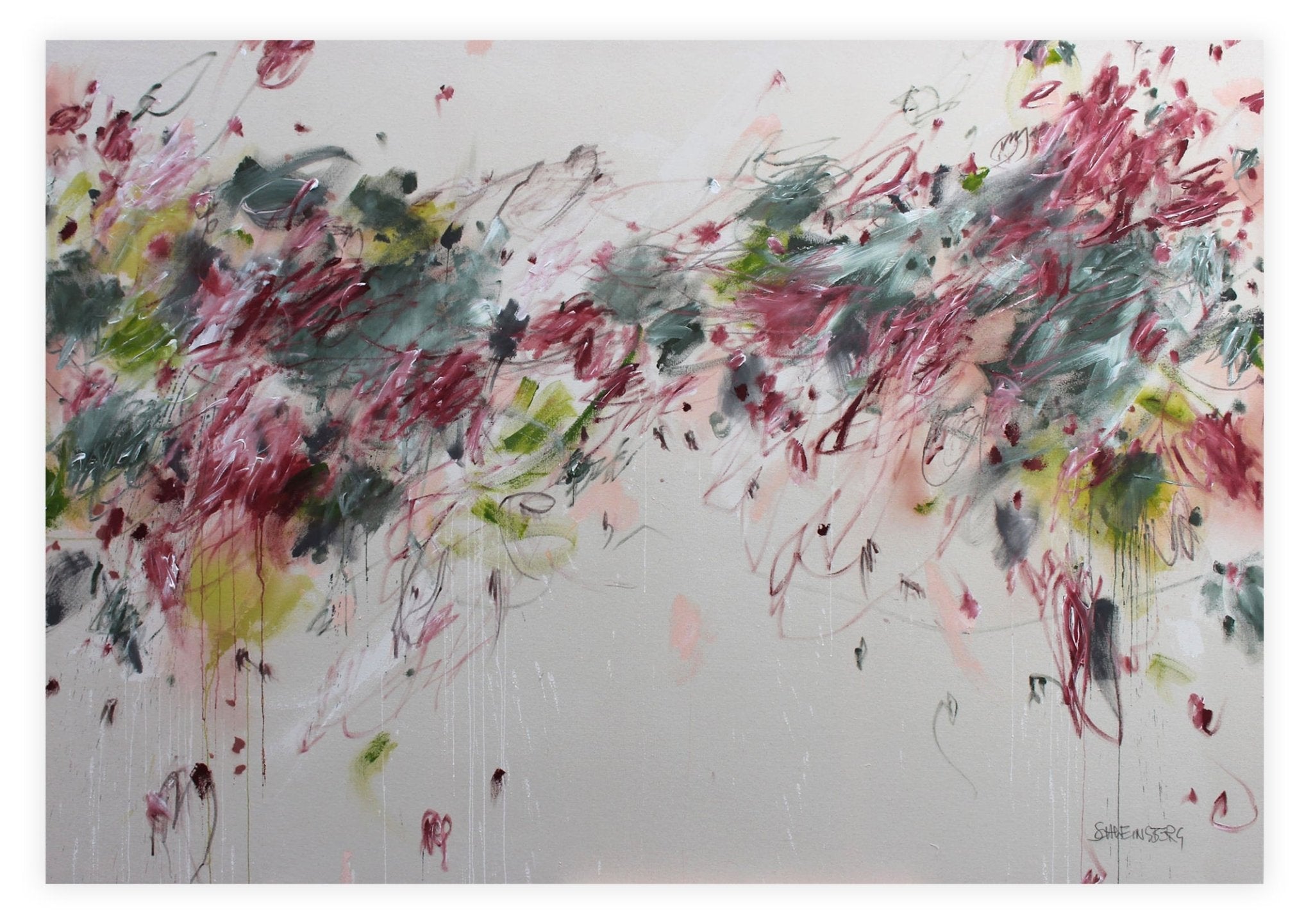
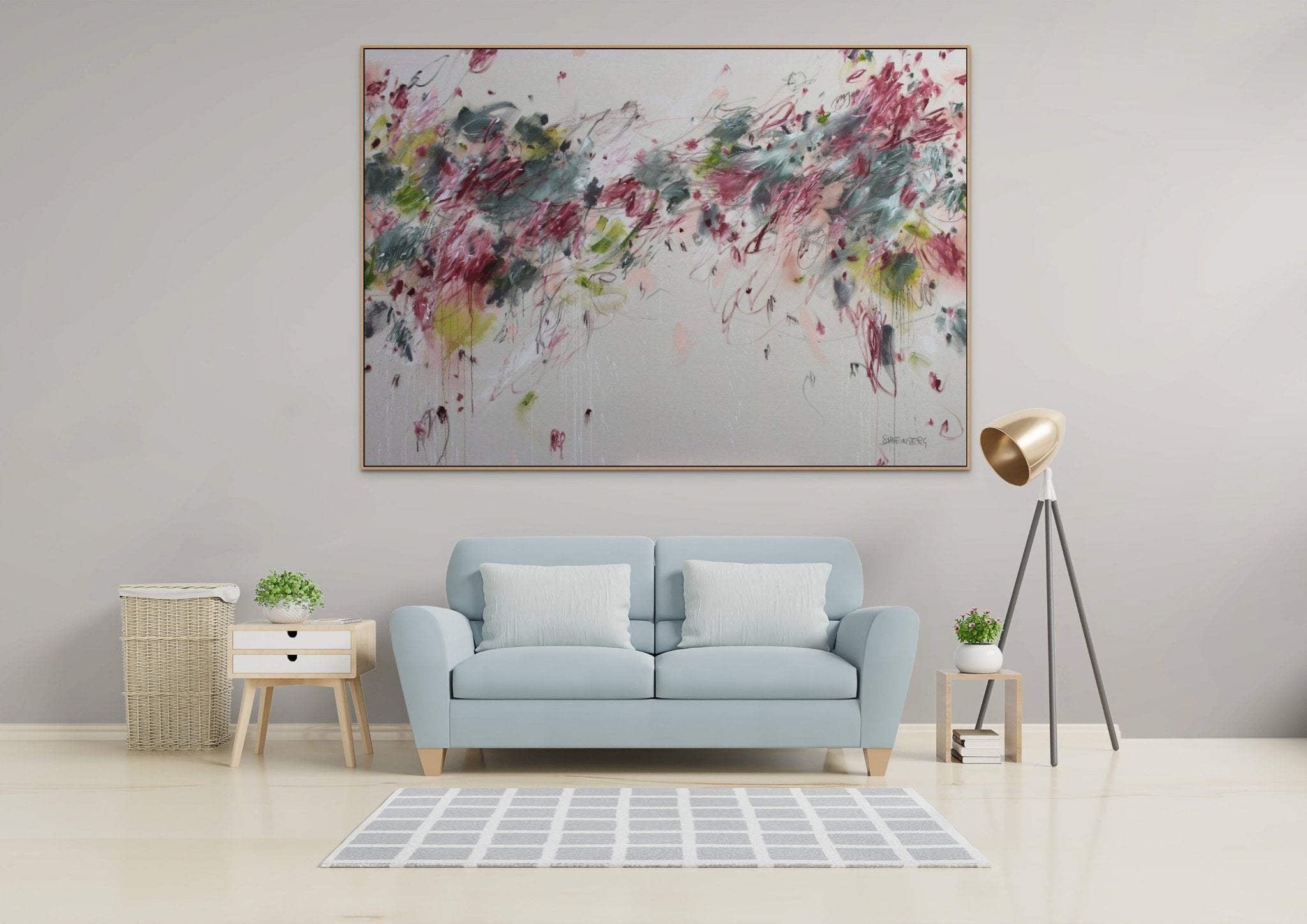
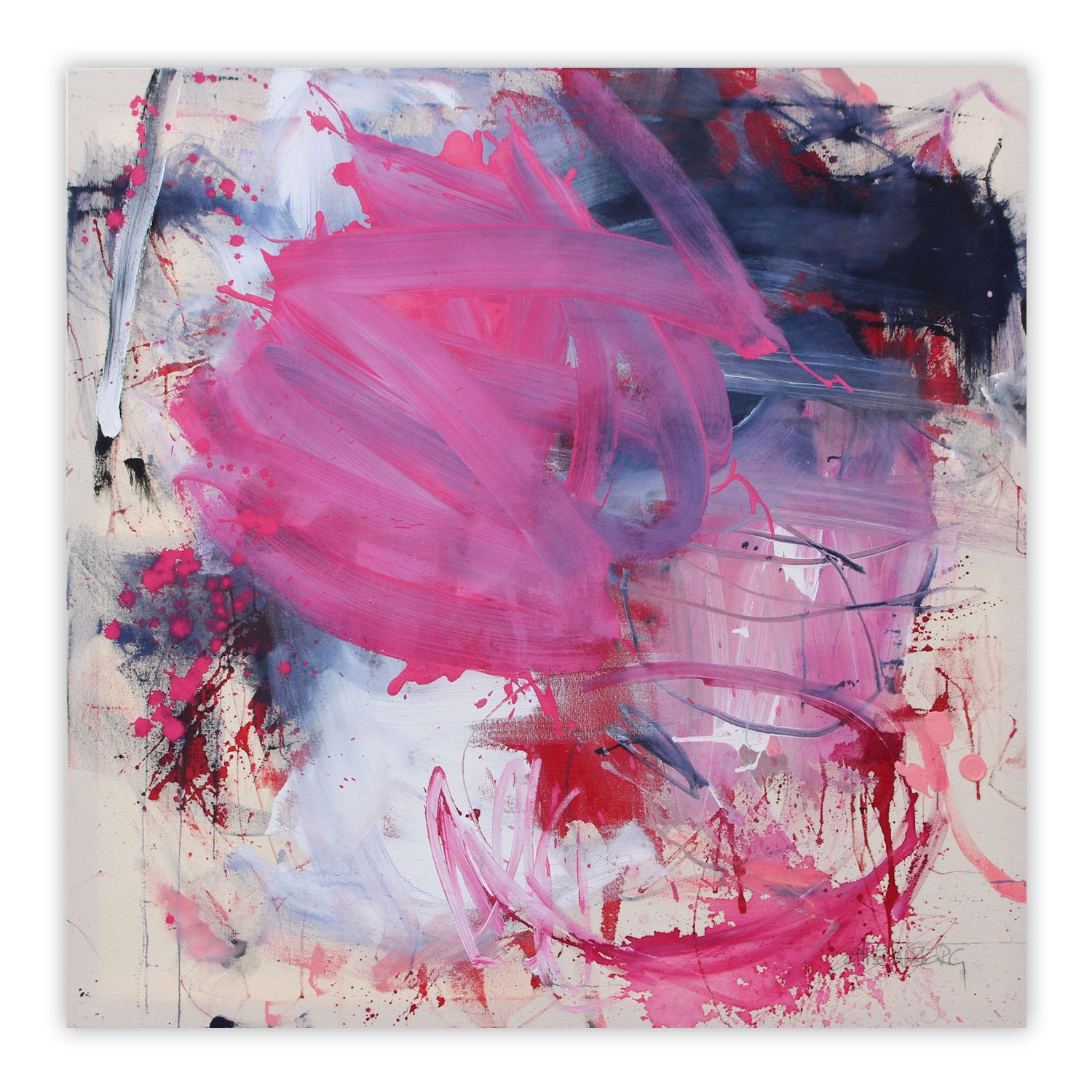
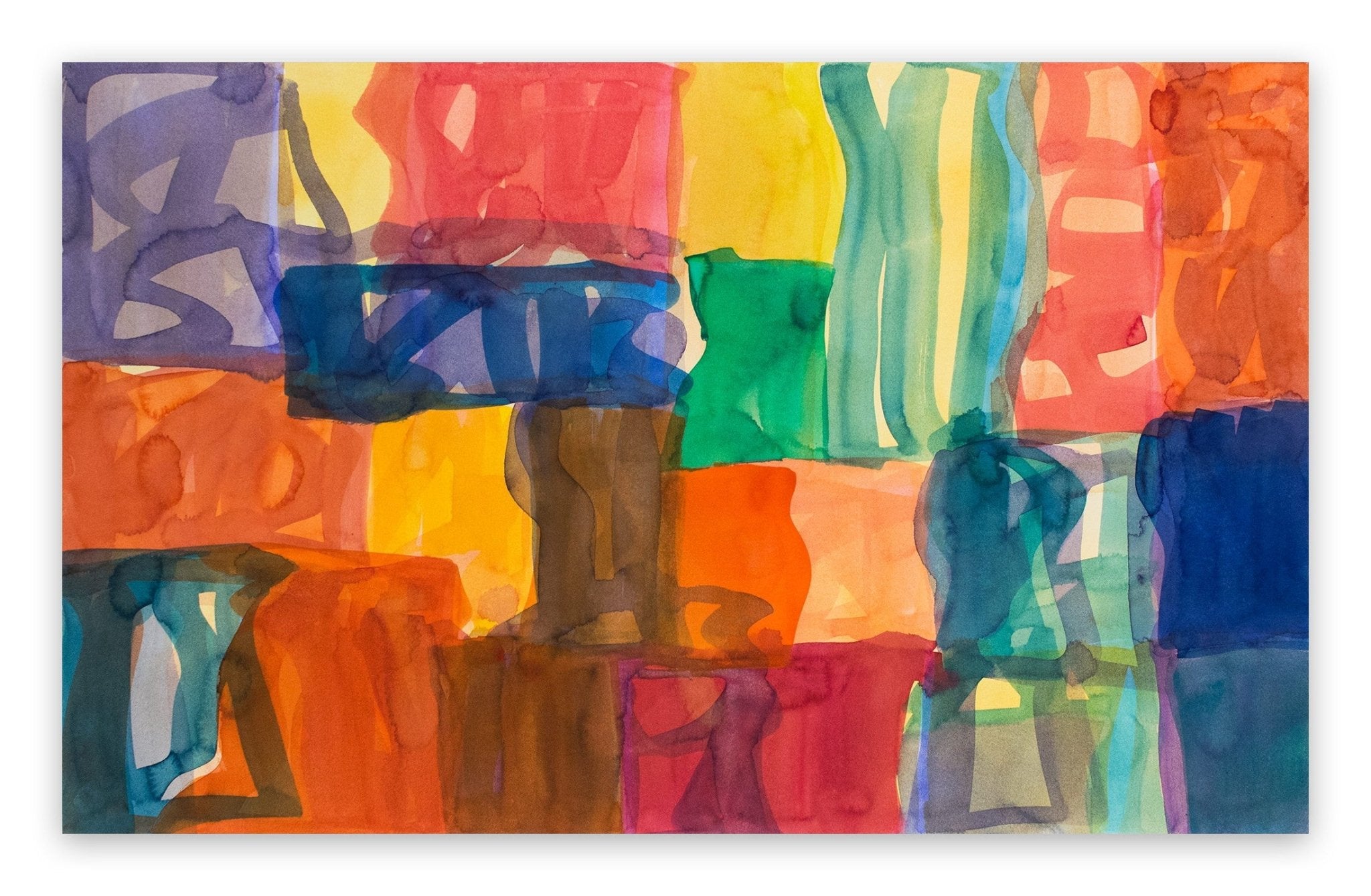
Lyrical Art From Our Inventory (A Selection)