Serious And Not-so-serious: Kyong Lee in 14 Questions
THE LANGUAGE OF COLOR
At IdeelArt, we believe an artist’s story is told both inside and outside the studio. In this series, we pose 14 questions that bridge the gap between creative vision and everyday life, mixing professional insight with the personal quirks that make each artist unique.
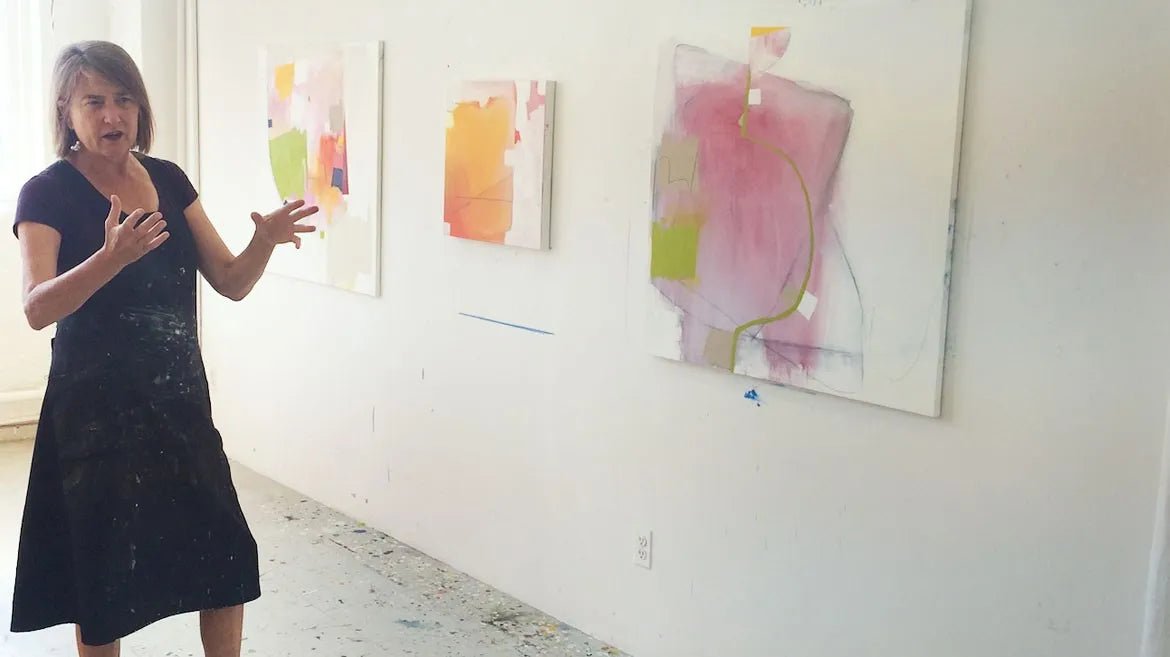
From her studio overlooking Korean rice fields, a space shared with five cats, a dog, and the shifting light of the seasons, Kyong Lee creates work that seeks to turn emotion into a visible language. Discover how a love for jazz, the influence of a thoughtful mentor, and a pivotal shift in materials helped her find the "Emotional Color" that defines her practice today.
The Not-So-Serious Questions
8 questions to reveal unexpected quirks and everyday life of Kyong Lee
If your art was a song or a piece of music, what would be playing in the background?
Miles Davis’s Kind of Blue,
Keith Jarrett’s The Köln Concert,
Pat Metheny’s Travels,
and Debussy’s Clair de Lune.
I spend long hours in the studio, and this music helps me stay inside a quiet, reflective state where color and emotion can unfold slowly.
What's something you're obsessed with or have a strong interest in that has nothing to do with art?
I keep a small vegetable garden, take daily walks with my dog, look after stray cats in my yard, and love watching the sky.

Coffee, tea, or something stronger while you work? Or just light and silence?
I start my day with a single cup of coffee, then switch to tea - often milk tea or yuzu tea - as the day goes on. I always work with music playing, usually jazz. The melodies of artists like Pat Metheny and Keith Jarrett often help keep the rhythm of my work fluid.
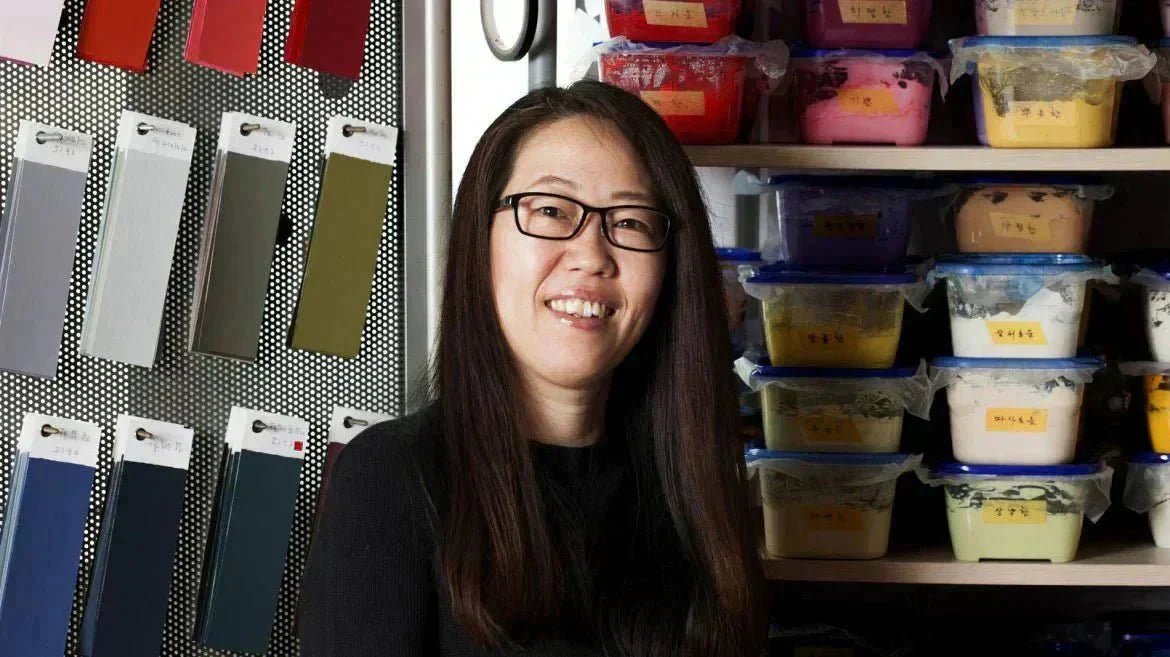
My studio is seamlessly connected to my daily life, shared with one dog and five cats. A small stream flows nearby, and a large zelkova and a cherry tree stand in the yard, surrounded by rice fields. It is an environment where the changing seasons are deeply felt, and I find inspiration during my daily walks here with my dog.
If you could meet with anyone, dead or alive, who would it be?
The late Klaus Stümpfel, my professor at HBK Braunschweig. He taught me through his passion and seriousness toward art. He wasn’t famous, but he was the most important teacher in my life.

If you weren't an artist, what would you be doing?
I’ve been drawn to art since fifth grade, when I began copying Cézanne’s Mont Sainte-Victoire watercolors - this is where the dream first took root. When I later realized that the life of an artist wasn’t the romantic ideal I had imagined as a child, I became even more committed to my work. I’ve never seriously considered another profession, but if I had to imagine one, perhaps I would be a researcher in biology or history - subjects I’ve always loved.
Can you share a short story or moment from your life that had a strong impact on your life as an artist?
One person who has deeply influenced my artistic journey is Christelle Thomas from IdeelArt. Since our first online meeting in 2017, she has supported my work with consistent trust and care.
During moments when I feel emotionally low or creatively stuck, her brief but sincere messages often become a quiet strength that helps me return to my work. Last autumn, she sent me a photo from Paul Cézanne’s studio in Aix-en-Provence. Knowing my admiration for Cézanne, her thoughtful gesture moved me deeply and led me to ask once again: What color is this emotion I am feeling? What words could hold it? And in what form could I give shape to these emotions as they build, layer by layer?
Moments like this - unexpected encounters and subtle emotional tremors - continually renew my sense of curiosity and become the driving force behind my desire to create.

What does a good day look like for you, outside of the studio?
A good day outside the studio is one in which I feel my senses are still alive. Daily routines can dull perception, yet within that repetition, unexpected moments of awareness often emerge.
Walking my dog on a clear day and letting my gaze follow the distant ridgelines, sharing freshly brewed coffee with my husband, or noticing the first azaleas blooming halfway up a mountain after a long winter—these ordinary moments bring me quiet joy.
Most days are filled with repetition and a certain sense of stagnation. But when, within that ordinariness, my senses gently awaken again, that is enough for it to feel like a good day.
Is there something about you that would probably surprise people who know your work only through your art?
I’m a small Korean woman. People who encounter my work before meeting me often admit they imagined the artist as a big man painting these works.

The (More) Serious Interview
6 questions to look deeper into the ideas, experiences, and hopes that shape Lee’s creative journey.
What themes or questions keep coming back in your work?
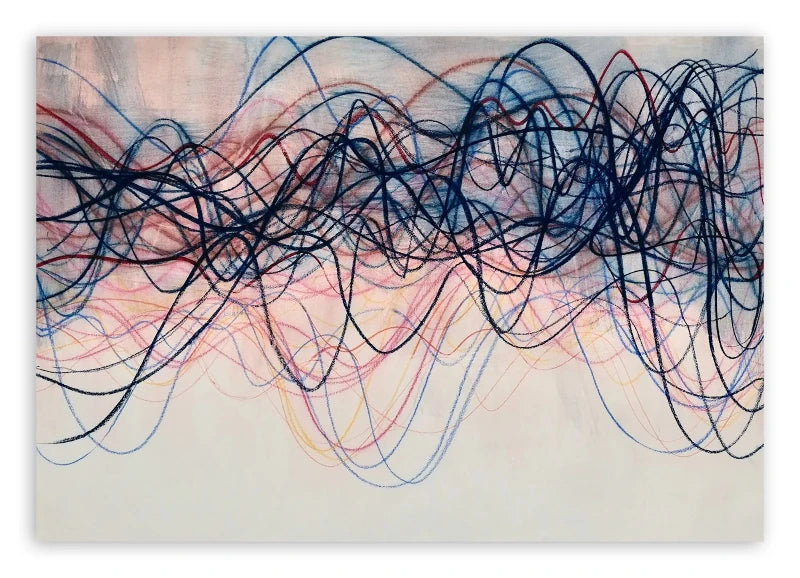
I repeatedly return to the question of how emotion becomes language, and how language, in turn, becomes color. I'm drawn to states before things are clearly defined - where feelings linger, shift, and resist precise naming. It's in this liminal space that I find the truest expression of human experience.
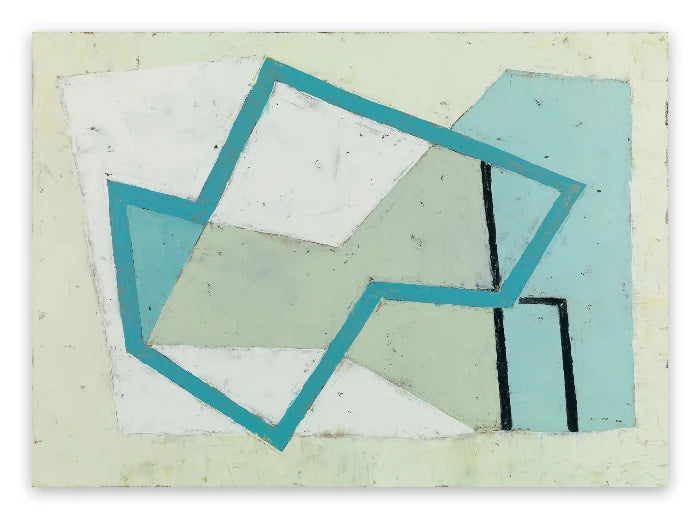
Another recurring element in my work is the horizontal structure. The horizontal bands that appeared in my earlier works and in the ‘Emotional Color Change’ series function as a quiet framework, allowing time, emotion, and perception to unfold evenly rather than hierarchically. Through this structure, I explore accumulation, subtle variation, and the balance between order and chance.
Can you describe a pivotal moment in your journey as an artist?
I left for Germany in the summer of 1991 and returned to Korea in the summer of 2000. During my studies abroad, I created abstract works in oil paint with water as a motif, and continued in the same vein after returning home.
The turning point came in 2001. Through an international exchange program at Ssamzie Space residency, I visited New York and gained two crucial insights. First, Korea's monsoon season was in direct conflict with my working method. The oil painting technique I used - which relied on the separation of water and oil - produced cracks and muddy colors in the high humidity. Second, to realize the horizontal structure I was pursuing, a fundamental shift in materials was necessary. I wanted each color to occupy its own distinct territory on the canvas, not simply blend into gradations.
Collaborating with New York artists gave me the courage to experiment. I began exploring the high-quality acrylic paints that were just becoming available in Korea at the time. The method of applying thick tape horizontally and filling the spaces with paint - this was impossible with slow-drying oils, but feasible with acrylics. This technical shift was not merely a change of materials; it was the decisive moment that opened the path to concretizing the visual language I had been searching for all along.

What materials or processes are most important in your practice, and why?
Working with acrylic paint on paper and canvas is central to my practice. I choose acrylics for their responsiveness to time - how quickly they dry, how precisely they can be layered, and how vividly they hold color. These qualities allow each color to maintain its own territory rather than dissolving into continuous gradation.
I often work with horizontal structures, using tape to define boundaries and creating rhythm through repetition. This process reflects how I understand emotion - as something that accumulates over time, structured yet open to subtle shifts.
Materials matter to me because they allow color to function not as mere representation, but as a record of perceptual and emotional states.
How do you want people to feel when they experience your work?
I hope viewers pause, then feel drawn to move closer to the work. Not to decode it, but to sense emotions quietly returning within themselves, without pressure.
Color reaches us before language - felt before it is explained. If my work can create a moment where emotion arrives before words, and viewers discover a name for a feeling they didn’t yet know within the colors, that is enough for me.

Can you walk us through a typical working day in your studio?
I work only while there is daylight. Even though I use daylight-balanced lights indoors, I avoid working with color at night, as I rely on subtle shifts in natural light. In the evenings, I usually read books or watch movies on Netflix rather than draw. One memorable movie I recently watched was Train Dreams, based on the novel by Dennis Johnson, which I found very impressive.
To stay faithful to the emotions of the day, I work with several canvases or sheets of paper laid out at once. I don’t follow any fixed rituals - each day’s work responds to the emotional and situational conditions of that moment. I focus on my studio work in the morning, take a late brunch around 1 p.m., and continue working through the afternoon until dinner.
What dreams or hopes do you have for your artistic journey?
My "Color as Adjective" series, which explores the relationship between emotion, color, and language, has now surpassed 420 works. Some colors have already been exhausted and can no longer be created, while many others await discovery and creation. I have exhibited these colors in small groupings under the singular noun "beauty."
What I dream of now is to bring the entire series together in a single space. It would be a totality of all the emotions I have discovered, experienced, and sensed - a record of time itself. I hope that within this space, visitors will discover their own emotions through the language of color, and experience the world in ways that are different from, or perhaps the same as, mine.
By Francis Berthomier
All images ©Kyong Lee
DISCOVER THE WORK OF KYONG LEE AVAILABLE ON IDEELART