文章: Serious And Not-so-serious: 14 Questions With Jean-Daniel Salvat
Serious And Not-so-serious: 14 Questions With Jean-Daniel Salvat
The Art of Paying Attention
Ask Jean-Daniel Salvat to describe a good day away from the studio and the answer is wonderfully unambitious but actually very profound: doing nothing. Not waiting for inspiration, not gathering material, simply escaping the obligation to be productive. "Idleness may well be the most underrated form of freedom", says Salvat, and I could not agree more.
For an artist whose work asks us to reconsider what we see, that willingness to leave things open feels telling.
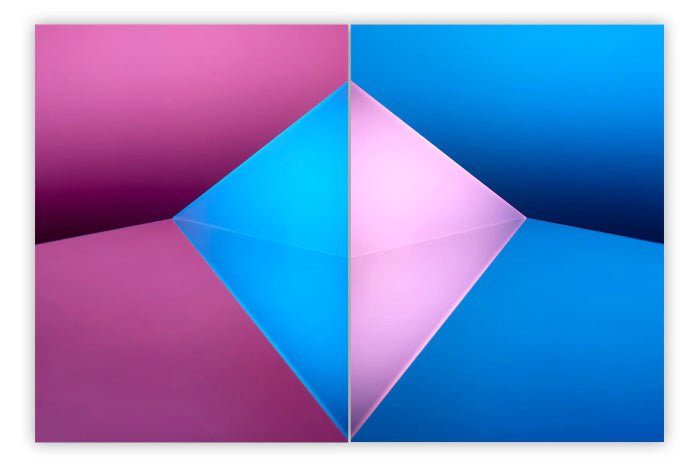
In his Reverse Paintings, Salvat works on the back of transparent vinyl, placing the painted gesture on the other side of the surface we encounter. The image is visible, but the physical act that brought it into being remains at a distance. Painting becomes a way of thinking about perception, rather than a means of settling what is real.
Our 14 questions take a less direct route into that practice: through Glenn Gould playing Bach, a decade in New York, the appeal of quantum physics and a former life at the baccarat table. Along the way, Salvat explains why attention can matter more than action, and why a painting should outlast the explanations attached to it.
Bach, Baccarat and the Freedom to Do Nothing
Before the studio questions, a few detours into the life around it.
1 - If your art was a song or a piece of music, what would be playing in the background?
I would choose Bach’s Goldberg Variations, performed by Glenn Gould. A rigorous structure that is constantly transforming, where repetition is never quite repetition: something of that nature runs through my work as well.

2 - What's something you're obsessed with or have a strong interest in that has nothing to do with art?
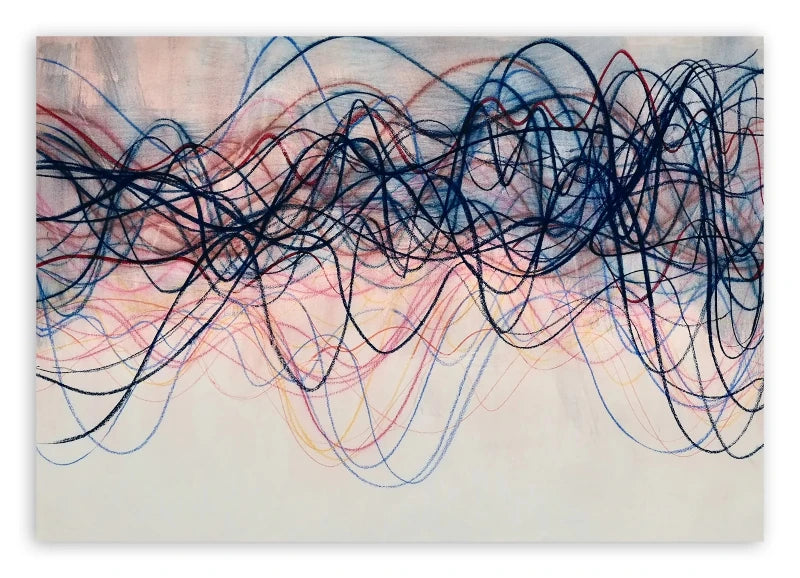
Quantum physics, particularly theories that challenge our intuitive understanding of time and reality. It is not so far removed from my artistic practice: my latest series, Time Loops, resonates with string theory and the idea that our perception of the world may grasp only a tiny fraction of what is actually there.
3 - Coffee, tea, or something stronger while you work? Or just light and silence?
Light and silence, whenever possible. I need that particular state of receptiveness in which the slightest shift, the smallest variation in perception, can become decisive. Painting sometimes demands less action than attention.

4 - If you could meet with anyone, dead or alive, who would it be?
Marcel Duchamp. I would like to understand how he managed to shift the very question of art: away from what a work represents or how it is made, and towards the conditions that make us recognize something as art in the first place.
5 - If you weren't an artist, what would you be doing?
I could easily imagine myself working in philosophy. What interests me about painting goes far beyond the making of images: it is a way of thinking, of testing our categories and questioning our relationship with reality.

6 - Can you share a short story or moment from your non-artistic life that had a strong impact on your life as an artist?
Living in New York between 1995 and 2005 profoundly broadened my relationship with the world. Moving between languages, environments and cultural references forces you to look differently at what you once took for granted. That experience nurtured my independence and shaped the way I approach painting.
7 - What does a good day look like for you, outside of the studio?
Doing nothing! Or rather, freeing myself from the obligation to do something. I enjoy those moments when time is no longer organized around a goal, when you can simply be, without having to produce, understand or even think. Idleness may well be the most underrated form of freedom.

8 - Is there something about you that would probably surprise people who know your work only through your art?
Thirty years ago, I used to play baccarat in prestigious casinos, which took me to many capitals around the world. That chapter of my life is now behind me.
On the Other Side of the Surface
Salvat turns to the decisions behind his paintings, and the questions he prefers to leave unanswered.
9 - What themes or questions keep coming back in your work?
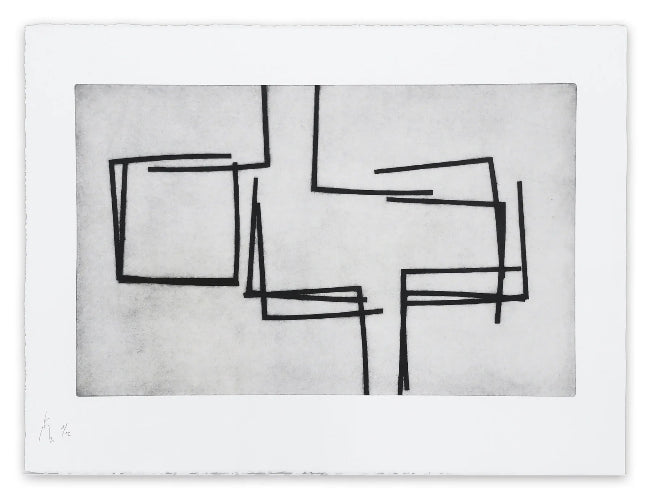
I continually return to the surface, visibility and the relationship between image and support. What exactly are we seeing when we look at a painting? And what happens when the gesture that produced it is removed from our perception? These are less themes to illustrate than questions to keep open.

10 - Can you describe a pivotal moment in your journey as an artist?
The development of my Reverse Paintings marked a decisive shift: painting on the reverse of transparent vinyl means working on a surface where the viewer cannot directly access the gesture itself. The painting appears on the opposite side, like an image from which the tactile trace of its making has been withheld. This reversal allowed me to question the materiality of the painting and the conditions under which it comes into view in an entirely different way.
11 - What materials or processes are most important in your practice, and why?
Transparent vinyl is essential to my Reverse Paintings because it is not simply a neutral support: it changes the status of the painting and the way we look at it. By painting on the reverse, I invert the conventional relationship between gesture, material and image. The surface becomes both a site of production and a screen separating us from what has taken place.

12 - How do you want people to feel when they experience your work?
I prefer not to prescribe an emotion. Rather, I would like viewers to experience a subtle shift in the way they see, to hesitate between what seems immediately visible and what remains beyond their grasp. A work interests me when it cannot be reduced to what can be said about it.
13 - Can you walk us through a typical working day in your studio?
The day begins with observation and decision-making: looking at what is taking shape and determining what should be pursued or interrupted. Making the work involves gesture, but also an essential process of stepping back and exercising judgment. One must accept that the painting can resist the initial intention and that the outcome is never entirely predictable.

14 - What dreams or hopes do you have for your artistic journey?
I would like my work to continue opening up questions rather than confirming answers that are already known. I hope it can be experienced over time, independently of the fashions and discourses surrounding contemporary art. Ultimately, perhaps the aim is to create works that retain their capacity to shift our perception, even long after they have been made.
There is a useful invitation in Salvat’s reluctance to tell us what to feel: we can return to the paintings without having to arrive at the same reading. The loops may recur, but the eye takes a different route each time. After the conversation, it seems worth trying his preferred approach: a little less effort to explain, a little more time to look.
By Francis Berthomier