
Serious And Not-So-Serious: Cristina Ghetti in 14 Questions
THE RHYTHM OF GEOMETRY
At IdeelArt, we believe an artist’s story is told both inside and outside the studio. In this series, we pose 14 questions that bridge the gap between creative vision and everyday life—mixing professional insight with the personal quirks that make each artist unique.
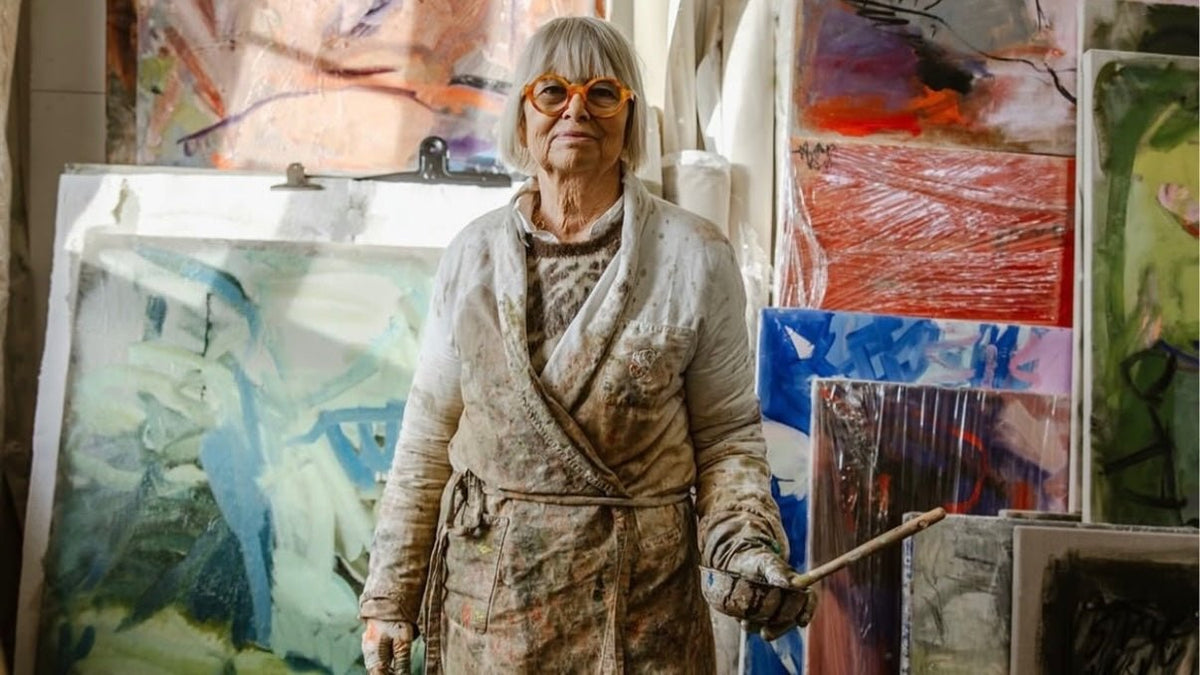
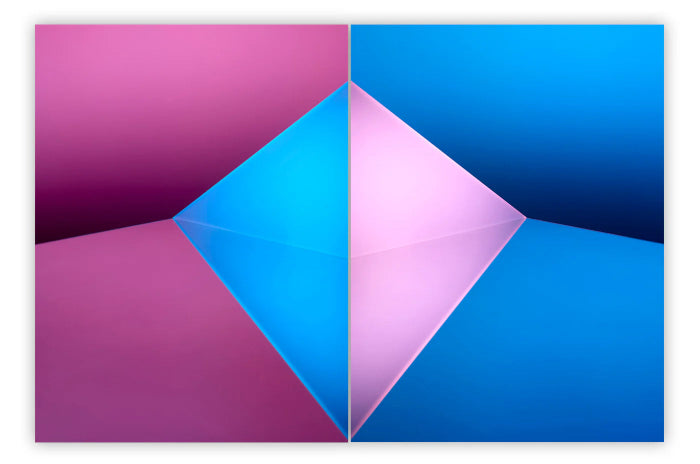
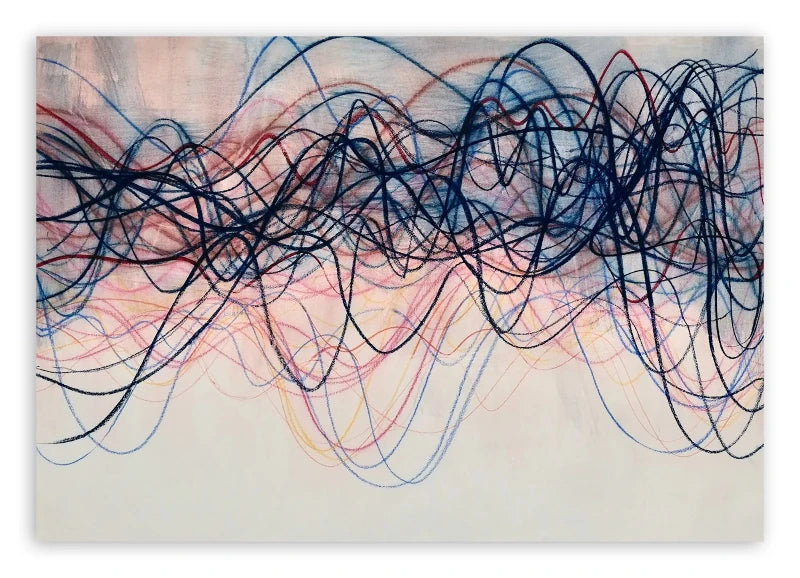
Today, we explore the vibrant, kinetic world of Cristina Ghetti. Based in Valencia, Cristina blends digital algorithms with traditional painting to create works that pulse with energy. Discover her passion for electronic music, her "messy" approach to sketching, and why she believes the most important tool in any artist's studio is actually the chair.
The Not-So-Serious Questions
8 questions to reveal unexpected quirks and everyday life of Cristina Ghetti.
If your art was a song or a piece of music, what would be playing in the background?
Sometimes I need electronic music like Robert Babicz, sometimes something happy like Metronomy, and sometimes very meditative pieces like Erik Satie or Oriental music, it depends on my mood.
What's something you're obsessed with or have a strong interest in that has nothing to do with art?
Oriental philosophy, buddhism and hinduism.

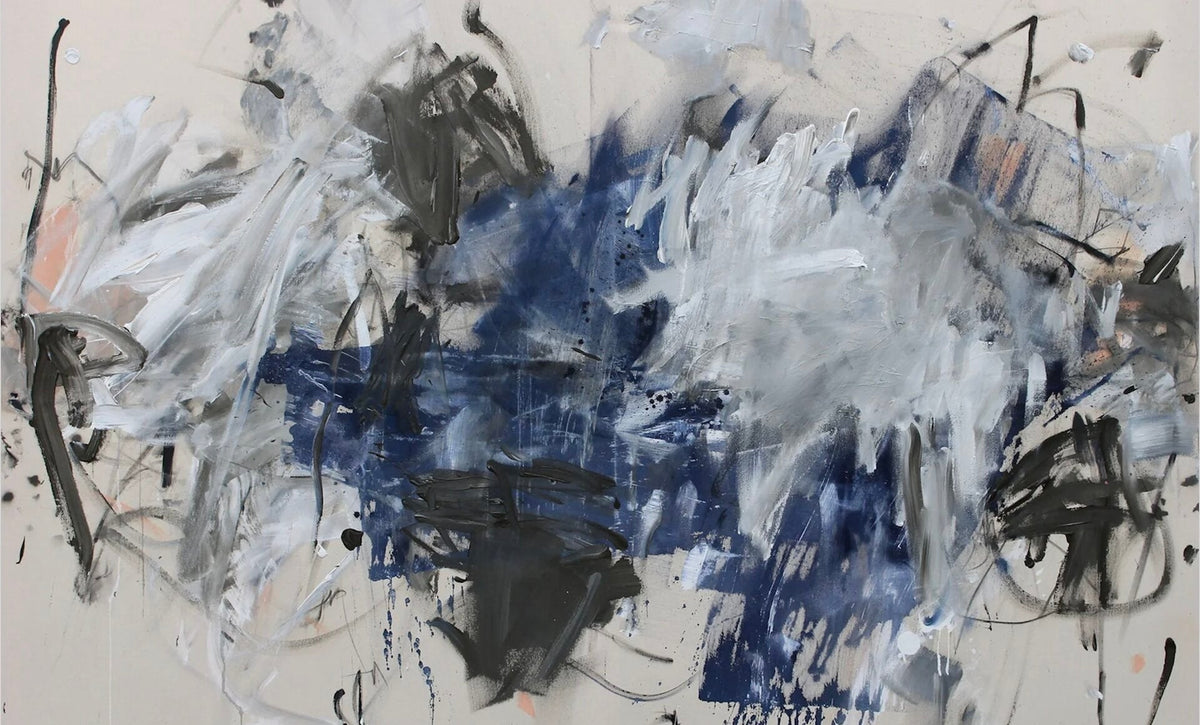
Cristina Ghetti - Double Wave Black - 2017
Coffee, tea, or something stronger while you work? Or just light and silence?
Coffee forever :)
If you could meet with anyone, dead or alive, who would it be?
Jesus, I think it would be so beautiful to talk to him personally
 Cristina Ghetti - S/T - 2020
If you weren't an artist, what would you be doing?
If I hadn't been an artist I would love to be a gardener or do something related to animal care or rescue.
Can you share a short story or moment from your life that had a strong impact on your life as an artist?
An important turning point was the day, during my art school studies, after two years of drawing and painting still lifes, that a professor allowed me to do abstract work. It was absolute joy and something I was looking forward to since the begining.
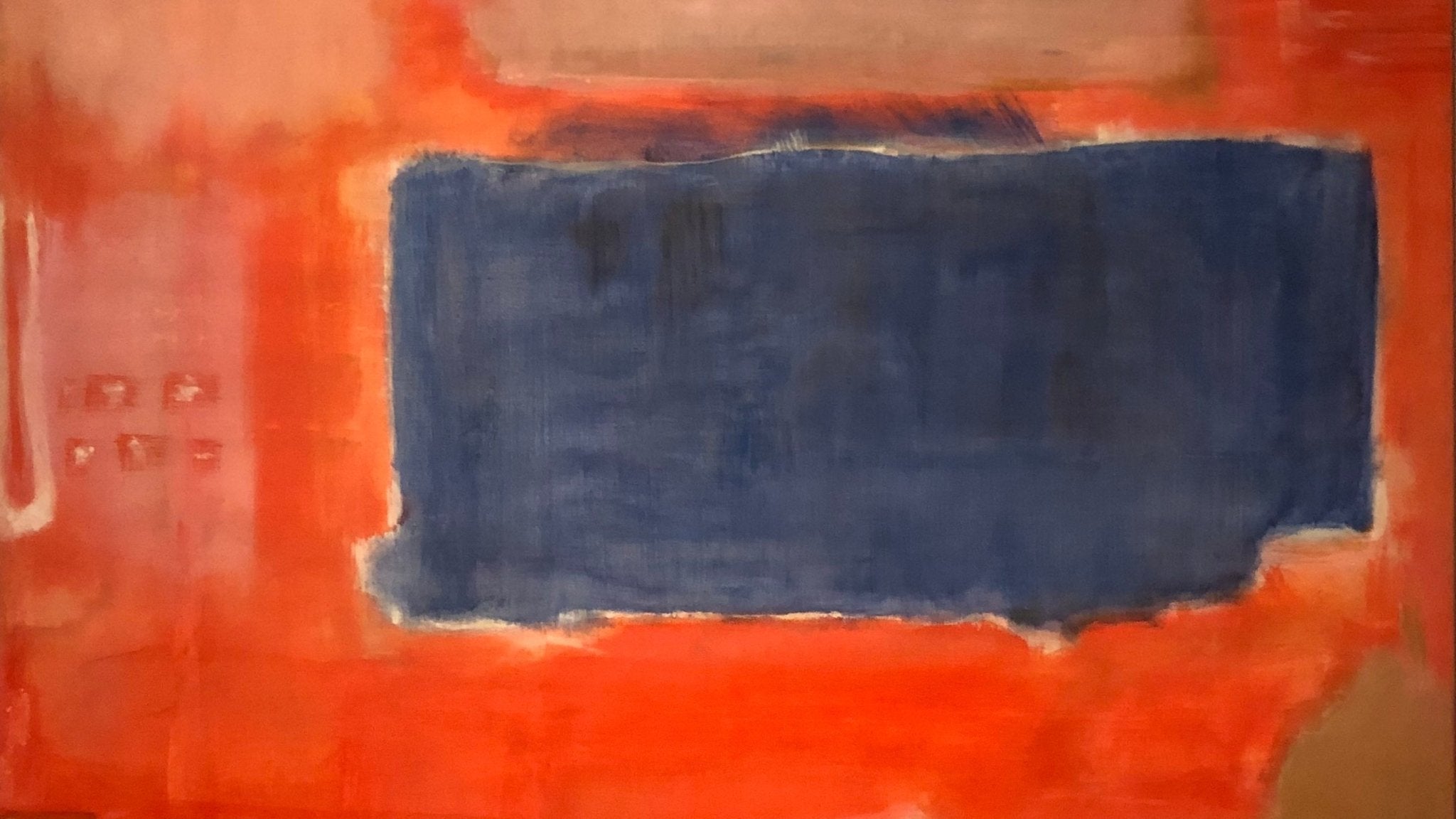
Another turning point was the day I faced a Rothko's work, I just started to cry and realised how blessed we are as artists.
 Cristina ghetti - Mareas - 2024
What does a good day look like for you, outside of the studio?
A sunny day, in nature, a walk on the beach or in the mountains... Luckily we have both in Valencia!
Is there something about you that would probably surprise people who know your work only through your art?
Maybe my art looks more serious than how I truly am: I love partying and I'm a bit of a clown too!
 Cristina Ghetti - Pinky - 2018
The (More) Serious Interview
6 questions to look deeper into the ideas, experiences, and hopes that shape Ghetti’s creative journey.
What themes or questions keep coming back in your work?
Several recurrent ideas are present in my work, emerging consistently across all my material processes. These ideas do not appear as explicit themes but as operative principles that shape how the work is made and experienced.
Repetition
Repetition in my work functions as a method. Each repeated gesture accumulates time and attention; repetition becomes a way of thinking through doing.
Error, deviation, and contingency
Small irregularities, misalignments, material resistance, and slight failures are not corrected but integrated. Error operates as a productive force, revealing the limits of systems and the impossibility of total control.
Materials
They are never neutral. Threads, paper, lines, and surfaces assert their physical presence, emphasizing touch, friction, and resistance.
Geometry
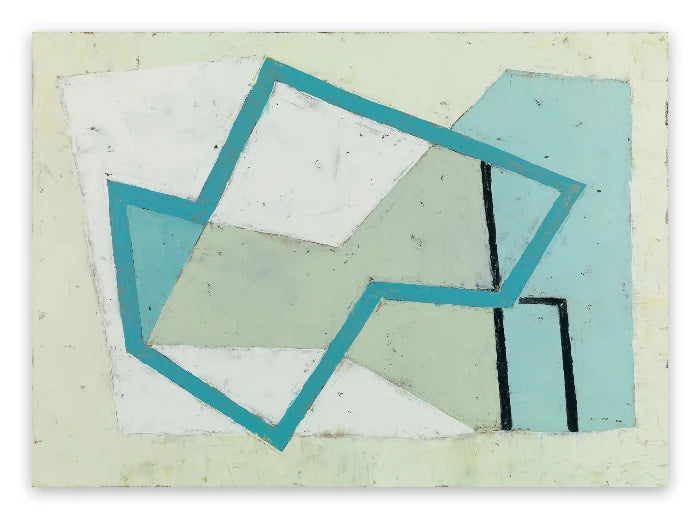
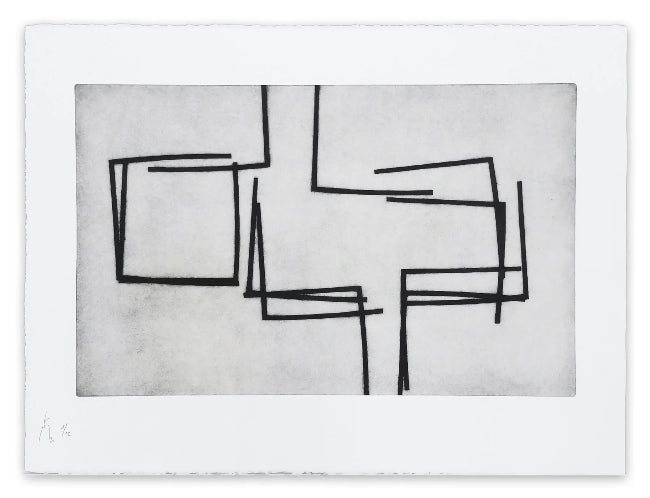
Geometric forms appear not as ideal or universal abstractions but as lived, negotiated structures. Geometry is softened, destabilized, and re-rooted in manual labor, time, and subjectivity.
Feminist resonances
While not illustrative, I want to resonate with feminist critiques of modernist abstraction: challenging ideals of neutrality, mastery, and detachment, and proposing instead situated knowledge, embodied labor, and relational perception.

Cristina ghetti - Gradient #1 - 2023
Can you describe a pivotal moment in your journey as an artist?
When I departed from my country, Argentina.
Beginning to travel (as I lived in many places for some years) disrupted my habits of seeing, making, and thinking. Being in unfamiliar places heightens awareness. Everyday gestures—walking, observing, orienting oneself—become more conscious acts. This sharpened attention often carries back into the studio; all this has shaped my art practice deeply.
What materials or processes are most important in your practice, and why?
I work mostly with painting, but also with paper and thread. Most of the process is a repeated gesture of the hand, using slow, manual processes that emphasize time, tactility, and material resistance. My works are built through accumulation and repetition, allowing small deviations and errors to remain visible as part of the structure.
I like to experiment with different media. Performance and video function as opening practices in my work: spaces to test repetition, duration, and bodily rhythm before they condense into material form. These practices foreground process, reinforcing an approach in which making is a form of thinking, and the trace of time and action is central to the work.
How do you want people to feel when they experience your work?
I would love to inspire a form of attentive looking that is ethical as much as aesthetic—asking viewers not only what they see, but how they look, how long they stay, and what kinds of knowledge emerge from that experience.
The absence of narrative can push viewers toward introspection rather than interpretation.
Also, I would like for viewers to perceive geometry as embodied, contingent, and subjective, instead of reading it as rigid or universal.

Cristina Ghetti - Morocco Series 3 - 2022
Can you walk us through a typical working day in your studio?
My studio is located in my own home, so it's very easy for me to go down after breakfast. I usually work late into the morning, until about 2 pm, then have lunch. I either come back to painting or spend some afternoons working on digital projects, like sketching or doing office work, as I manage all my work myself.
What dreams or hopes do you have for your artistic journey?
My aspirations are less about fixed goals and more about ongoing desires that shape a way of working and being in the world: giving form to what is difficult to name—sensations, intuitions, contradictions, or states of being that resist language.
I aim to remain faithful to my inner necessity, continuing to work despite doubt, invisibility, or uncertainty. And certainly, I hope to reach others quietly, without explanation or persuasion, opening a space for attention, slowness, or reflection in a very distracted world.
By Francis Berthomier
All images ©Cristina Ghetti
CLICK HERE TO DISCOVER THE WORK OF CRISTINA GHETTI AVAILABLE ON IDEELART