文章: Serious And Not-so-serious: 14 Questions With Xanda McCagg
Serious And Not-so-serious: 14 Questions With Xanda McCagg
Painting as a Language of Connection
At IdeelArt, we believe an artist's story is told both inside and outside the studio. In this series, we pose 14 questions that bridge creative vision and everyday life, mixing professional insight with the personal details that make each artist unique.
Today, we meet Xanda McCagg, an American abstract artist who lives and works in New York City's Chelsea neighborhood. For Xanda, painting is a language of connection. Through form, gesture and color, she explores human behavior and the layered complexity of experience, bringing the rhythms of music and movement into her studio practice.
From dancing between canvases to an unexpected discovery among torn drawings, Xanda shares the experiences that have shaped her work. She also recalls a moving lesson from her mother, sculptor Louise McCagg, about the enduring impulse to create, and explains why she hopes her paintings leave viewers with a curiosity that lasts.
The Not-So-Serious Questions
Eight questions about Xanda McCagg's everyday life and unexpected interests.
1 - If your art was a song or a piece of music, what would be playing in the background?
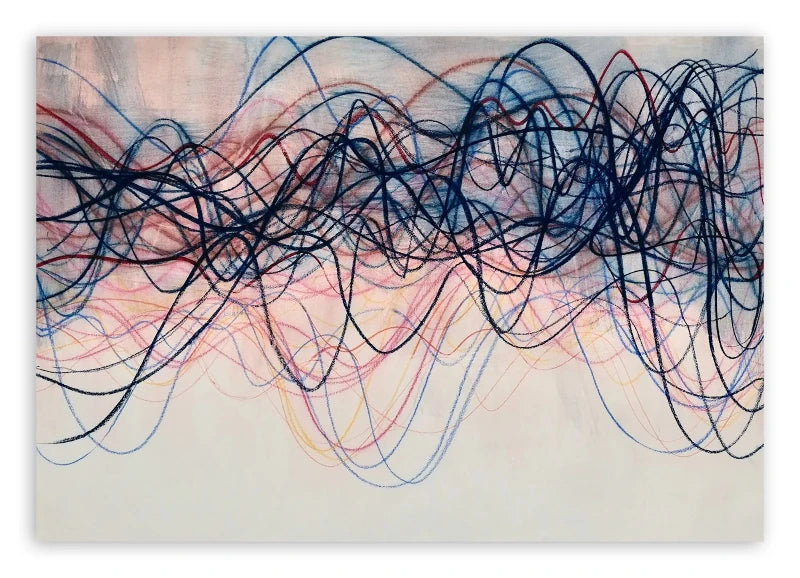
I think of my paintings like a symphony, with a soprano aria intertwined. Some of them are Jazz, R&B, a Rachmaninoff piano concerto, or dance music, passionate and physical!

2 - What's something you're obsessed with or have a strong interest in that has nothing to do with art?
I practice Qi gong and Tai chi.
3 - Coffee, tea, or something stronger while you work? Or just light and silence?
Tea or a seltzer! While working, I might listen to books or podcasts spanning subjects from art to history to philosophy and science. I also love to dance when working, either to swing or Latin salsa, or, depending on how I am feeling, I just listen to zen or classical.

4 - If you could meet with anyone, dead or alive, who would it be?
The wonderful historian David McCullough, whose books I have read over the years, but most recently I was given “History Matters,” a compilation of his speeches and talks. He speaks of his process and life: very inspiring words, a reminder that it's not a straight line, and to keep open and in the process!
5 - If you weren't an artist, what would you be doing?
I'd be a travel writer.

6 - Can you share a short story or moment from your non-artistic life that had a strong impact on your life as an artist?
There was a moment with my mother, sculptor Louise McCagg, that impacted me deeply. She suffered from Parkinson's in the last years of her life and in the end was unable to do much for herself. She would say, “I want to draw” and we would put the pencil in between her stiffening fingers and, with little motor ability, she would begin to push and pull the pencil across the paper. It showed me the great lesson that being an artist is innate. It never dies. We must keep doing whatever we do in life, no matter what. We all go through moments of discouragement or blocks, but our artistic urges are there waiting!
7 - What does a good day look like for you, outside of the studio?
Coffee! Reading, running, practicing Qi gong, reading, getting out to see people and exhibitions, swimming in the ocean at ALL times of the year, or getting into nature.

8 - Is there something about you that would probably surprise people who know your work only through your art?
I love dancing and have practiced tango, salsa, and swing! AND I am a Dachshund mother :)
The (More) Serious Interview
Six questions about the ideas, experiences and hopes that shape Xanda McCagg's creative journey.
9 - What themes or questions keep coming back in your work?
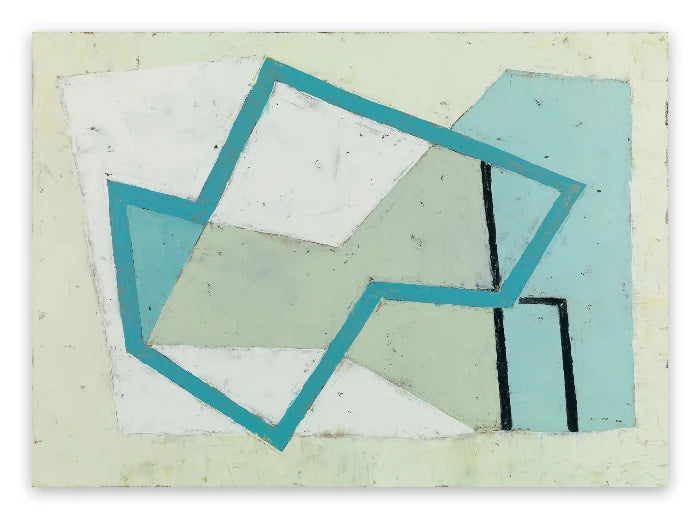
Human behavior is endlessly fascinating to me. Through form, gesture, and color, I explore abstraction as a kind of visual poetry, using metaphor and layered meaning to express the complexity of human experience.

10 - Can you describe a pivotal moment in your journey as an artist?
In the 90s, I was at an artist residency making imagined figurative pieces with pastel on paper. I had been making this work for a while and was at a point when I needed to change, to push into new work, a point that all creatives come to. I was feeling stuck and began to tear up the drawings. Then I noticed the relationships of the pieces piled on the floor and got excited! I began collaging the pieces together, creating my first abstractions.
11 - What materials or processes are most important in your practice, and why?
I use paint, paint sticks, and pencils to draw, going back and forth between the materials on canvas or paper. Marking and rubbing colors into one another is like the glazing technique of Renaissance painters, but without drying between layers. This is where my work sometimes resembles watercolor. Then, in other moments, it is like a thicker impasto when I let the paint build up or just put it on thick.
12 - How do you want people to feel when they experience your work?
For me, it’s less about a particular emotion and more about an invitation to stop and notice. No matter what, you will feel something when you look at a piece of art, but the thing that means the most to me is that the experience elicits a curiosity that would continue to inspire the viewer even after they’ve left.
13 - Can you walk us through a typical working day in your studio?
First, I plan a set time to work. I carve out time each day, even if I only have an hour or two, as I feel it's important to keep in the process. That can mean actively painting, reading, writing, or simply sitting with the paintings to look. Often I set an alarm in order to compartmentalize my working time and admin work. I find this helps me focus.
I usually start by listening to a book, then music and moving helps to get started. I have a ream of paper set up so, if I'm not feeling inspired, I can just start with a line drawing, then move on to painting. I work the whole room, having many canvases going at once, one inspiring the others. I developed this technique in part because the oil paint needs time to dry, and when I began working abstractly I needed more flexibility, not wanting to be stopped by waiting periods.

14 - What dreams or hopes do you have for your artistic journey?
My painting practice naturally flows into connections with people. Art is my way of communicating. Music, dance, the visual arts, writing, all forms of language that connect with the innate human need to be in dialogue and to express. I believe the arts, including mine, inspire and challenge a viewer to understand a different perspective. Creating shifts us emotionally and physically to use the mind, to consider another perspective, to capture elements of life or history, and to be present or create moments of solace and peace.
By Francis Berthomier
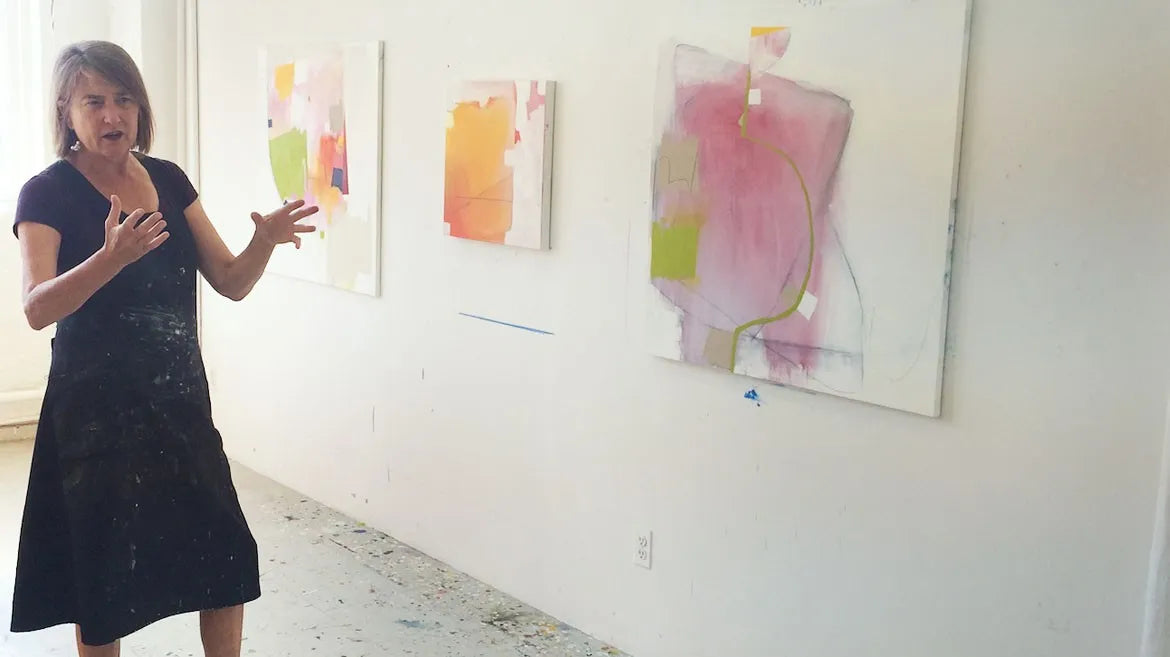
Featured image: Xanda McCagg in her studio Chelsea (New York City) ©Xanda McCagg