Serious And Not-So-Serious: Pierre Muckensturm in 14 Questions
THE PRECISION OF SILENCE
At IdeelArt, we believe an artist’s story is told both inside and outside the studio. In this series, we pose 14 questions that bridge the gap between creative vision and everyday life, mixing professional insight with the personal quirks that make each artist unique.
Today, we meet Pierre Muckensturm. Drawing on his heritage as the grandson of a carpenter and a tailor, Pierre crafts works defined by architectural rigor and mathematical grace. Discover his love for classic 2CVs, his passion for beekeeping, and how he uses "entasis" to give his minimalist compositions a life of their own.
The Not-So-Serious Questions
8 questions to reveal unexpected quirks and everyday life of Pierre Muckensturm
If your art was a song or a piece of music, what would be playing in the background?
The background music of my work should be structured around a slow, repetitive, almost mathematical melodic line, disrupted by small, slightly irritating elements. It should employ recurring motifs that evolve and change very gradually. The first act of Philip Glass's opera Einstein on the Beach seems to me to correspond to the spirit of many of my works.
What's something you're obsessed with or have a strong interest in that has nothing to do with art?
The sauna. While I doubt it's possible to consider this activity a hobby or a passion, I know from experience that a perfect day must combine art and sauna.

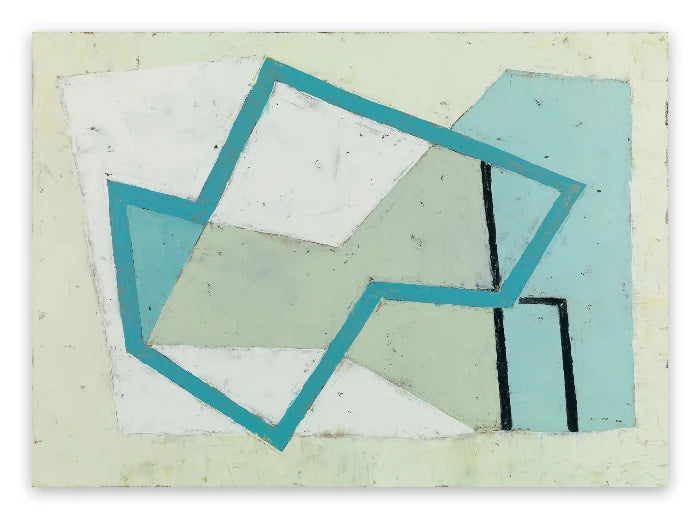
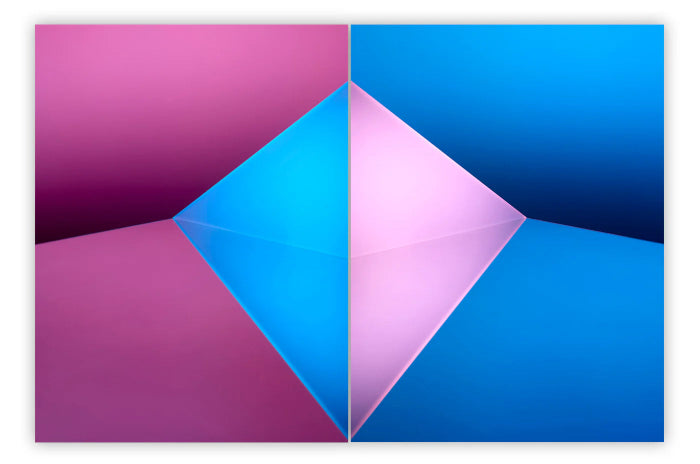
Pierre Muckensturm - XX 10161 - 2020
Coffee, tea, or something stronger while you work? Or just light and silence?
A coffee before entering the studio in the morning, another for a mid-morning break, are part of an unchanging ritual. I particularly enjoy working while listening to podcasts that address questions of creation, philosophy, or psychoanalysis.
If you could meet with anyone, dead or alive, who would it be?
I never knew my grandfathers. One was a carpenter, the other a tailor.
I can't shake the feeling that my artistic practice is inevitably part of this continuity, canvas, frame, painting. Meeting them would allow me to share experiences and pool the intelligence and exacting standards of our respective skills.
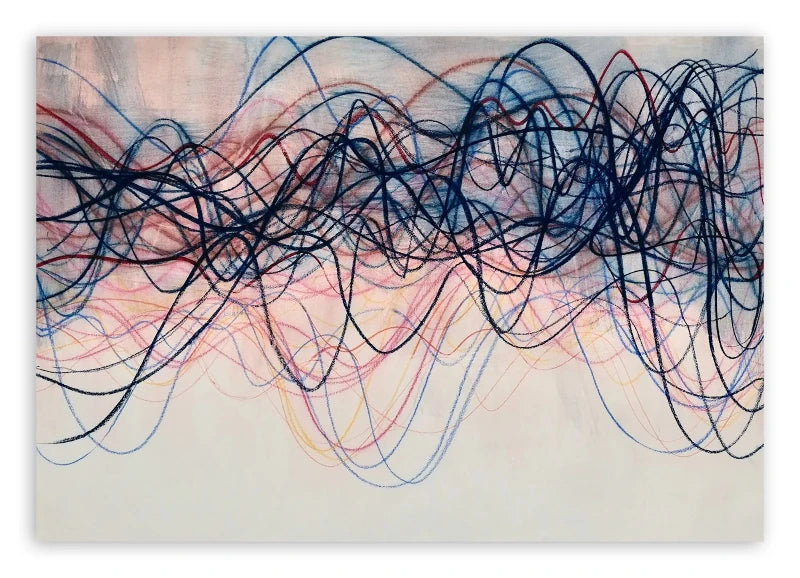
 Pierre Muckensturm - XXIV 33 212 (Diptych) - 2024
If you weren't an artist, what would you be doing?
Environmental crises affect me deeply. I am convinced that the survival of bees is essential for our planet's resilience. If I weren't creating art, I would be a beekeeper.
Can you share a short story or moment from your life that had a strong impact on your life as an artist?
In 2004, discovering the Notre Dame du Haut chapel designed by Le Corbusier was a revelation.
Inside the building, it was the perfect balance between void and solid, between lightness and weight, that moved me. Since then, this feeling of perfect harmony has influenced all my work.
 Pierre Muckensturm - 204C1741 ABCD - 2020 - Quadriptych
What does a good day look like for you, outside of the studio?
It would be a hot summer day. In a place where time stretches out to the point of sometimes seeming to stand still. This place would be isolated from the world but open to the view of a majestic and arid mountain range. This day would unfold to the rhythm of nature. It would be spent with family and friends around large tables in a friendly and relaxed atmosphere.
It would be punctuated by swims in the stream and periods of rest in the shade of large trees, and would end with the observation of a starry sky.
Is there something about you that would probably surprise people who know your work only through your art?
For almost 40 years I've always owned and driven Citroen 2CVs. The first was green, the second red, and the current one is gray. I appreciate the simplicity of the design and construction of this iconic and popular French car. It has nothing superfluous, just the essentials.
 Pierre Muckensturm - XXIV 12 041 - 2024
The (More) Serious Interview
6 questions to look deeper into the ideas, experiences, and hopes that shape Lee’s creative journey.
What themes or questions keep coming back in your work?
Since 2019, my work has been based on my discovery of the use of "entasis" by ancient architects.
[a note from the editor: In architecture and art, entasis is a slight convex curve applied to a column or surface to correct the optical illusion of it looking concave, giving it a more "organic" and stable appearance.]
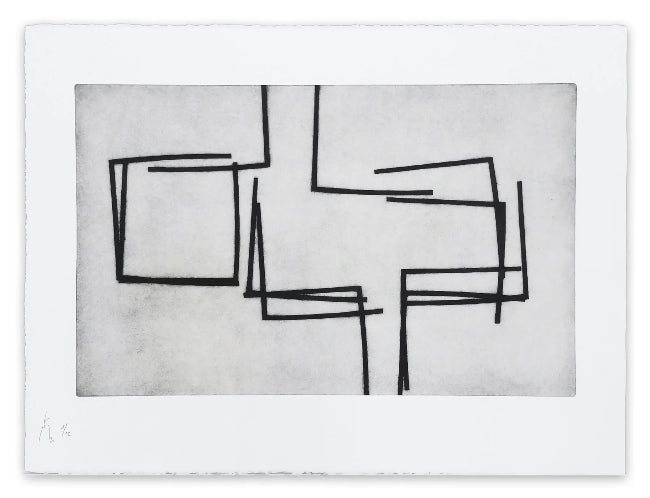
I introduce almost imperceptible curved lines into rigorously geometric constructions. My works thus degrade a strict, mathematical, and clear geometry into a fuzzy, unmodelable construction.
This change of state that occurs at the heart of the work leads the person who takes the time to look at it to have to make an inevitable, sometimes slightly irritating, shift from reason to intuition.
Can you describe a pivotal moment in your journey as an artist?
My discovery of Africa left a deep impression on me and profoundly influenced my artistic journey.
In 2010, during an artist residency at the Boribana Museum in Dakar, the straight line posed a problem for me because it contradicted a new, infinitely flexible relationship with time that African life had imposed upon me.
This experience led me to broaden my research to include the possible coexistence of the curved line and the rigor of a geometric construction with an orthogonal basis.
 Pierre Muckensturm - XXII 97 325 - 2022 - Quadriptych
What materials or processes are most important in your practice, and why?
Sometimes I find myself drawing all the energy needed to create a work from the simple desire to give it a whimsical title, originating from a pointless pun or a basic wordplay. The materials, techniques, or processes I master are not my priorities; they are not the subject of my work. They are simply tools that I use to serve the idea.
How do you want people to feel when they experience your work?
Perhaps I shouldn't say this, but I don't create to elicit a reaction or emotion from viewers. For me, each new work simply aims to materialize an idea in order to test its relevance.
![]()
 Pierre Muckensturm - 191J24018 - 2019
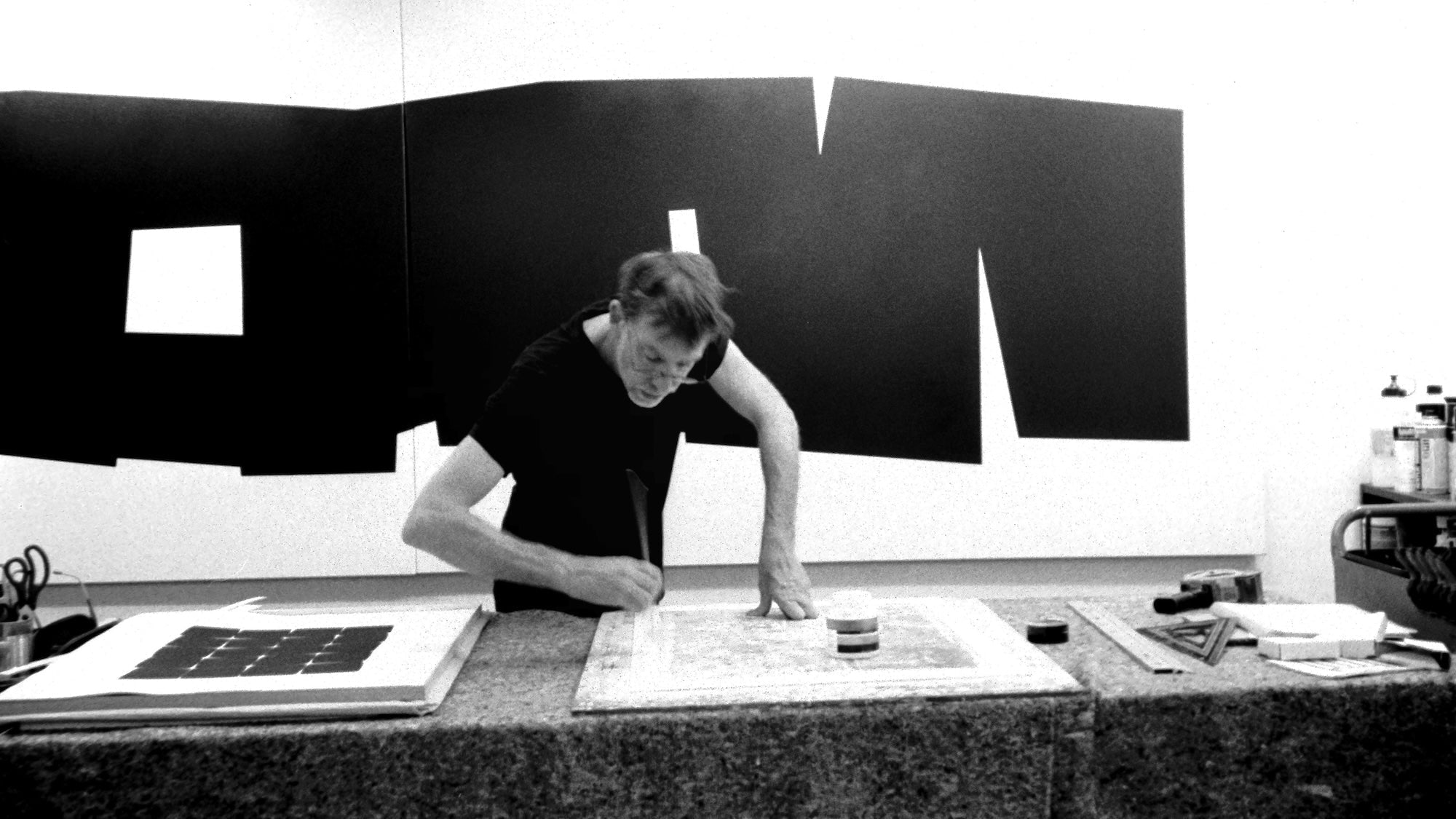
Can you walk us through a typical working day in your studio?
My workdays invariably begin with a coffee followed by reading current events newspapers and art books. This time usually allows my cat to nap on my lap.
Once his nap is over, I begin a period of intense creation, a time for exploring new forms, protocols that could be implemented, a time for sketching.
This process, which usually takes place on the computer, leads to designs for works that may be realized in the distant future, but are also sometimes forgotten deep within a computer file system.
The rest of my day is spent in the studio where I create the artworks.
Since my works are conceived beforehand, this studio time isn't strictly speaking a time of creation; I would call it a time of execution.
I don't experience any boredom in this organization, which might seem repetitive and routine, because I can alternate my practices between drawing, engraving, painting, and sculpture.
What dreams or hopes do you have for your artistic journey?
Above all, I value what I can control from my position as an artist: the quality of my work and the coherence and relevance of my approach. I don't have any particular dreams or hopes regarding my artistic journey.
I aspire to be surprised by encounters and exchanges with people in the art world; I like things not to be predetermined.
By Francis Berthomier
All images ©Pierre Muckensturm
CLICK HERE TO DISCOVER THE WORK OF Pierre Muckensturm AVAILABLE ON IDEELART