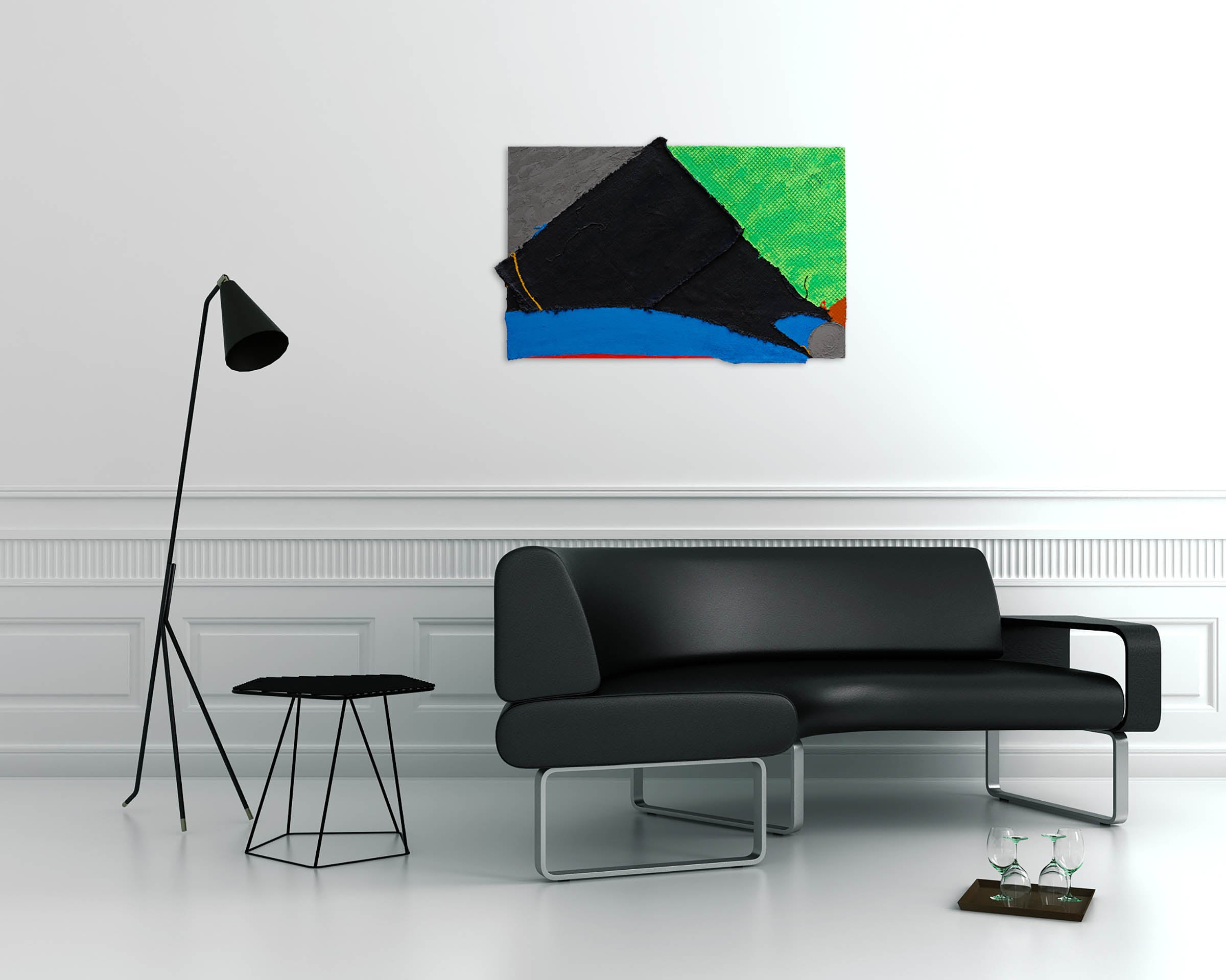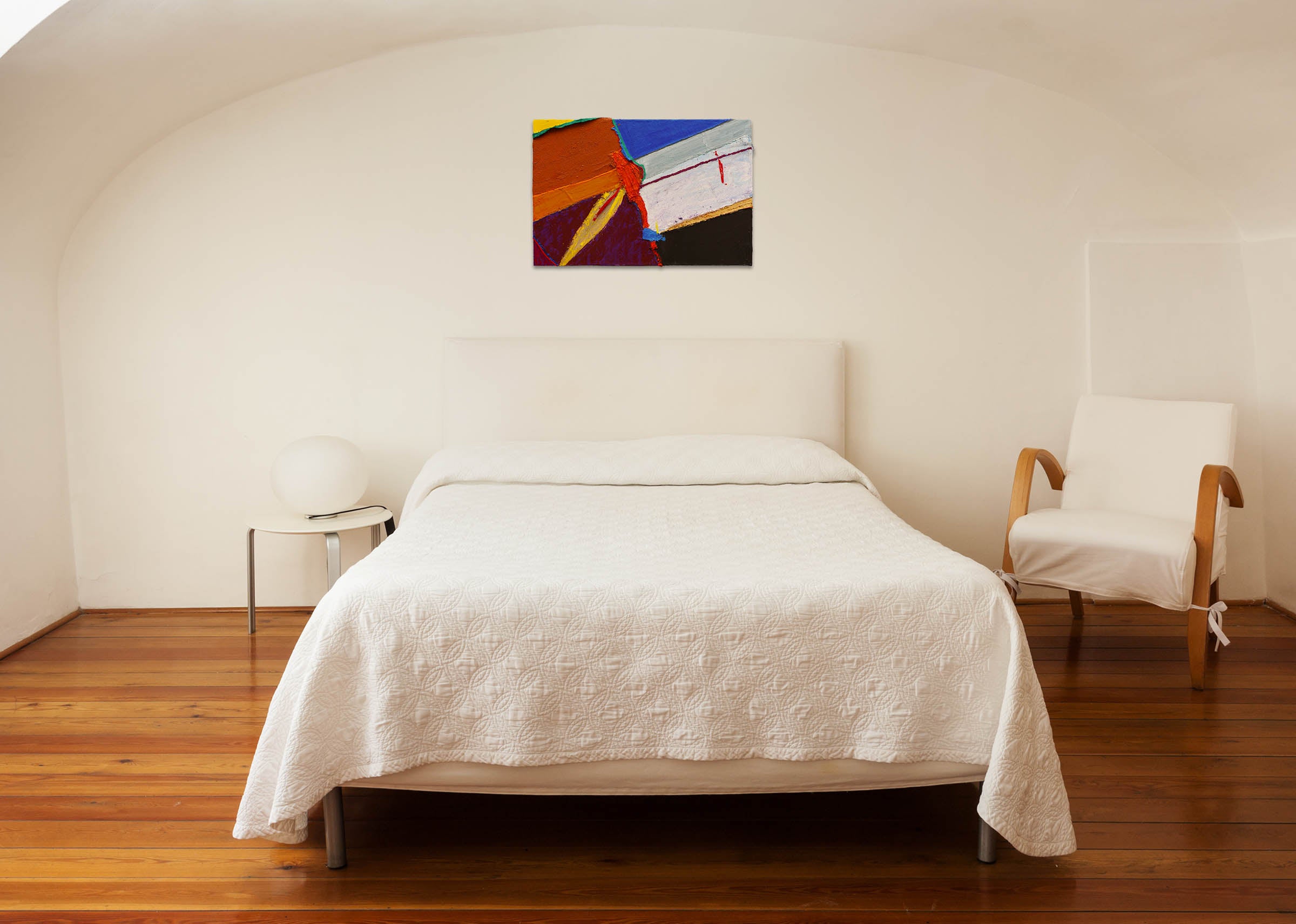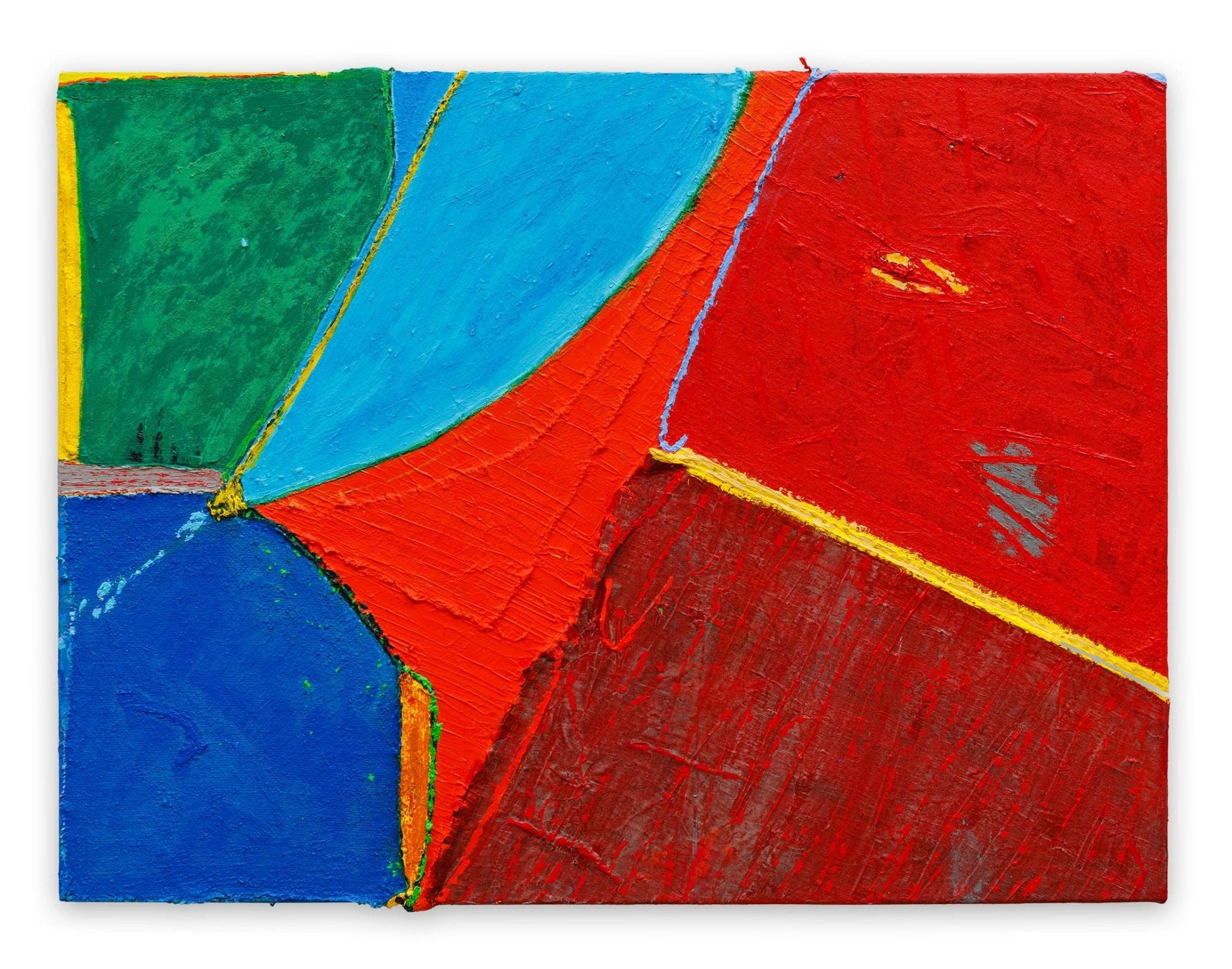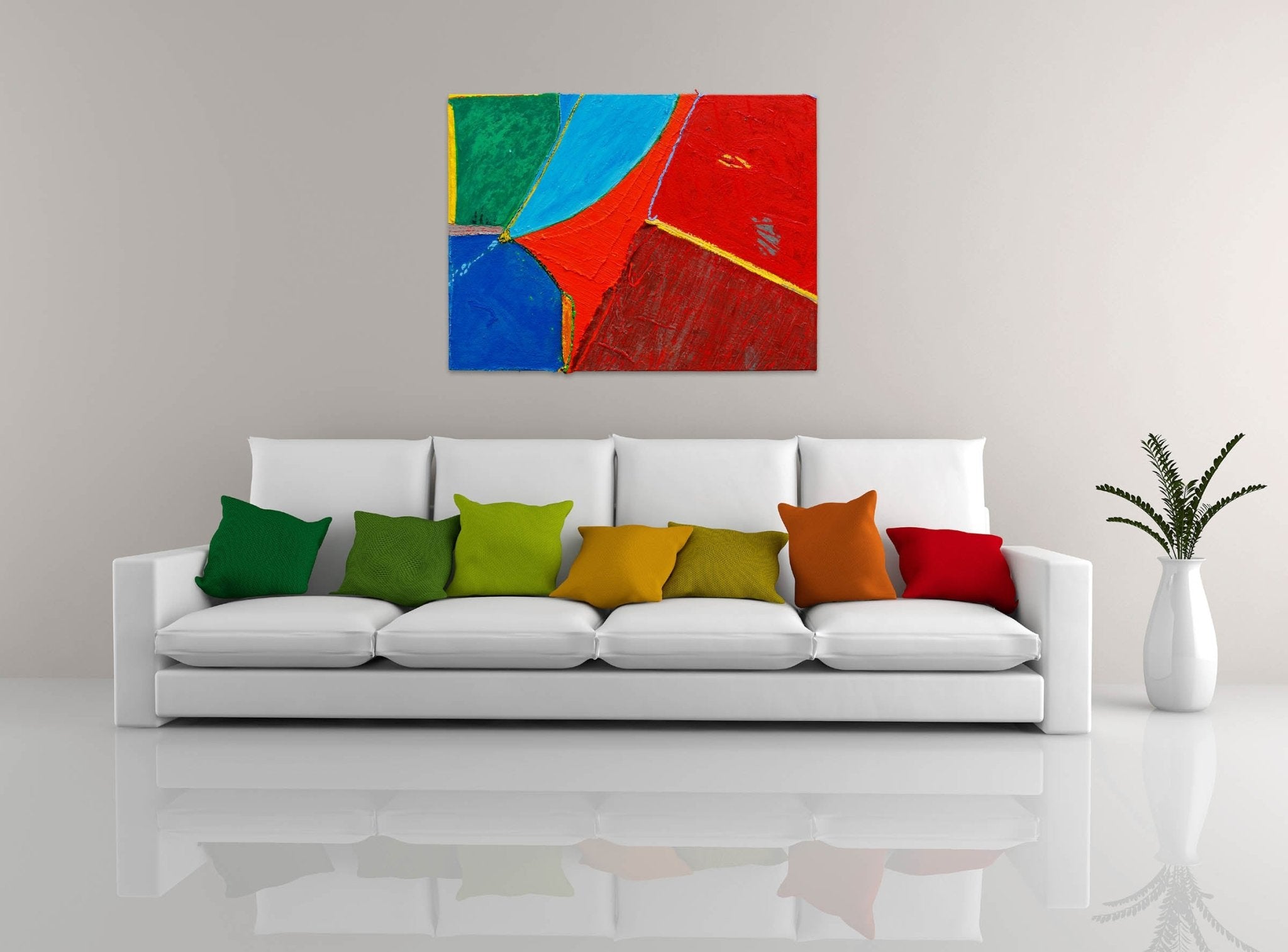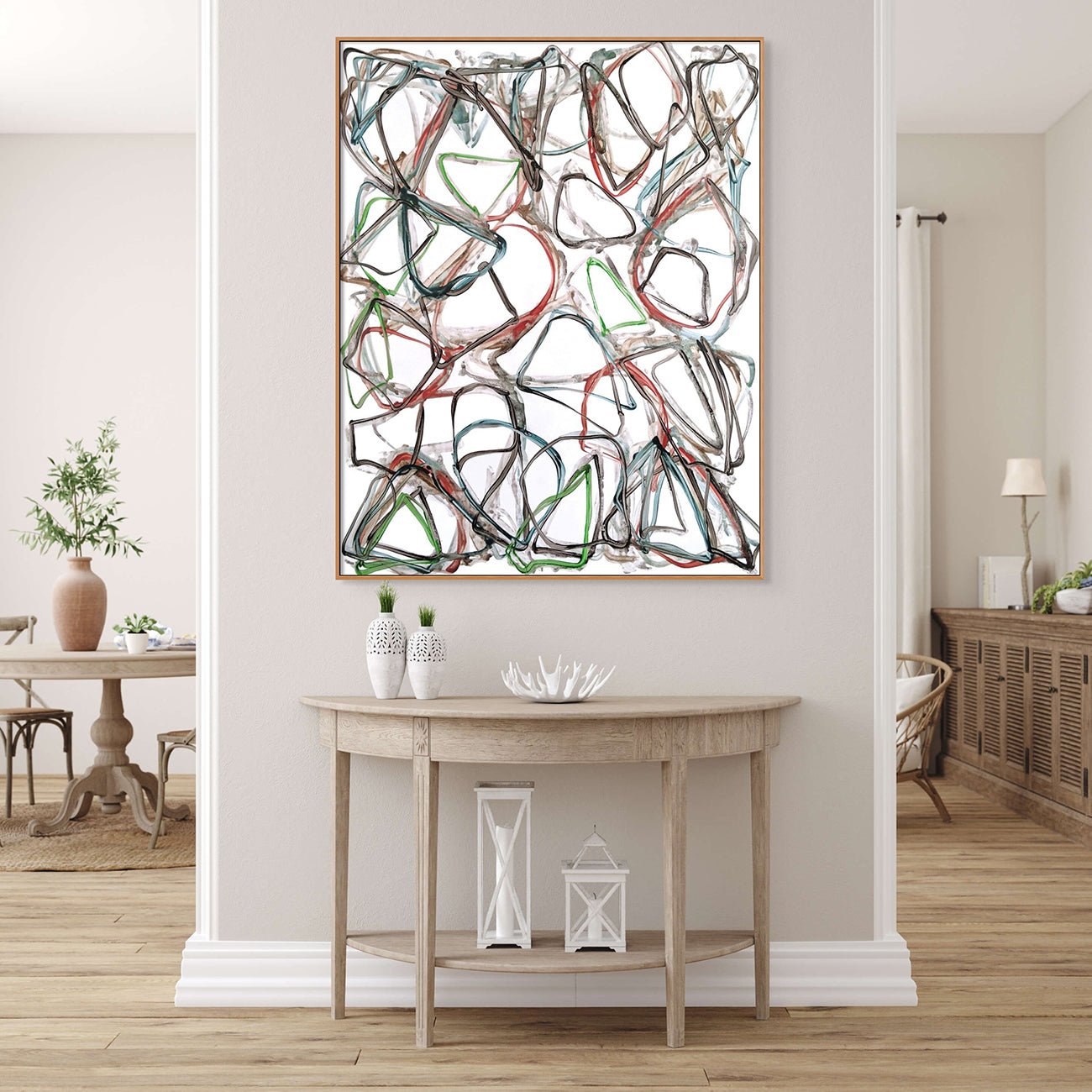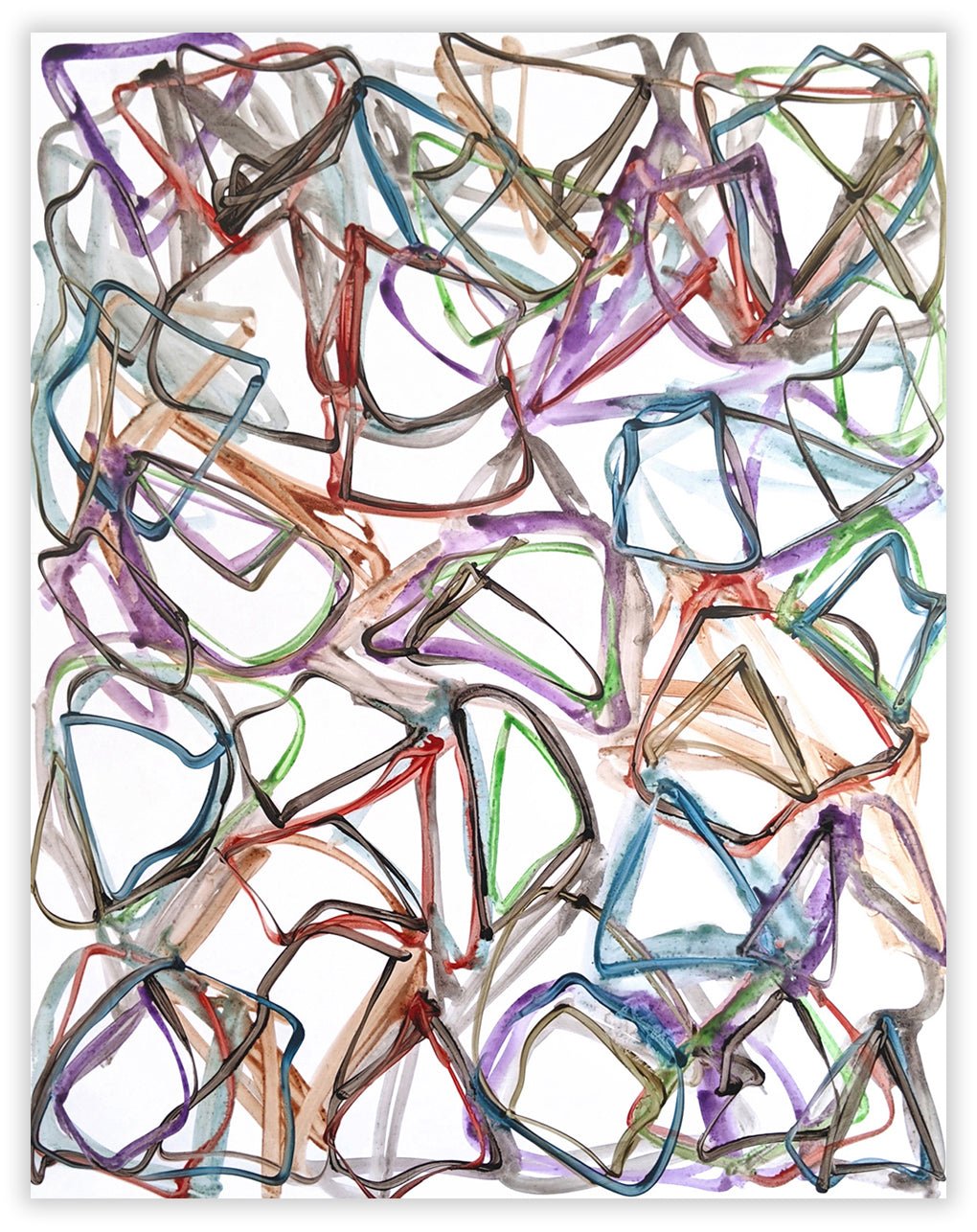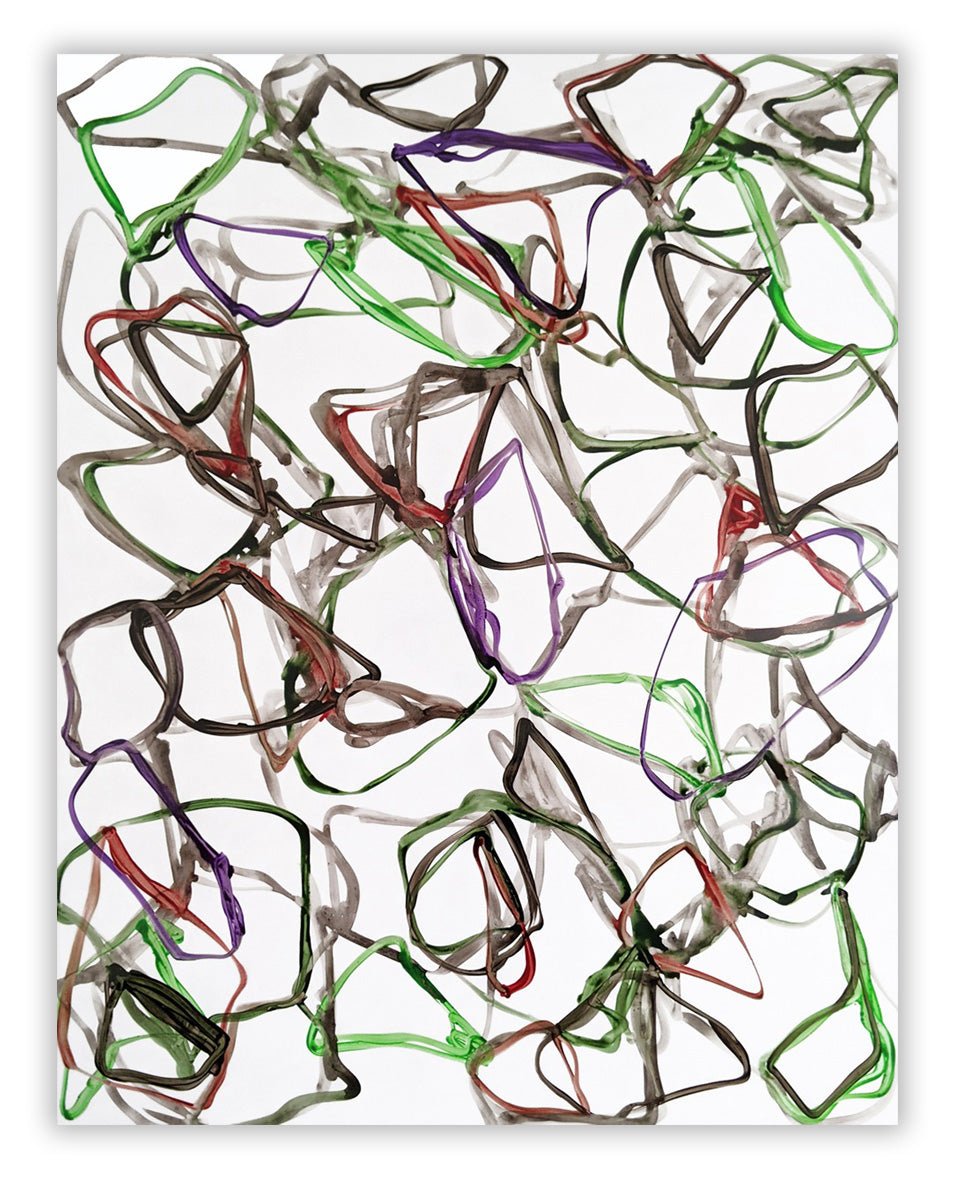
新型 Supports/Surfaces:21世紀物質現實主義宣言
In the cartography of art history, movements usually have a clear beginning and an end. They burn bright, fade, and eventually migrate into the quiet archives of museums. Supports/Surfaces, born in the theoretical fire of 1966, is the rare exception that refused to go out.
While the movement was originally fueled by the political radicalism of May 1968, and ultimately consumed by violent dissensions between its Maoist and Marxist factions, its true legacy has proven to be far more durable than its ideological origins. The core discovery of Supports/Surfaces was not political, but ontological: by separating the support (the stretcher) from the surface (the canvas), these artists revealed the physical truth of painting. They proved that a painting is not a window into an illusion, but a material object in the real world.
As we navigate the art world of January 2026, this concept has evolved into what critics could be calling the "Neo-Supports/Surfaces" movement: with some of the founding fathers, now all in their 80’s or 90’s, still actively producing their most vital work alongside a rising generation of heirs who have stripped away the old politics to focus entirely on the artistic power of the medium.
For the connoisseur, this is not a history lesson; it is a living timeline connecting the radical dismantling of the 1960s to the material "truth" sought by collectors today.
I. The Living Pillars: The Founders Are Still at Work
It is a rare privilege to witness the originators of a historical avant-garde still operating at the peak of their powers. These are the men who, fifty years ago, established the grammar of the movement.

Claude Viallat - Solo Show at Galerie Ceysson Bénétière, 2023 - Installation shot
The narrative begins with Claude Viallat (b. 1936), the movement’s indefatigable patriarch. In 1966, Viallat made the radical decision to liberate the canvas from its wooden frame, inaugurating the era of the toile libre. Today, at 89, he remains the most visible figure of the group, driven by a legendary work ethic that sees him producing daily. He is not merely repeating the past; he is deepening a lifelong groove, proving that infinite variation can exist within the single constraint of his signature "bean" shape.

Daniel Dezeuze, "Oeuvres Récentes 2020-2015" at Musee Paul Valery (Sète, France), 2026
If Viallat claimed the canvas, Daniel Dezeuze (b. 1942) claimed the void. Famous for exhibiting empty wooden frames and flexible ladders leaning against walls, Dezeuze spent decades revealing the "skeleton" of Western painting. In 2026, his work continues to dismantle the illusion of the "window," insisting on the uncompromising "objecthood" of art. His intellectual rigor remains a touchstone for the movement.

Noël Dolla - Solo show at Galerie Ceysson Bénétière St. Etienne, 2025 - Installation shot
Noël Dolla (b. 1945) stands among the last of the movement’s original architects. Renowned for his audacious use of color and unorthodox materials, Dolla has consistently expanded the language of abstraction beyond the canvas. His early works, dyed dishcloths, stretched string, and land art interventions, challenged conventional hierarchies and brought Supports/Surfaces’ materialist ethos into both private and public realms. In recent years, Dolla’s practice has remained as inventive as ever, oscillating between monumental outdoor installations and delicate, process-based works that engage with space, architecture, and the viewer’s own movement. His ability to reinvent his approach while maintaining a rigorous conceptual core makes him a vital force in contemporary abstraction and a living link to the movement’s origins.

Bernard Pagès - Solo Show at Galerie Ceysson Bénétière Lyon, 2013 - Installation shot
Bernard Pagès (b. 1940) represents the sculptural vanguard of Supports/Surfaces. From the outset, Pagès distinguished himself by deconstructing the boundaries between painting and sculpture, assembling humble materials - wood, stone, metal, concrete - into works that foreground process, juxtaposition, and the inherent qualities of matter. His practice is marked by a deep attention to the relationship between object, space, and viewer, as well as a persistent questioning of artistic authorship and value. Pagès’ recent exhibitions have reaffirmed his position as a key innovator, demonstrating how the movement’s principles can be continually reactivated through new forms and materials. His ongoing exploration of structure, rhythm, and physical presence ensures that the experimental spirit of Supports/Surfaces remains alive and evolving.
II. The Gallery Engine: Ceysson & Bénétière’s Decisive Role
All four founding artists remain actively exhibited and are notably represented on the primary market by Ceysson & Bénétière. The gallery’s sustained commitment has been instrumental in ensuring the enduring visibility and accessibility of the Supports/Surfaces artists.
Indeed, among the many actors shaping the fate of Supports/Surfaces, the role of Ceysson & Bénétière stands apart. Founded in 2006, the gallery has grown from a regional space in Saint-Étienne to a multinational force, with nine exhibition venues spanning Europe, North America, and Asia, including the landmark opening of their Tokyo gallery in 2025. This centrifugal expansion, rooted in a deep intellectual and logistical base outside the traditional capitals, has allowed Ceysson & Bénétière to rewrite the rules of the contemporary art market.

"Supports/Surfaces" exhibition, Galerie Ceysson Bénétière, Tokyo 2025 - Installation shot
From the outset, the gallery made a bold wager on the historical and artistic value of Supports/Surfaces. By championing artists who had long been underestimated by the market: Claude Viallat, Noël Dolla, Bernard Pagès, Daniel Dezeuze, André-Pierre Arnal, Patrick Saytour, and many others, Ceysson & Bénétière played a decisive role in re-evaluating and securing the movement’s legacy. Their curatorial rigor, scholarly publishing program, and international exhibition strategy have ensured that the works of these artists remain visible, collected, and discussed at the highest level.
The gallery’s commitment is not merely patrimonial. With exhibitions like the 2025 Tokyo opening (See installation shot above), headlined by a major Supports/Surfaces survey, Ceysson & Bénétière has positioned the movement as a living, globally relevant force. Their ability to balance historical depth with contemporary dynamism is evident in their support for emerging artists who extend the materialist and process-driven ethos of Supports/Surfaces into new territories.
III. The School Behind the Movement: The Revolutionaries as Teachers
For an artistic revolutionary, there is a particular kind of recognition beyond the museum retrospective: the opportunity to teach the revolution one has helped create. The artist who challenged the accepted rules of painting is entrusted with the formation of those who will follow. The former challenge to the institution becomes a force within it. In the history of Supports/Surfaces, art schools offered precisely this possibility: not simply the study of a radical movement, but direct access to the artists who had made its discoveries.
Claude Viallat occupied this position with exceptional authority. His teaching career began in 1963, before the emergence of his repeated form in 1966, and continued through the formation of Supports/Surfaces and its subsequent development. After appointments including Nice, Limoges, and Marseille, he arrived in Nîmes in 1979, later moving to the Paris Beaux-Arts in 1991. At Nîmes, therefore, he was not teaching an upheaval that had yet to happen: he could transmit an approach he had already helped establish, while continuing to explore its possibilities in his own work. Students encountered the author of the proposition, not merely its interpreter.
This gives the Beaux-Arts in Nîmes a distinctive place in the movement’s institutional afterlife. The school offered a setting in which the questions of support, surface, color, and process could pass directly from artistic invention into education. Viallat’s teaching, documented in the Histoire de la pédagogie artistique interview archive, emphasized material practice and dialogue, including the problem of how not to become a model for students to imitate. The privilege carried a responsibility: to transmit the freedom opened by the revolution, rather than merely its recognizable forms.
Alain Clément brought a related but independent experience to the institution, teaching in Nîmes before directing the school from 1985 to 1990. Close to members of Supports/Surfaces without being one of its founders, he had participated in the artistic questioning of the late 1960s and developed conceptual investigations of his own. His subsequent engagement with lyrical gesture and chromatic construction makes his contribution especially significant. Here was an artist able to teach from the experience of radical change without treating a past position as a permanent obligation.

Clément’s dialogue between painting and sculpture gives that independence a physical expression. Gesture becomes construction; color suggests volume; a curved line can migrate from the canvas into space. His work demonstrates that the authority of an artist-teacher need not rest on defending a fixed doctrine. It can also rest on showing how a language is continually renewed.
The achievement nevertheless contains its own paradox. Recalling the teaching programme in a conversation with this article’s author, Clément joked about the danger of producing too many artists working in the same vein. “We had to stop,” he said with a broad smile. The remark captures the moment when a successful transmission risks becoming a formula. The supreme recognition of the revolutionary, being able to teach what he helped make possible, also brings the danger that yesterday’s liberation becomes tomorrow’s convention.

Institutional recognition, however, does not reach every participant equally. For this article’s author, André-Pierre Arnal, once a dear friend, deserves a more prominent place in the telling of this history. This personal assessment is a reminder that the visibility of its leading figures cannot stand for the reception of an entire generation. A revolution may enter the school and the museum while parts of its contribution remain insufficiently acknowledged.

André-Pierre Arnal - Untitled (Red Triangle) - 1973
(Collection of F.Berthomier)
The importance of Nîmes lies in this meeting of artistic invention, institutional recognition, and direct transmission. Those who had helped overturn painting’s conventions were in a position to educate another generation. The most enduring reward was not the reproduction of their discoveries, but the possibility that students might use them to discover something else.
IV. The "Pure" Heirs: Rigor and Autonomy
The "Neo Supports/Surfaces" movement is carried forward by the "Intermediate Generation," artists trained directly by the masters who have refined the raw deconstruction of the 60s into a precise, contemplative science.

Frédéric Prat - Solo show at Galerie Richard, 2025 - Installation shot
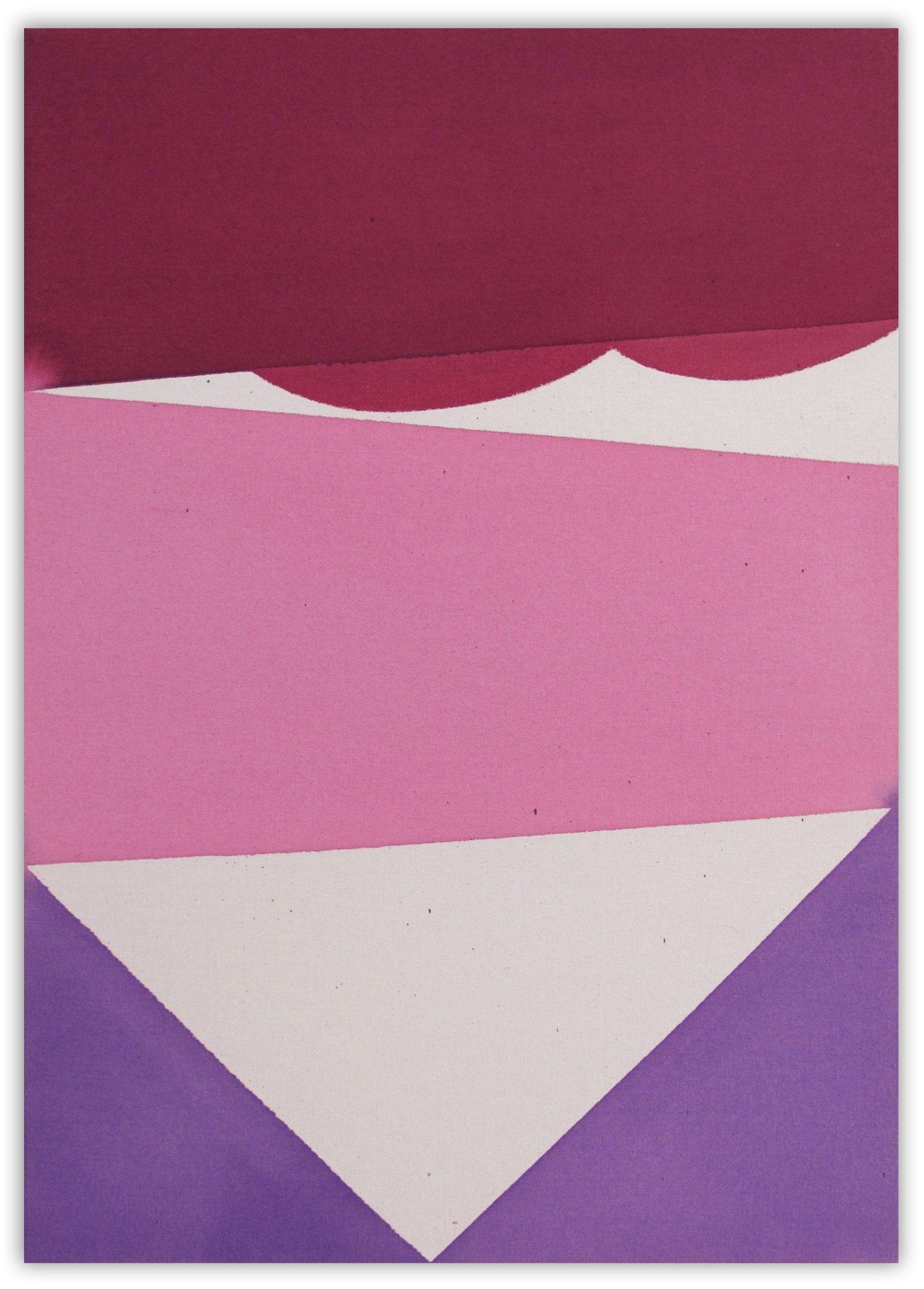
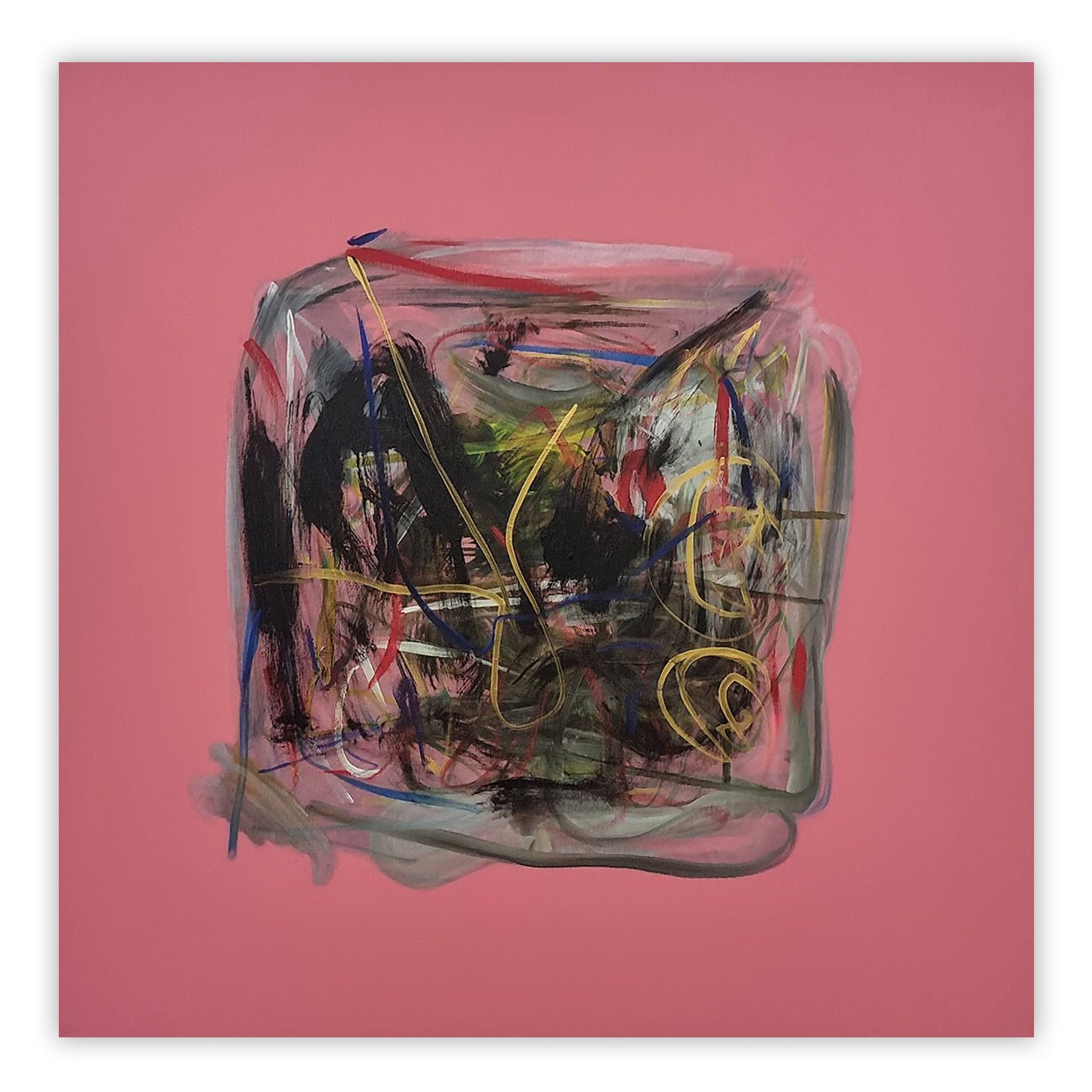
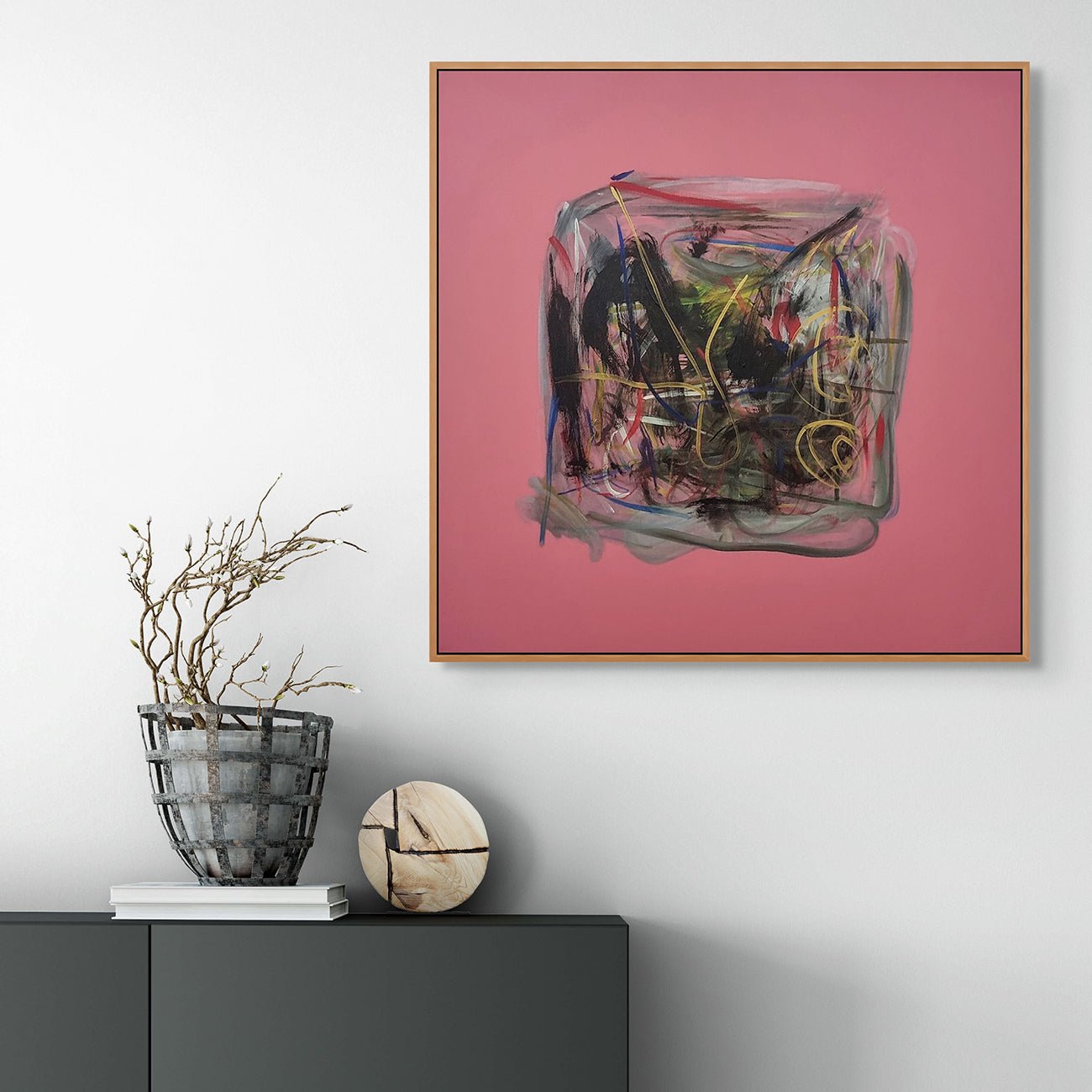
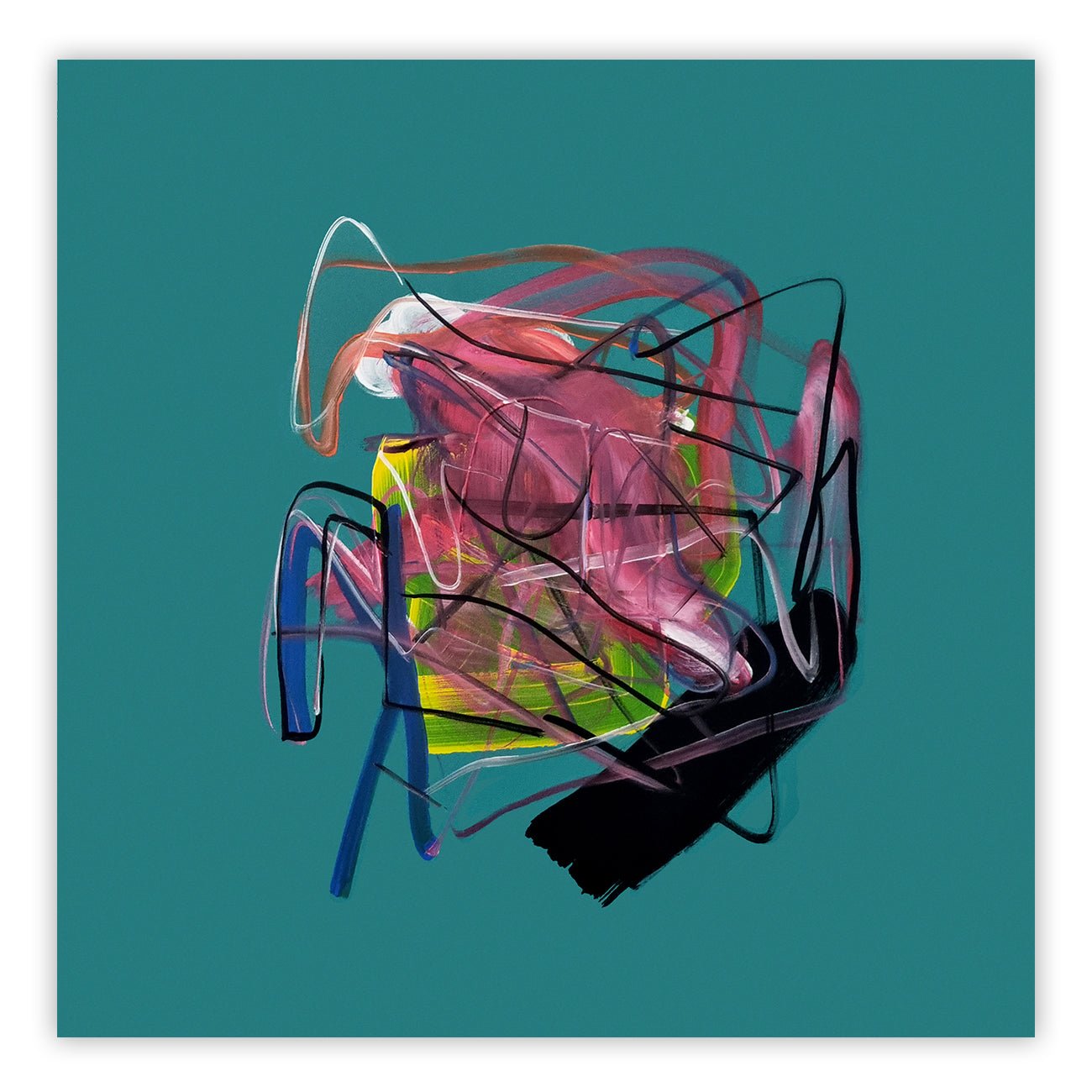
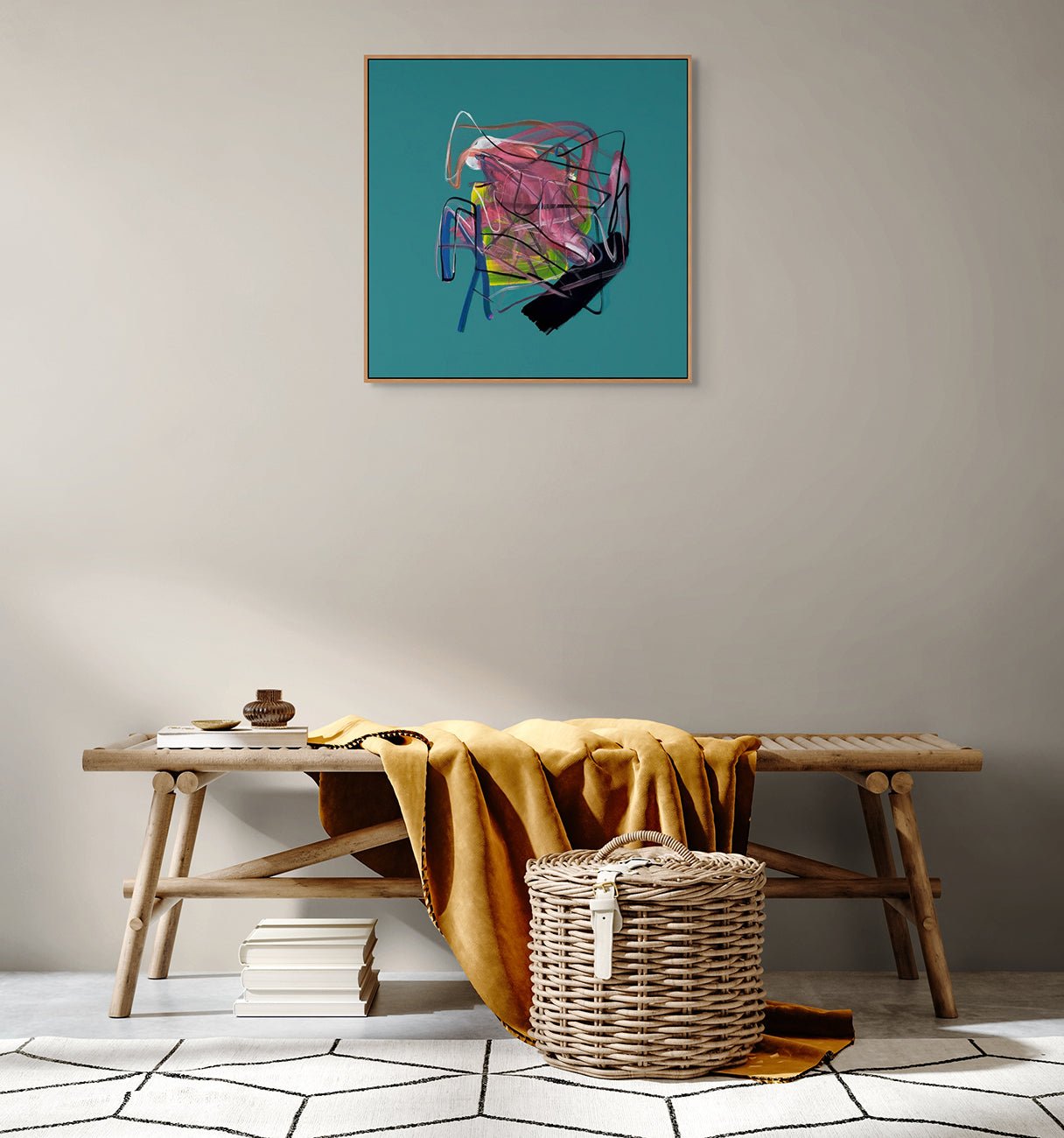
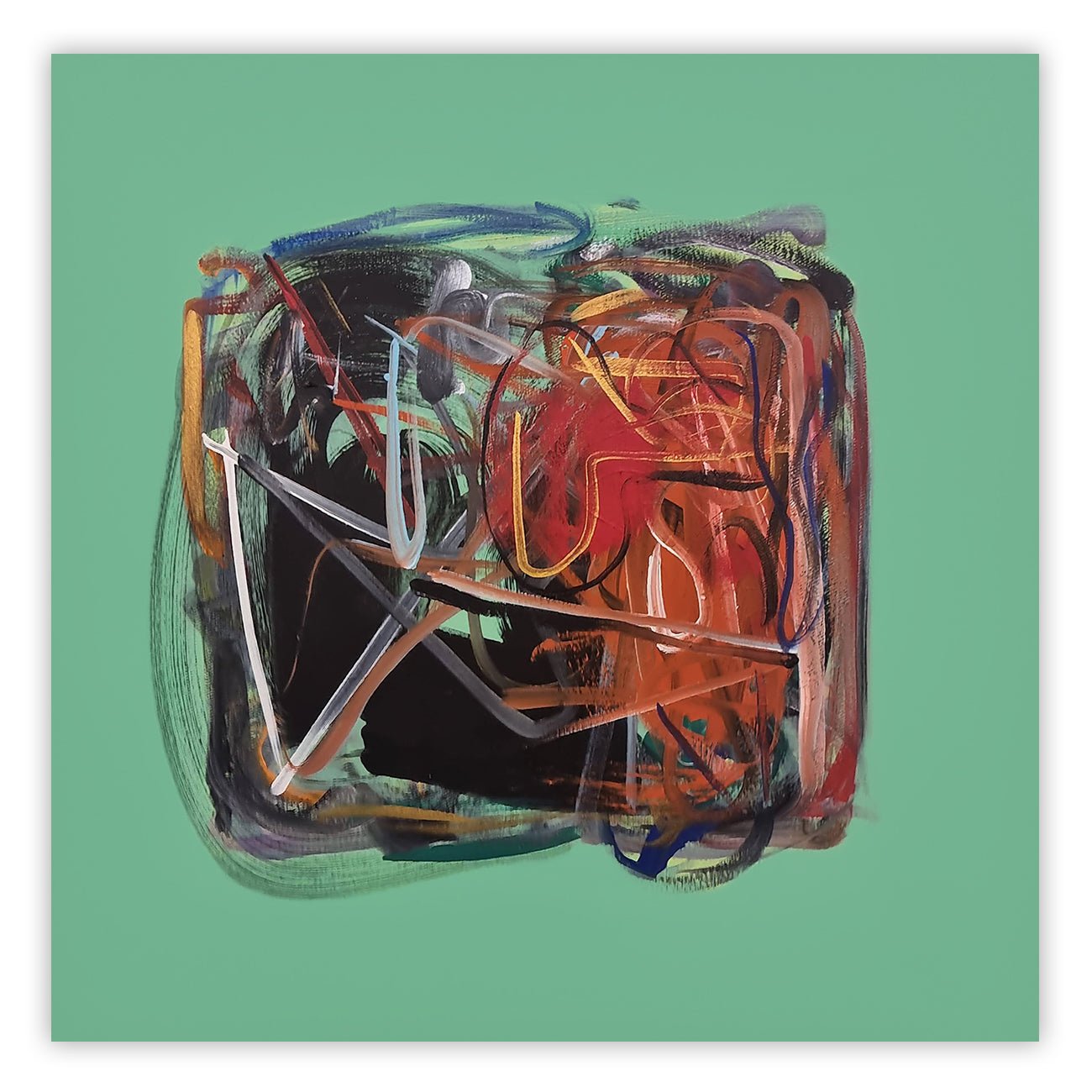
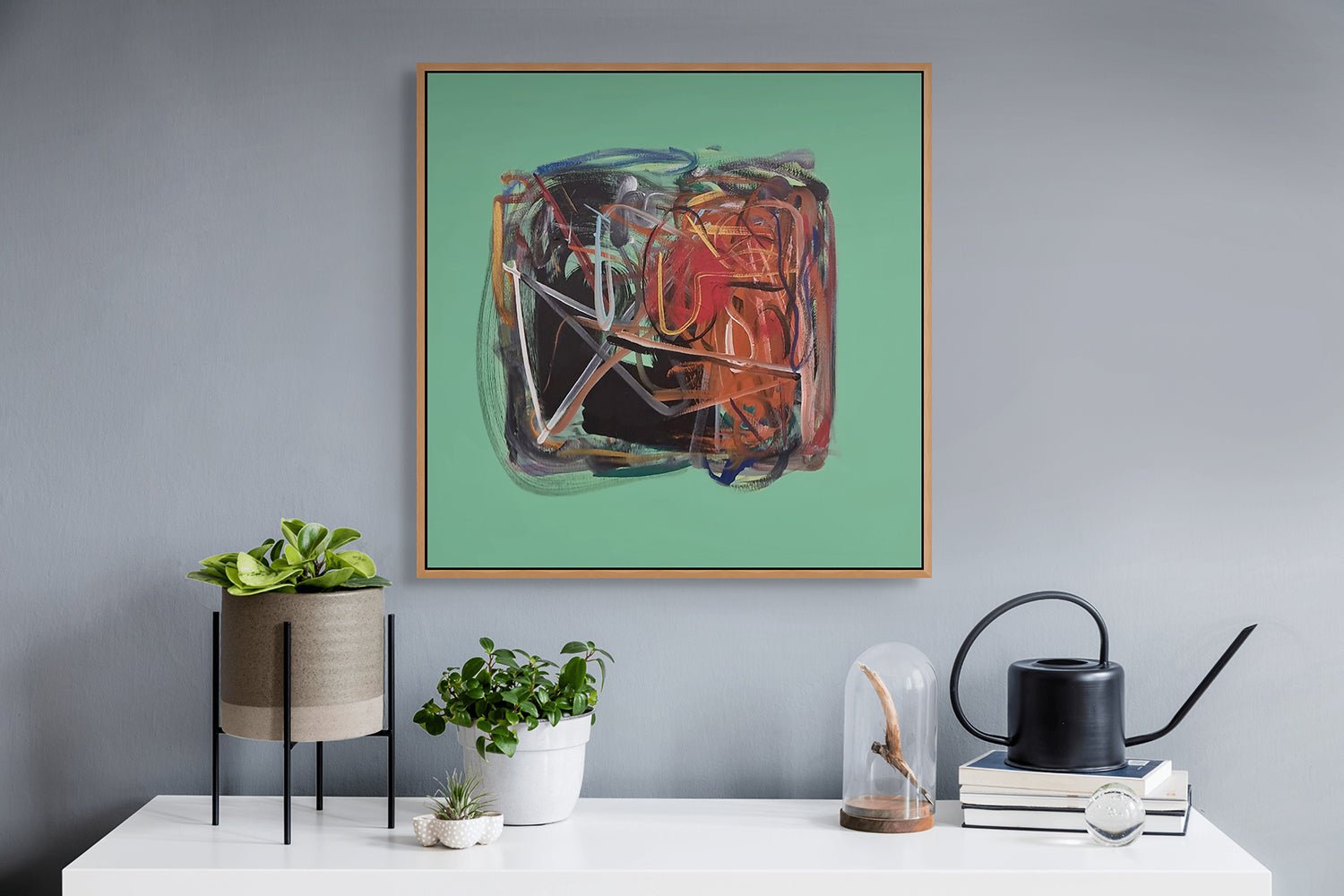
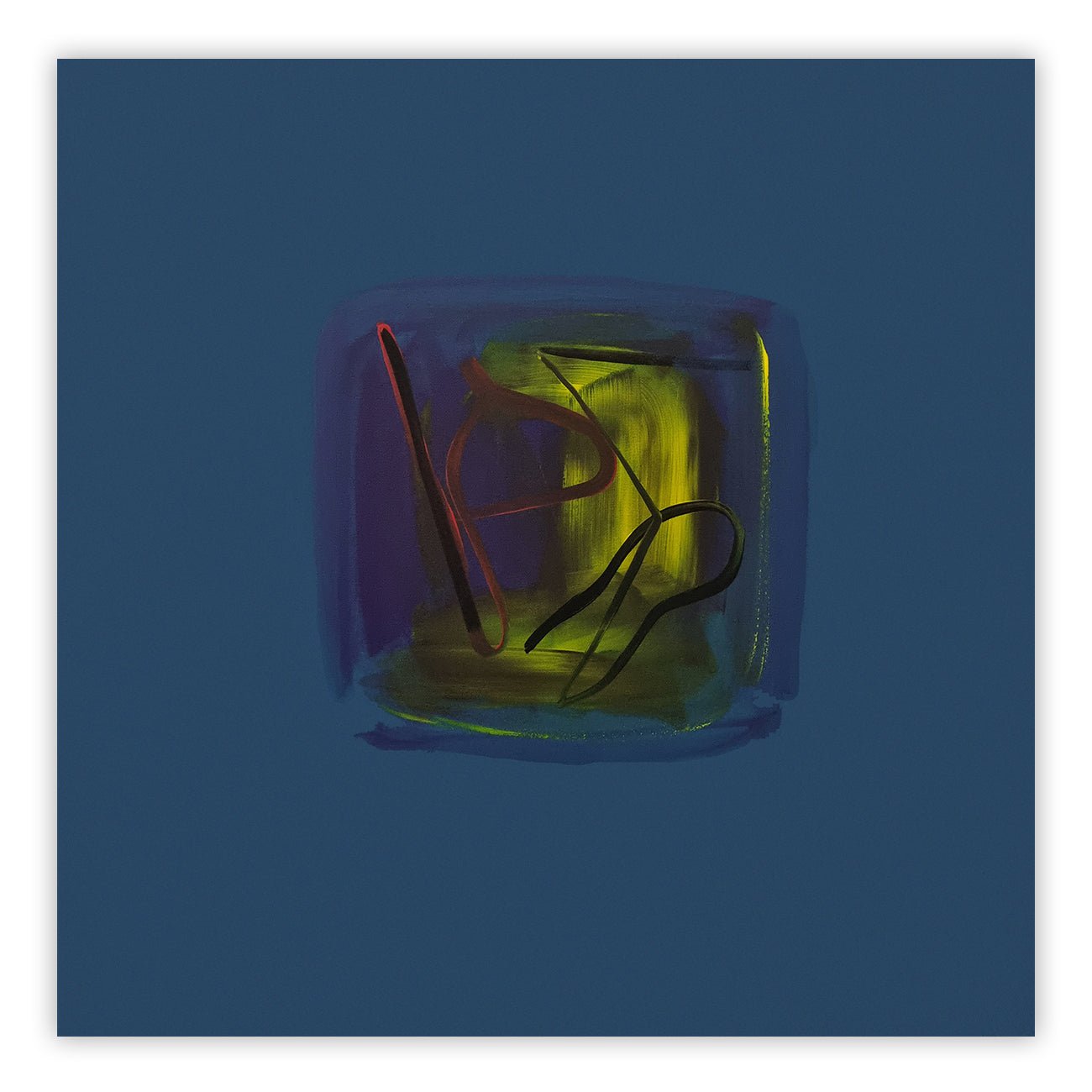
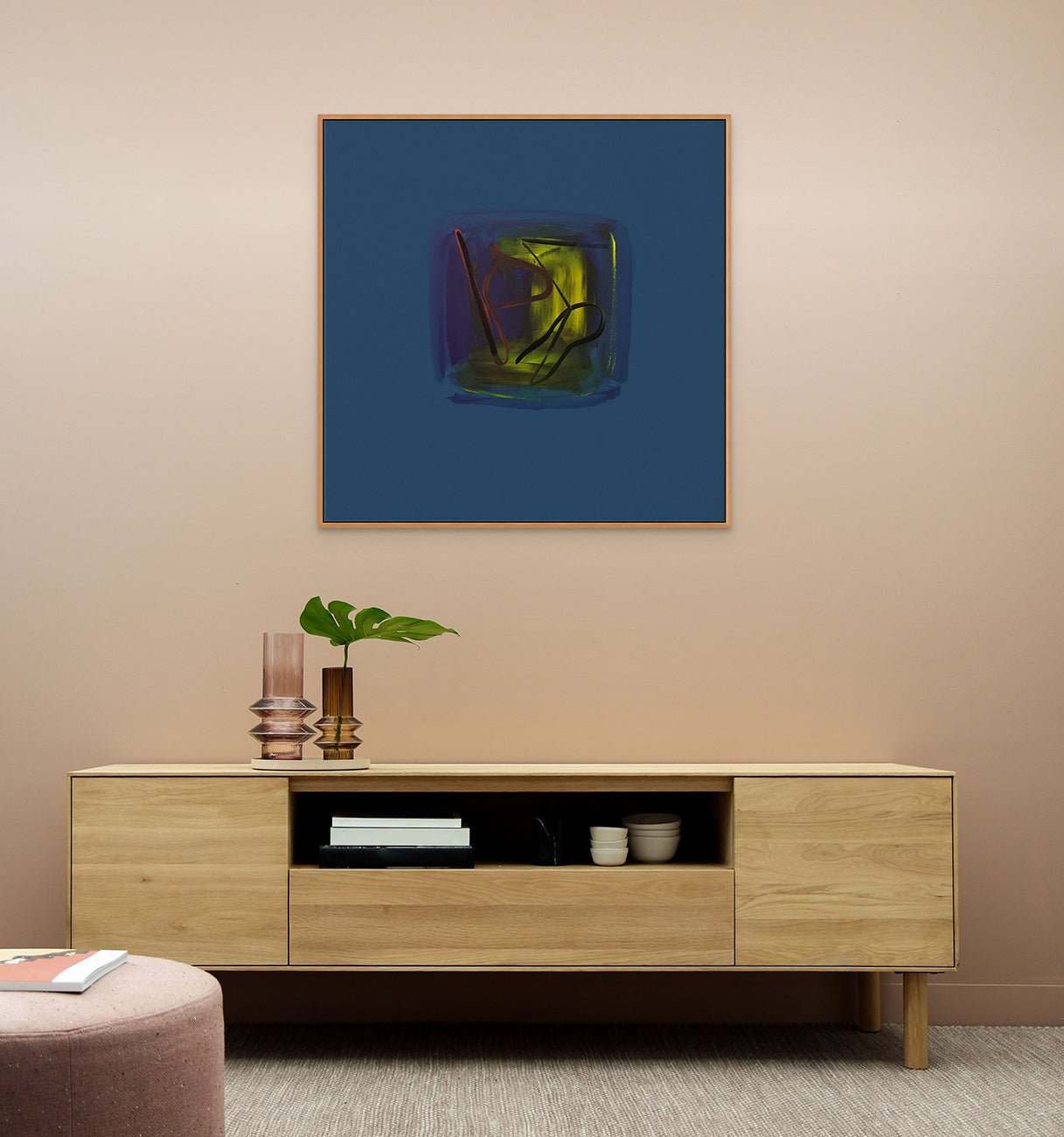
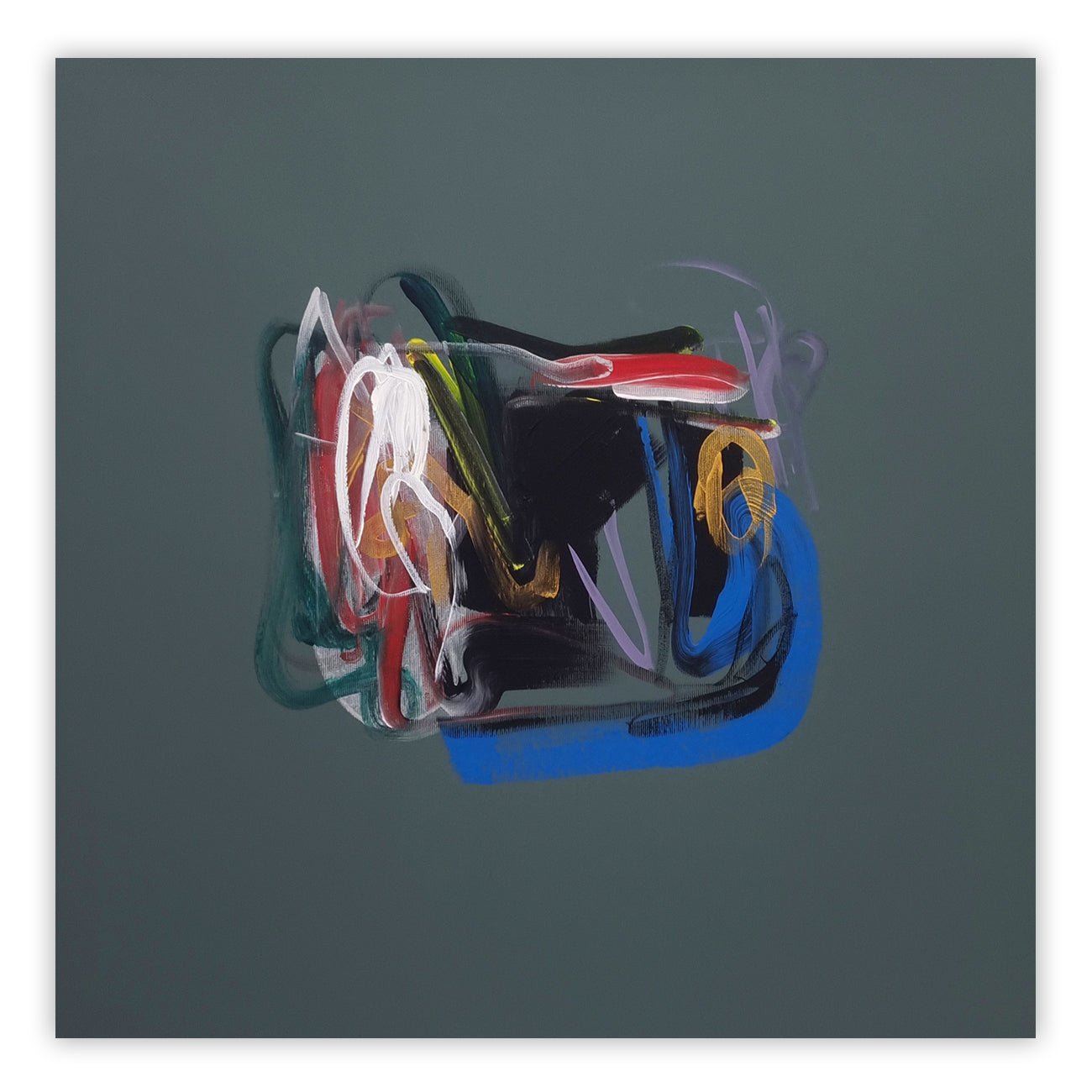
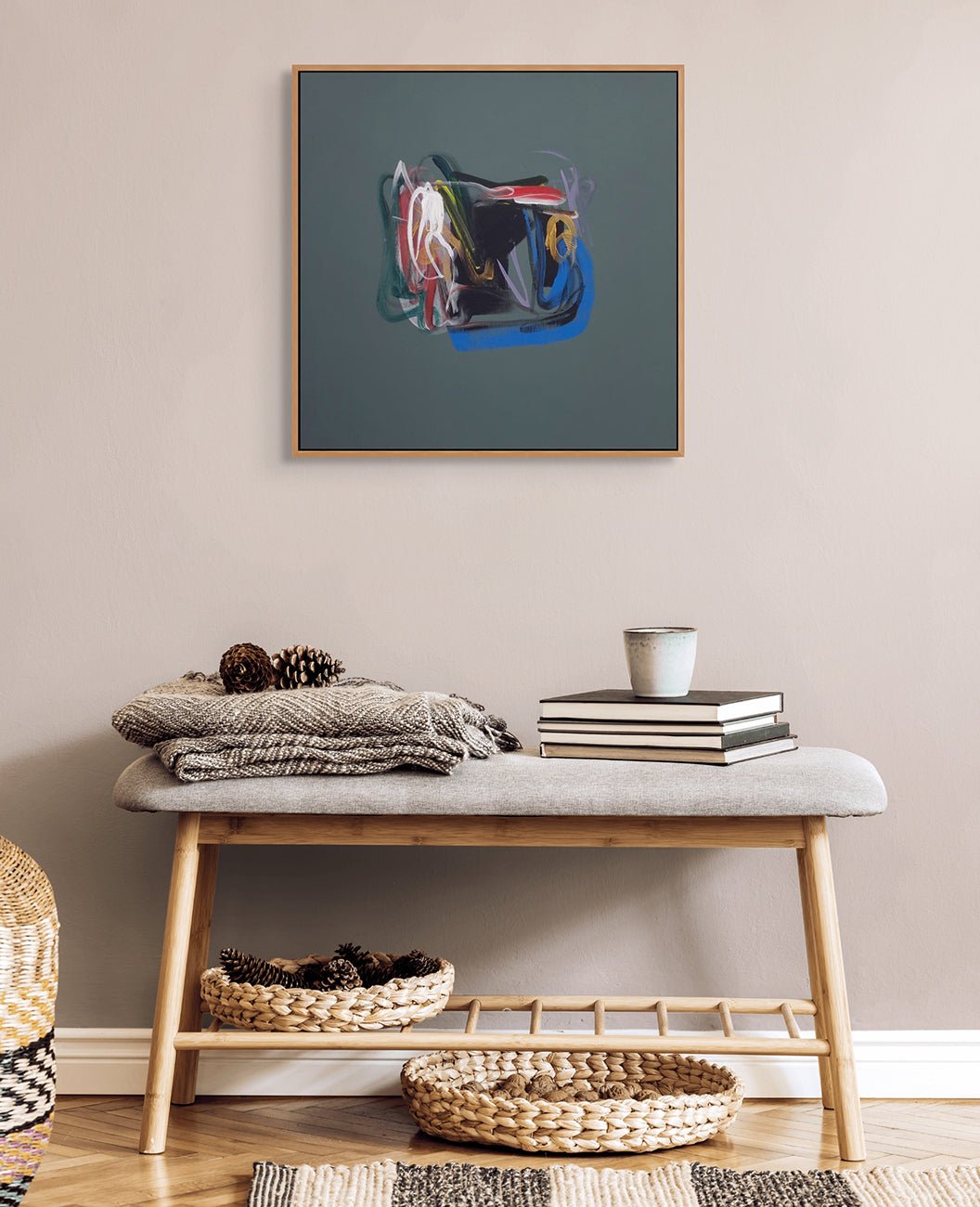
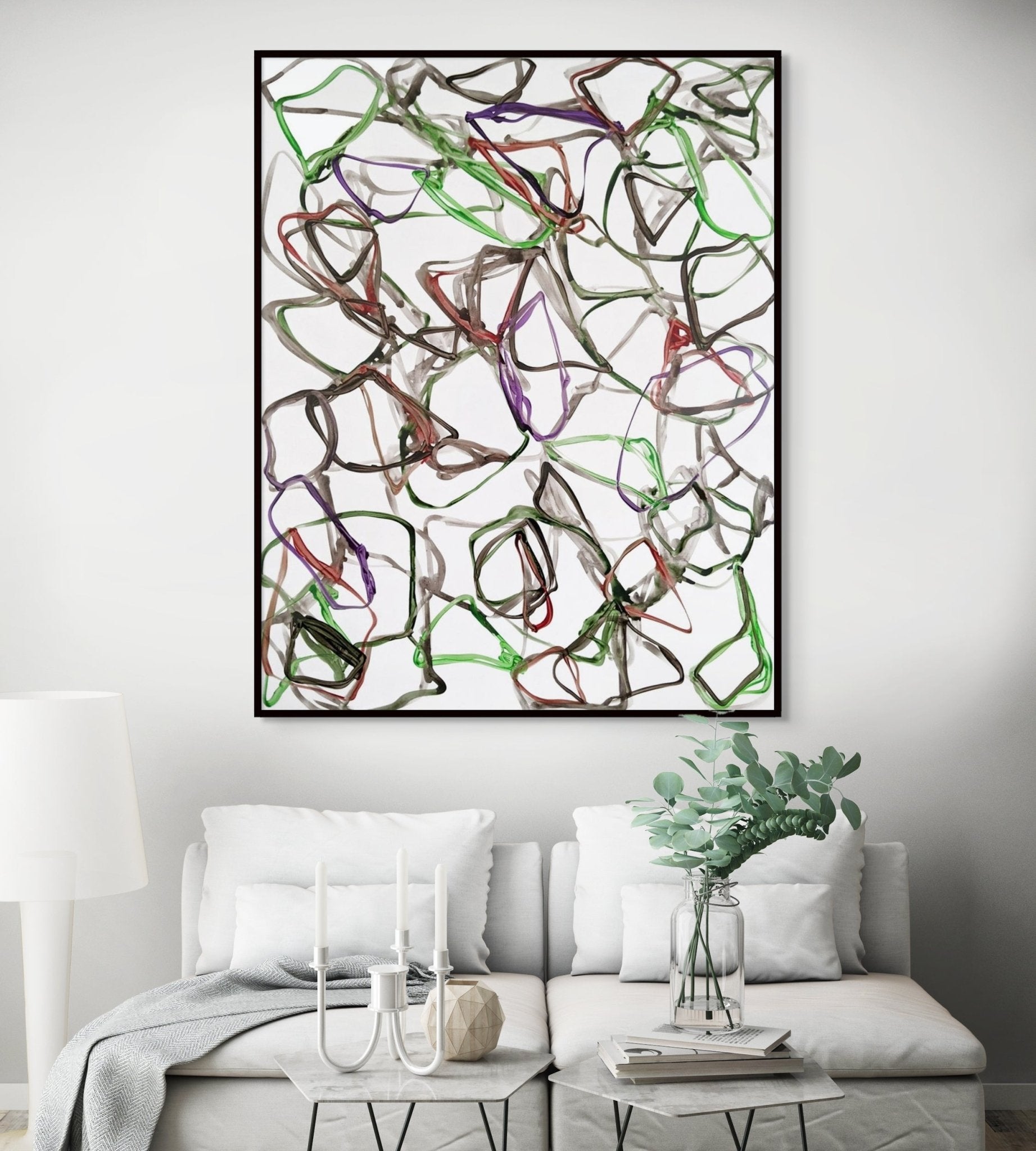
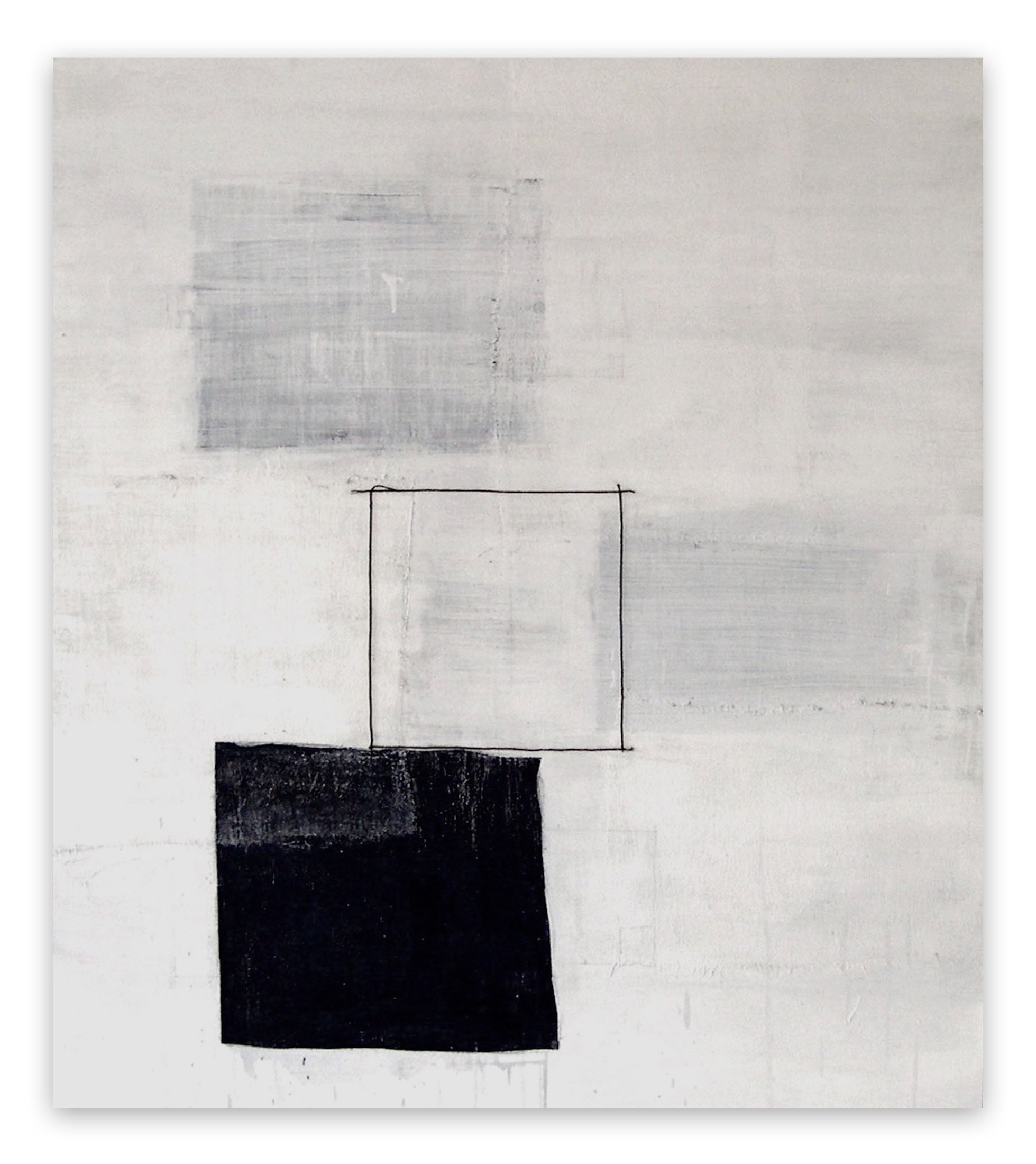
Frédéric Prat (b. 1966) represents the "classical" turn of the movement. A student of Claude Viallat and Toni Grand at the Paris Beaux-Arts, Prat has spent his career purifying the movement's grammar. He rigorously rejects naturalistic associations, engaging instead in an extreme search for "non-forms." His large-scale square canvases feature monochrome backgrounds interrupted by autonomous "pictorial events", loops and lines that refuse to represent anything outside themselves. Where Viallat used repetition to destroy composition, Prat uses the "non-image" to construct an object of pure thought. Represented by Galerie Richard in France, his rigorous formalism is represented within the global digital context by IdeelArt.

Stéphane Bordarier - Solow show at Galerie ETC, 2023 - Installation shot
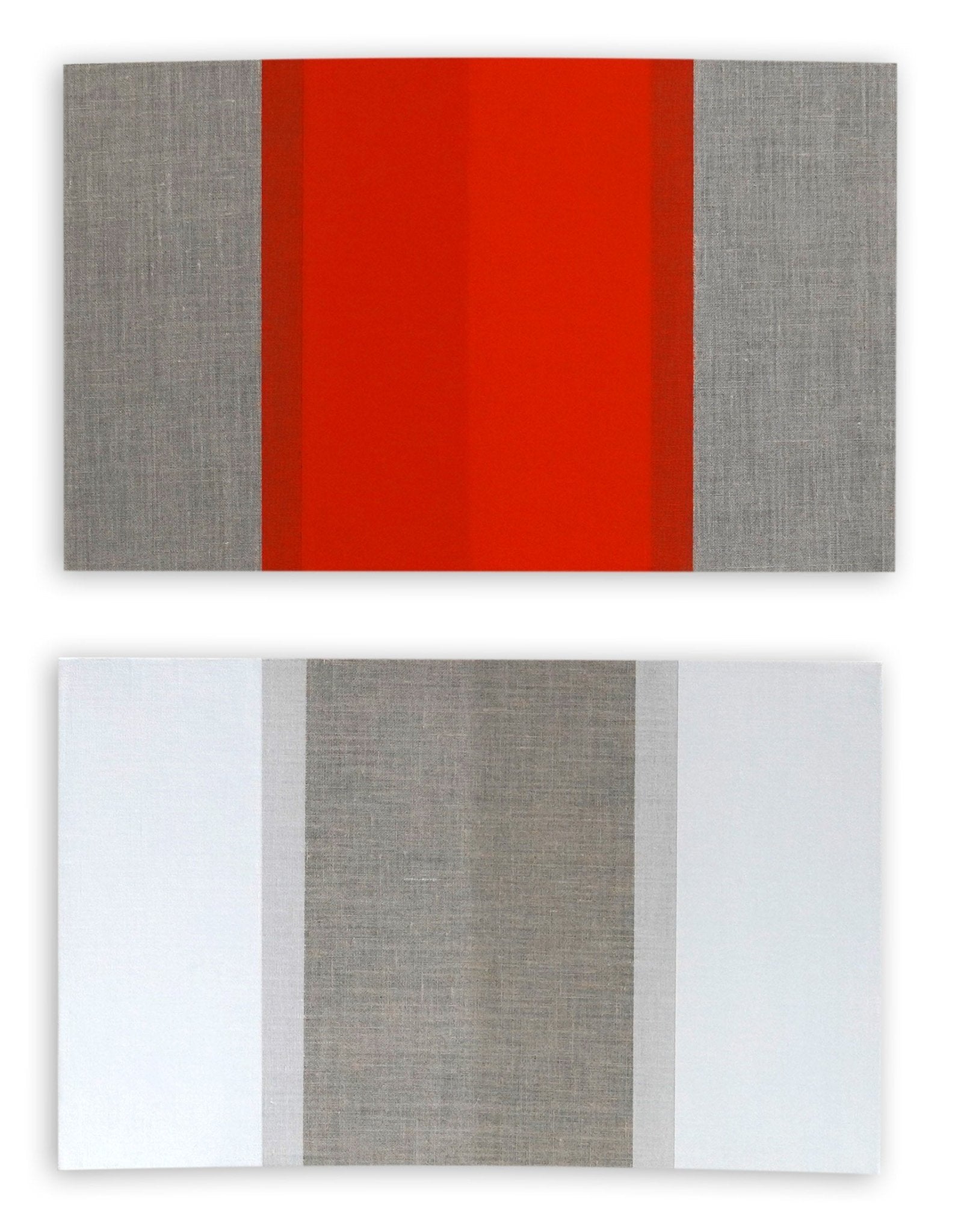
In Nîmes, Stéphane Bordarier (b. 1953) operates as the group's theologian. His practice is defined by an uncompromising constraint: the use of colle de peau (animal skin glue). Because this medium sets rapidly, Bordarier is forced to paint his "false monochromes" in a race against time, eliminating any possibility of subjective hesitation. This process aligns perfectly with the movement's focus on procedure over ego.

Guillaume Moschini - Solo show at Galerie Oniris, 2023 - Installation shot
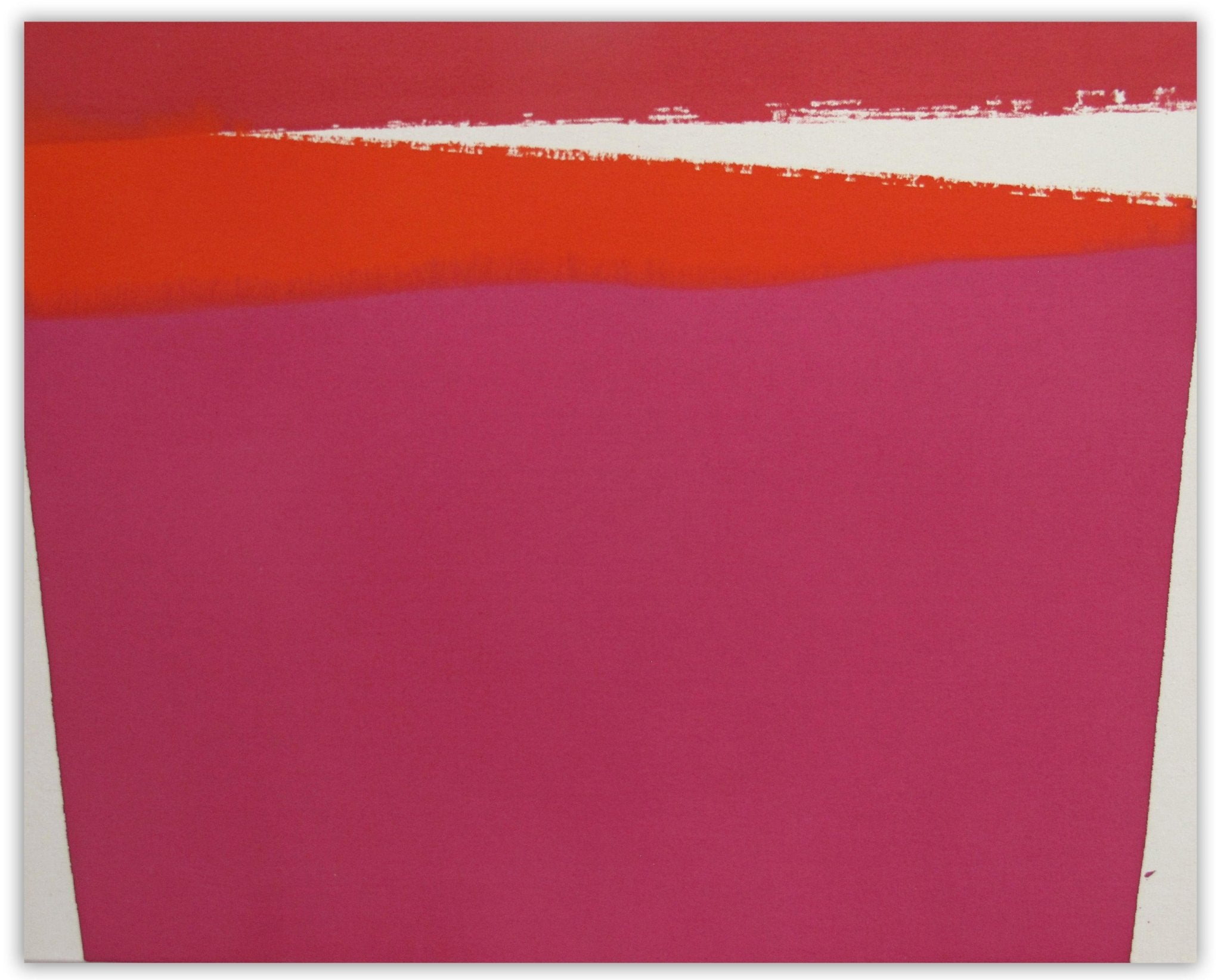
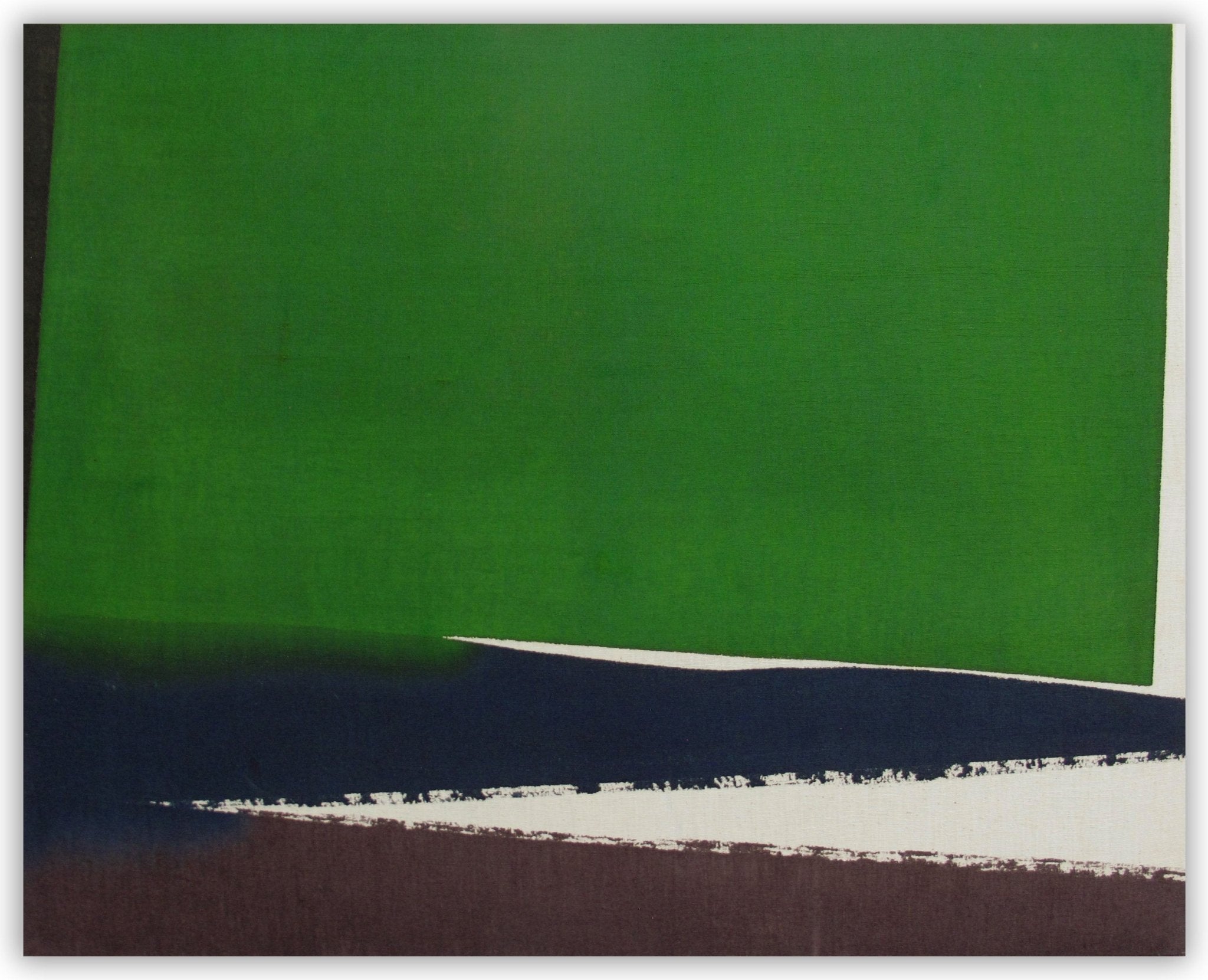
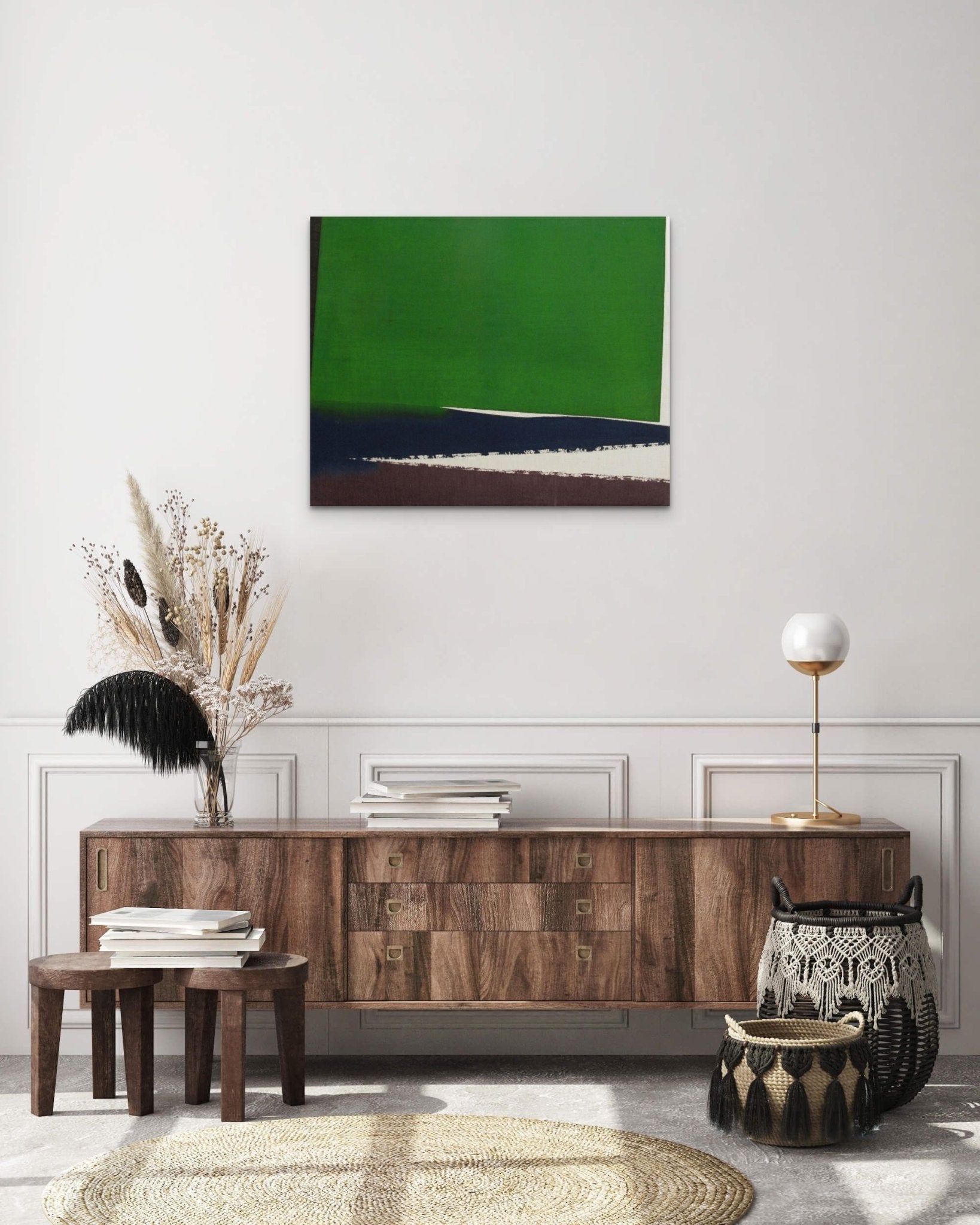
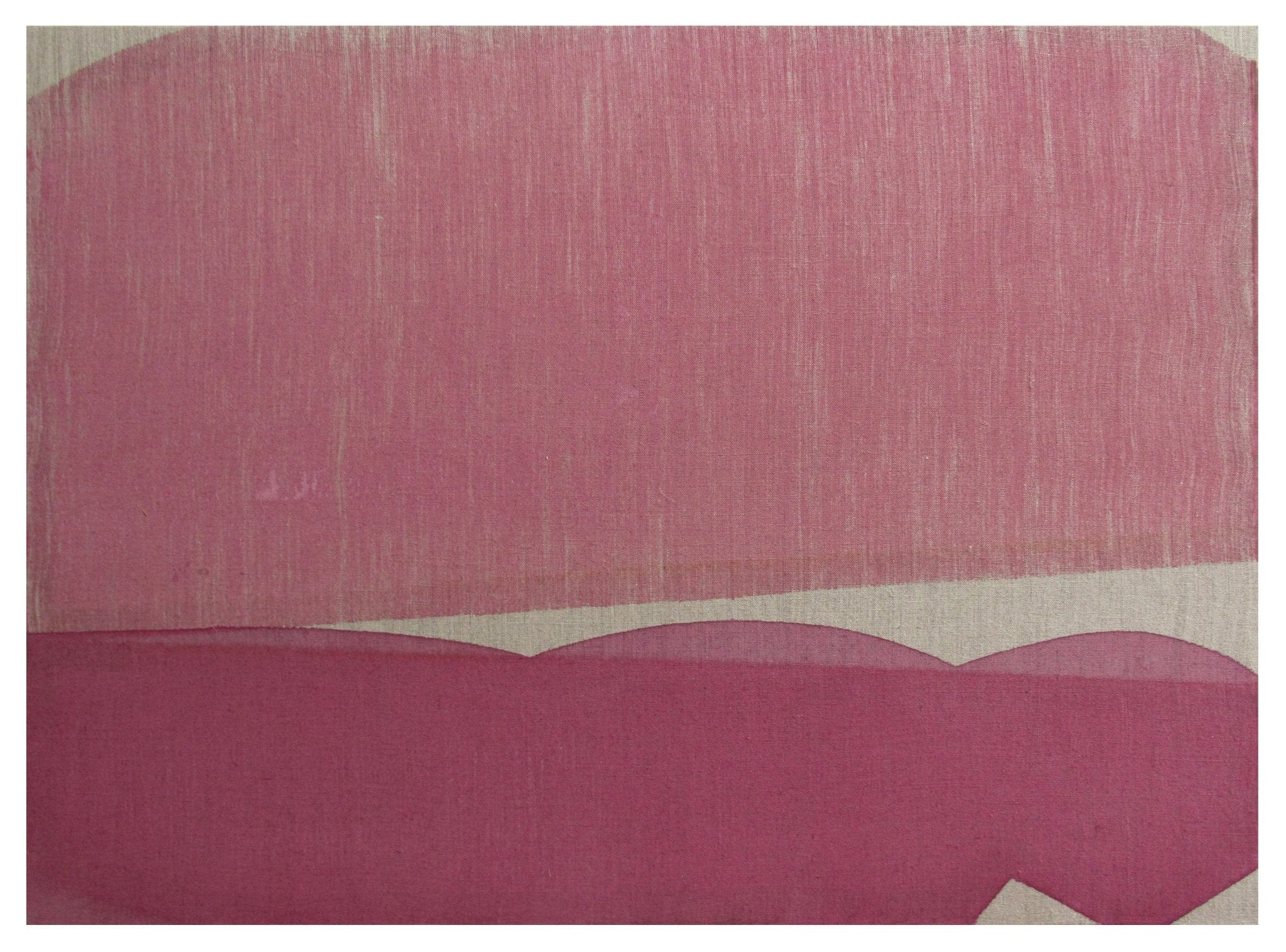
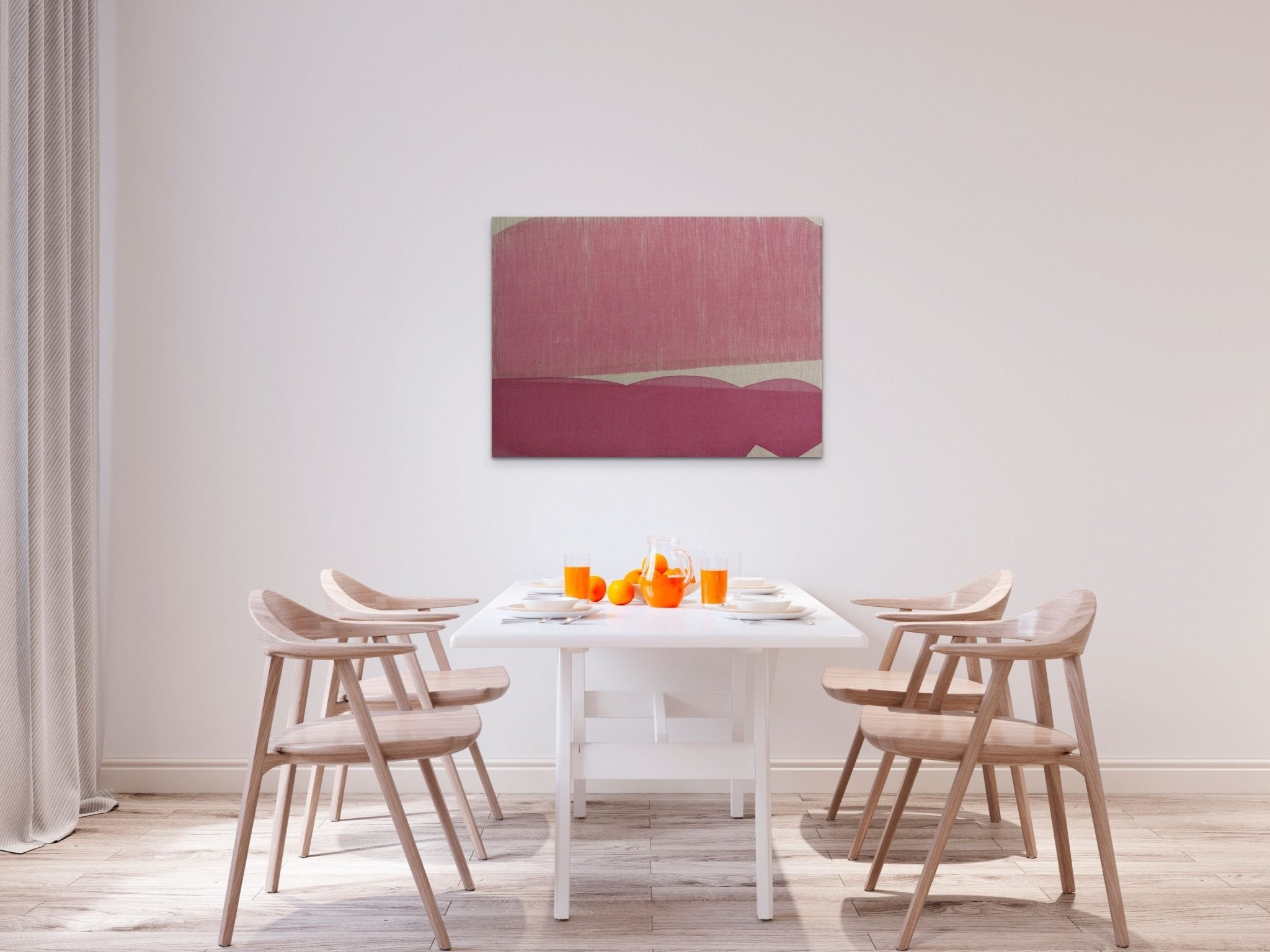
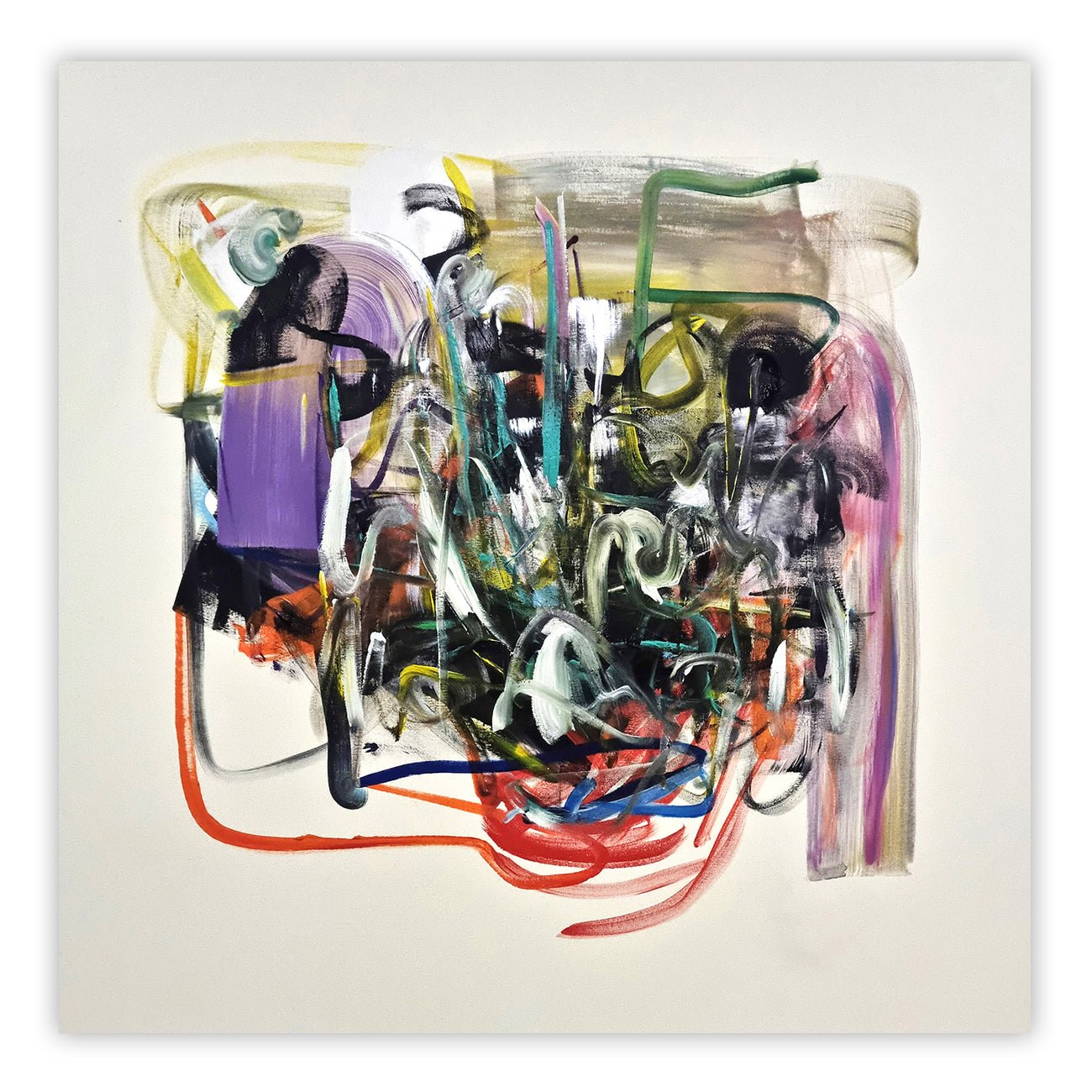
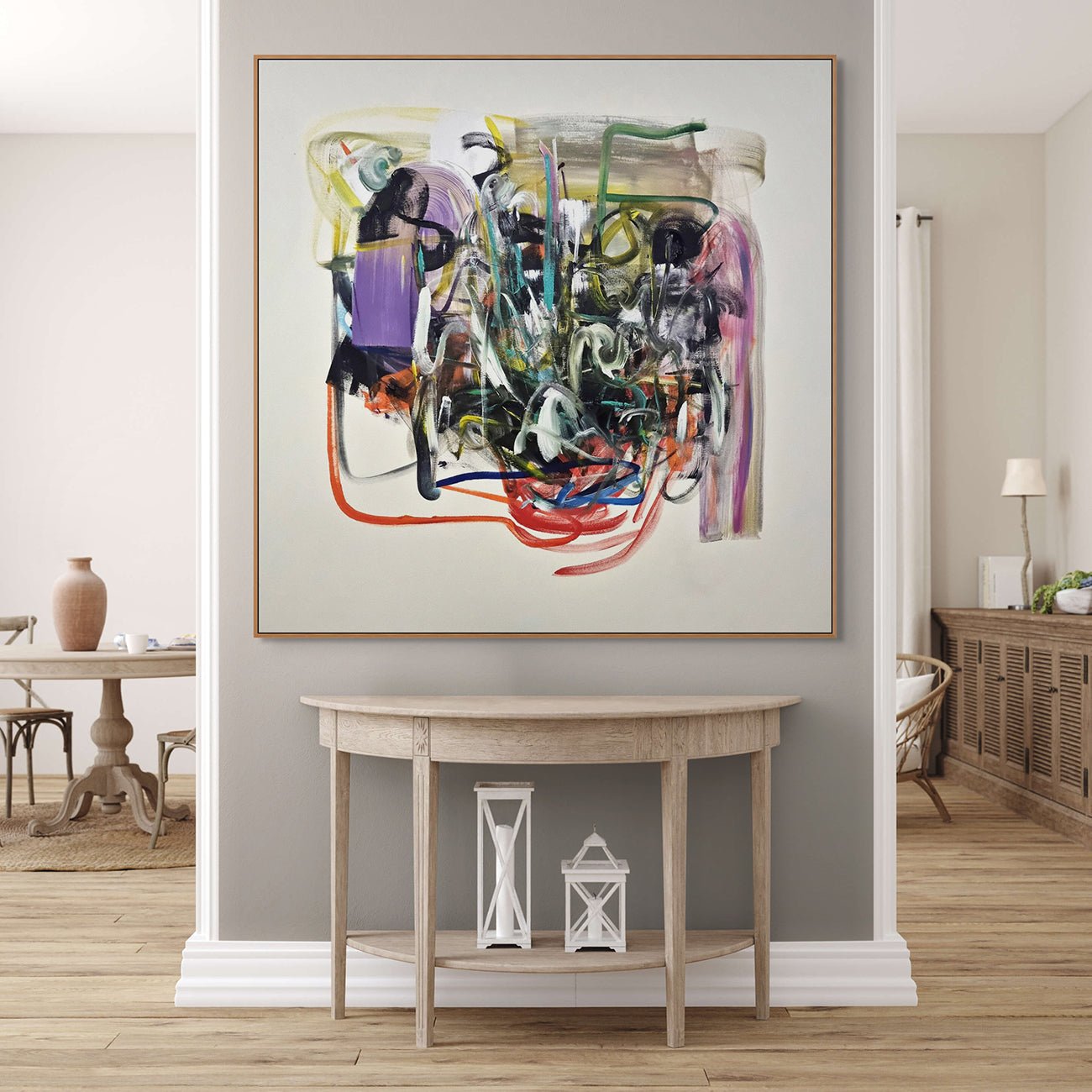
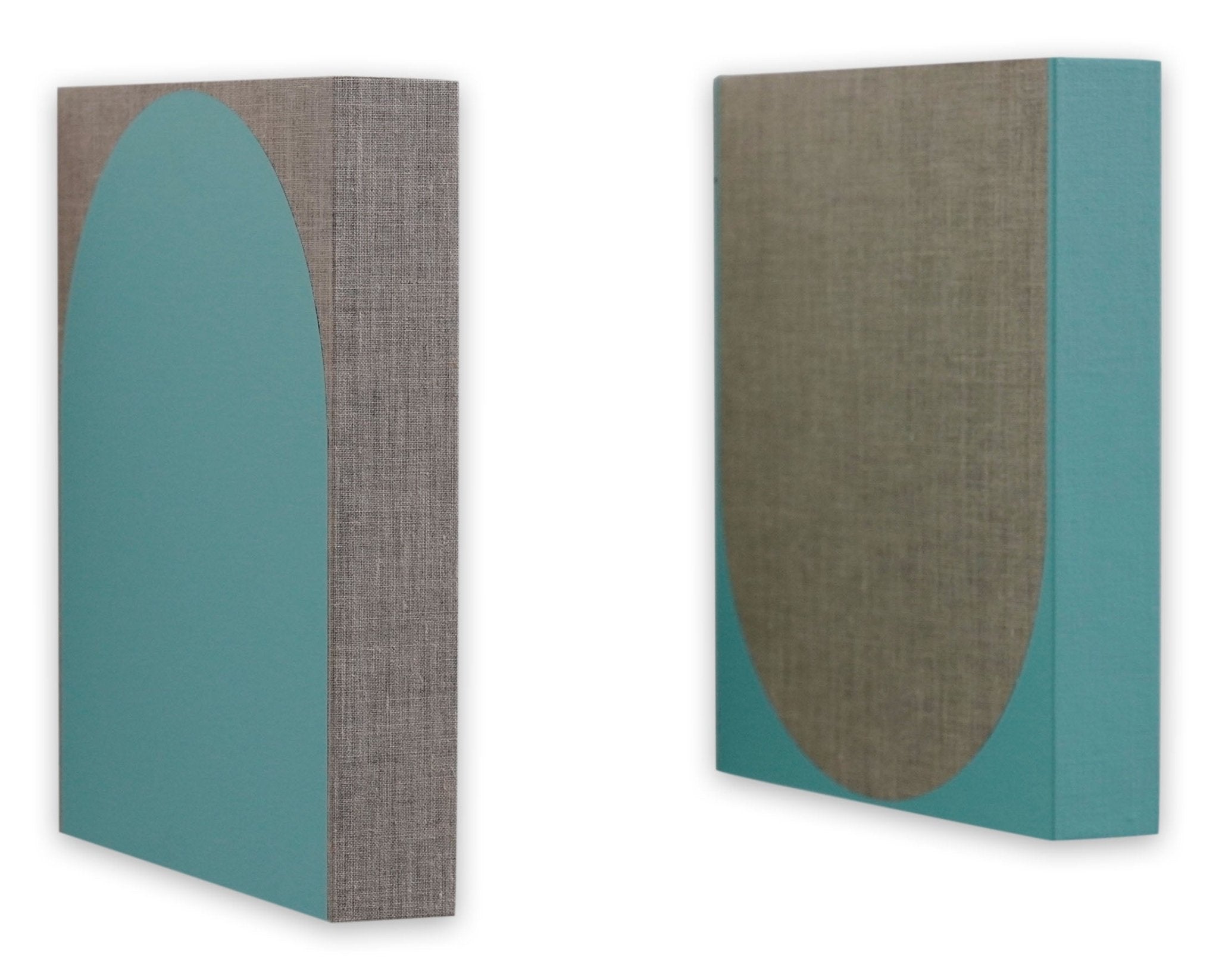
Guillaume Moschini (b. 1970), mentored by the triumvirate of Viallat, Saytour, and Bioulès, has softened the aggressive deconstruction of his teachers. Working with unprimed canvas and the "imbibition" technique, he allows diluted acrylics to soak directly into the fiber. The result is a "virtuous circle" of light and transparency, a "soft geometry" that vibrates with color rather than confronting the viewer. A staple of the French abstract scene through Galerie Oniris, Moschini’s work reaches international collectors through IdeelArt.
V. The Innovators
The movement also survives because it is being challenged. The youngest generation uses the tools of Supports/Surfaces to critique or expand its logic into new media.

No 1113 by Jean-Daniel Salvat, 2020
Jean-Daniel Salvat (b. 1969), a student of Viallat’s class of '92, essentially inverted the movement to create "Post-Supports/Surfaces". While his mentor celebrated the rustic weave of the canvas, Salvat paints on the reverse side of transparent vinyl. The viewer sees the work through the plastic, resulting in a smooth, industrial "facsimile" of a painting that mirrors the slickness of a digital screen. He maintains the movement's obsession with the object but swaps the rustic for the synthetic. His work is also available through IdeelArt.com.

Nicolas Chardon - Solo show at Galerie Jean Broly, 2014 - Installation shot
Nicolas Chardon (b. 1974) engages in a conceptual dialogue with Patrick Saytour’s domestic fabrics. Chardon paints on "Vichy" (gingham) fabrics, but with a twist: when he stretches them, the grid lines naturally distort due to tension. He paints his geometric squares following these distorted lines, proving that the "ideal" geometry of the mind must always bow to the physical reality of the support.

Adrien Vescovi - Solo show at Ceysson & Bénétiere St Etienne, 2017 - Installation shot
Finally, the legacy has even moved outdoors with Adrien Vescovi (b. 1981), heir to the "Intérieur/Extérieur" exhibitions of 1970. Vescovi takes the toile libre out of the studio entirely. Using natural dyes, he exposes his canvases to the sun, wind, and rain for months, shifting the movement's focus from "Marxist materialism" to "Ecological materialism." With major institutional projects in 2026, he has also exhibited with Ceysson & Bénétière, the same powerhouse defending the movement's founders.
VI. Parallel Histories and the Universal Language in Western Culture
If Supports/Surfaces began as a specifically French rebellion, the questions it asked were universal. It turns out that the urge to dismantle the painting was not unique to Nîmes; it was a global zeitgeist.
For the collector, this section does not map a lineage of "heirs," but rather a constellation of kindred spirits. These are western artists who, emerging from different capitals and different decades, arrived at the same "Supports/Surfaces" conclusions, proving that the search for material truth is a cross-cultural necessity.

"La Couleur en Fugue" at Fondation Louis Vuitton , 2022. Sam Gilliam - Drape Paintings series
The American Counterpart: Sam Gilliam (1933–2022).
It is a case of historical synchronicity: at the precise moment Claude Viallat was unfurling his canvases in the South of France, Sam Gilliam was removing the stretchers in Washington, D.C. His celebrated "Drape Paintings" - vast, color-saturated canvases suspended in space - are not descendants of the French school, but its spiritual twin. Like the French founders, Gilliam understood that liberating color from the rigid architecture of the frame allowed it to inhabit real space. Whether hanging in loose, sculptural folds or stained with intense pigment, his work treats the canvas as a physical skin rather than a window, validating the materialist quest across the Atlantic.
 "La couleur en fugue" at Fondation Louis Vuitton, 2022. Steven Parrino
The Punk Parallel: Steven Parrino (1958–2005).
Steven Parrino is internationally recognized for pushing the boundaries of painting into radical deconstruction. His iconic works, large, circular canvases twisted, folded, or crumpled, often painted in bold stripes or metallic monochrome, treat the canvas as a sculptural object, emphasizing the physicality and resistance of the material. Crumpled metallic forms on the floor echo these gestures, dissolving the line between painting and sculpture.
Parrino’s interventions are not simply about destruction, but about the energy and tension that arise when the conventions of painting are upended. While he developed his approach independently, Parrino’s work resonates strongly with the Supports/Surfaces ethos: both foreground process, materiality, and the autonomy of the painted object. His practice stands as a powerful parallel to, rather than a direct extension of, the movement, demonstrating how the radical rethinking of painting’s limits has played out on both sides of the Atlantic.

Sergej Jensen at PS1 MOMA, 2011. Installation shot.
The Contemporary Dialogue: Sergej Jensen (b. 1973) & Wyatt Kahn (b. 1983).
Today, artists from Berlin to New York continue to expand this logic. Jensen’s "paintings without paint" (sewn from linen and burlap) mirror Patrick Saytour’s use of domestic textiles. Meanwhile, Wyatt Kahn constructs puzzle-like assemblages of raw canvas and shaped frames, creating an architectural answer to Daniel Dezeuze’s empty ladders. They are not copying the French; they are speaking the same material language

Wyatt Kahn - Untitled (Grayscale City-Paintings) - 2018 ©Wyatt-Kahn
VII. Global Resonances: Supports/Surfaces and Asia
While Supports/Surfaces originated in France, its radical rethinking of painting’s materials and conventions finds striking parallels in postwar Asian art. Although there is no direct Asian equivalent or formal connection, artists and movements such as Dansaekhwa in South Korea and Gutai in Japan have independently explored many of the same concerns that animate Supports/Surfaces.
Dansaekhwa artists such as Park Seo-Bo (1931–2023), Ha Chong-Hyun (b. 1935), and Lee Ufan (b. 1936) foreground the materiality of the canvas, repetitive gesture, and the autonomy of the support. Their process-driven, meditative works often involve manipulating, scraping, or weaving the canvas, echoing the material experimentation and deconstruction found in Supports/Surfaces.

"Lee Ufan and Claude Viallat , Encounter" at Pace London, 2023. Installation shot.
Similarly, the Gutai group in Japan pioneered an experimental approach to painting in the 1950s and 60s, embracing unconventional supports, performative gestures, and the integration of the body and chance into the creative act. Artists like Kazuo Shiraga (1924–2008), with his dynamic, foot-painted canvases, and Shozo Shimamoto (1928–2013), known for his radical material experiments and performative “bottle-throwing” paintings, embody a materiality and process-orientation that closely echo the Supports/Surfaces ethos, challenging the hierarchy of painting as illusion and insisting on the objecthood and physical presence of the artwork.
Today, these affinities are increasingly recognized by curators and critics, who bring together Supports/Surfaces, Dansaekhwa, and Gutai in exhibitions to highlight a broader, global movement toward materiality, process, and the dissolution of painting’s traditional boundaries. This convergence underscores that the search for material truth in art is not limited by geography, but resonates across continents and cultures.
 "Action" - Shozo Shimamoto and Kazuo Shiraga at Whitestone gallery, 2023. Installation shot
VIII. The IdeelArt Constellation: Material Realism in Practice
The "Neo Supports/Surfaces" movement is not merely a historical footnote; it is a living frequency that continues to vibrate through contemporary practice. At IdeelArt, this lineage is anchored by the direct heirs we have already discussed, Frédéric Prat, with his rigorous purification of the "non-form"; Jean-Daniel Salvat, who questions the very skin of the painting through his work on vinyl; and Guillaume Moschini, whose procedural application of color eliminates the ego to reveal the vibration of the support.
Yet, the pursuit of "material truth" extends beyond these direct descendants. It appears in a diverse constellation of international artists who, consciously or intuitively, have arrived at the same conclusion: that a work of art must first be an object in the real world before it can be an image.

Jean Feinberg - "Minimal/Maximal" Exhibition at Ed Rothfarb studio, 2025 - Installation shot
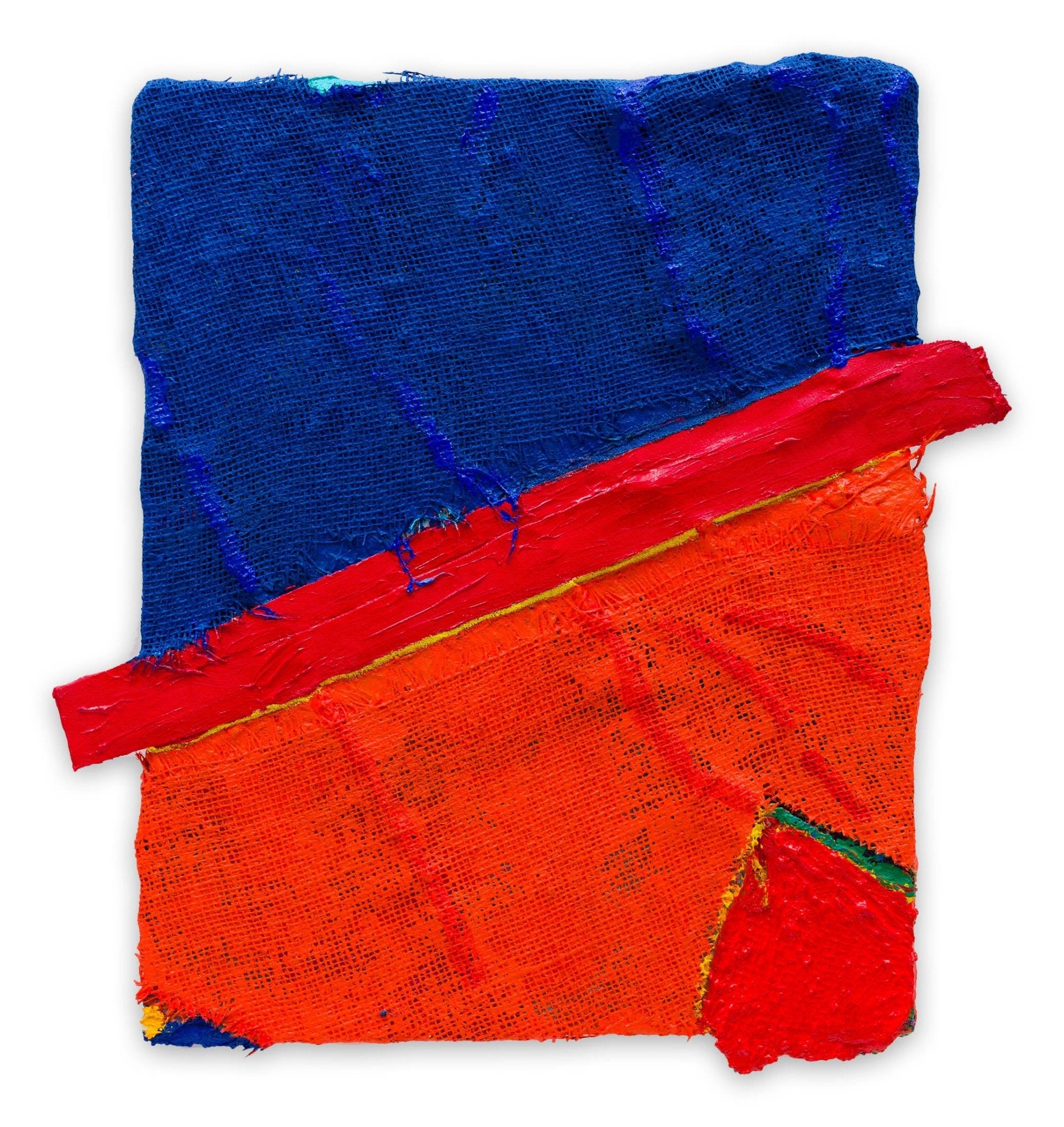
Jean Feinberg (USA) embodies the movemen's insistence on the "painting as object." Her work rejects the rectangular window of traditional painting in favor of "constructions" built from salvaged wood, canvas, and paint. Like the early experiments of Bernard Pagès, Feinberg’s works are not images of something; they are autonomous entities that protrude into the viewer’s space. By integrating found debris and structural timber, she validates the thesis that the physical tension of the object is the true subject of art.

Louise Blyton - "Mulooning" - Solo show at Five Walls gallery, Melbourne, 2025 - Installation shot
Louise Blyton (Australia) engages in a profound dialogue with the "truth of the support." In the spirit of Claude Viallat’s liberation of the canvas, Blyton elevates raw linen from a passive background to an active, visible material. Her reductive technique—wrapping linen over shaped balsa wood forms and applying endless, ego-less layers of pigment—creates works that are neither painting nor sculpture, but hybrid objects. They do not hide their making; they celebrate the woven reality of their surface.

Anthony Frost in his studio (2023)
Anthony Frost (UK) channels the movement’s rejection of "fine art" preciousness through his radical embrace of modest materials. Much as Noël Dolla turned to dishcloths and tarlatan, Frost constructs his visceral abstractions using sailcloth, fruit netting, and burlap. These are not neutral surfaces for illusion; they are gritty, industrial realities that assert their own history. His work proves that the "Neo Supports/Surfaces" spirit thrives wherever an artist prioritizes the raw honesty of matter over the deception of representation.

"Fragile Beauty: Photographs from the Sir Elton John and David Furnish Collection", Richard Caldicott, Victoria & Albert Museum, 2025
Richard Caldicott (UK) applies the movement’s deconstructive logic to the medium of photography. Just as Daniel Dezeuze stripped painting down to the stretcher to reveal its skeleton, Caldicott strips photography down to its elemental mechanics: light and paper. Through his photograms and paper negatives, he bypasses the camera’s documentary function to create images that are physical imprints of the world. He reveals the "ontological truth" of photography, transforming it from a mirror of reality into a generator of concrete form.
We believe the "Neo Supports/Surfaces" movement is far larger than its French origins; it is a global search for material truth. Whether called "Provisional Painting," "Casualism," "New Materialism," or seen in Dansaekhwa and Gutai, artists from Brooklyn to Seoul are actively engaged in this same quest.
This is not nostalgia, but a valid, universal methodology for the 21st century. What began in the studios of Nîmes finds its echo in the drapes of Washington D.C., the textile art of Denmark, the minimalism of New York, and the meditative canvases of Asia.
The founders broke the painting apart to find its truth; the institutional bridge preserved that truth; and a global generation of artists is using it to build new architectures. The political pamphlets of 1968 may have faded, but the aesthetic discovery remains sound: the object of painting is painting itself.
By Francis Berthomier

Claude Viallat & Christelle Thomas. "Avatar 2005-2025". Hotel des Arts de Toulon. Dec 2025.
This article was inspired by a recent visit to the Viallat exhibition at the Hôtel des Arts in Toulon (France), where a conversation with Claude Viallat himself confirmed that he still produces three works a day, an enduring testament to his ongoing vitality and to the movement’s living energy.
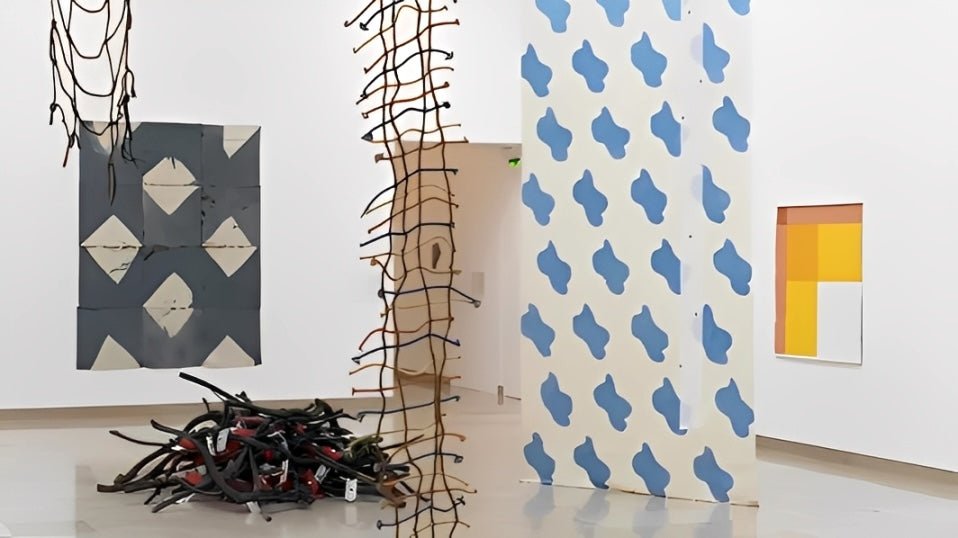
Featured image: "Supports/Surfaces : Les origines 1966-1970" at Carré d'Art (Nimes, France) 2018. Installation shot.