跳至內容

購物車

您的購物車為空

文章: Abstract Expressionism: Véhémences Confrontées

Abstract Expressionism: Véhémences Confrontées

Abstract Expressionism: Véhémences Confrontées

Everyone knows this story. A troubled genius in a Long Island barn drops his brushes, lays the canvas on the floor, and flings enamel at it. A nation that had never produced a major art movement suddenly produces the only one that matters. Painting's capital migrates from Paris to New York on the strength of a few American arms, and modern art is never the same.

It is a wonderful story. Parts of it are even true.

But it is a story that had to leave things out in order to work, and what it left out is more interesting than what it kept. The shipping manifests, the gallery invitations and the exhibition posters of 1950 to 1952 describe something quite different from a conquest. They describe an argument: loud, transatlantic, conducted in two languages, and genuinely unresolved at the time. Americans and Europeans were hung on the same walls, on purpose, by dealers and critics who thought the comparison was the whole point. Only afterwards did one side get to write the catalogue.

Rather than retelling the heroic version one more time, this article follows the evidence. Not because the heroic version is a lie, but because the real version is better, and because it explains something the myth cannot: why the gestural language associated with Abstract Expressionism never actually disappeared, and why painters in Antwerp, Sydney, Tehran and Tallinn are still making it today.

(And if you are here strictly for the basics, who they were, when it happened and why it ended up with that name, the twenty questions at the end of this article answer all of it without the argument.)

The Myth in One Sentence, and Who It Was For

The standard account goes: between roughly 1943 and 1956, a group of painters working in Manhattan invented the first American art movement of world importance, freed painting from European tradition, and made New York the centre of the art world.

Notice how much work the word "freed" is doing.

The men and women in question did not think of themselves as a movement, disliked the label, and could not agree on a name for what they were doing. At a three-day symposium at Studio 35 in April 1950, organised by Robert Motherwell and Ad Reinhardt, they sat in a room and failed to name themselves. "Abstract-Expressionist" was proposed. So was "Abstract-Symbolist." Nobody was satisfied. The term that stuck had been borrowed from German Expressionism by the critic Robert Coates, and several of the painters it described spent the rest of their lives objecting to it.

So who needed this "Abstract-Expressionist" movement to exist? Critics, who required a subject. Dealers, who required a category. And, by the late 1950s, a country that had discovered that culture was a useful instrument of foreign policy. We will come back to that.

The roll of names the label finally settled on is worth having in front of you, and we have set it out elsewhere in 17 Abstract Expressionist Artists You Should Know. What follows is the part that account leaves out.


Blue and Grey (1962) by Mark Rothko - December 2023 - Fondation Louis Vuitton - ©IdeelArt

What Arrived by Boat

The first thing the heroic tale has to forget is that a substantial part of the European avant-garde was physically living in New York while Abstract Expressionism was being invented.

Fleeing the war, André Breton, Max Ernst, André Masson, Roberto Matta, Piet Mondrian, Fernand Léger and Marcel Duchamp all spent significant time in the city in the early 1940s. Peggy Guggenheim opened her gallery Art of This Century in 1942 and hung the young Americans alongside the Surrealists she had collected and, in Ernst's case, married. Hans Hofmann, who had taught in Munich and absorbed Cubism first-hand in Paris, ran the most consequential painting school in America out of West 8th Street.

The technique at the centre of the myth came with them. Surrealist automatism, the practice of letting the hand move without conscious direction, is the direct ancestor of the poured painting. Masson had been making automatic drawings since the 1920s. Matta taught automatist exercises to a circle of young New York painters including Motherwell and Baziotes. Arshile Gorky, an Armenian immigrant, is the hinge figure: half Surrealist, half something new, and the painter the others were watching.

None of this diminishes what the Americans did with it. It does mean that the story of a native genius emerging from nowhere is, at minimum, badly geographically confused. The gesture did not begin in a barn in Springs. It arrived at a pier in Manhattan.

That inheritance is still legible today. When Macha Poynder begins a work with automatic drawing, she draws on a lineage established by André Masson in the 1920s, carried across the Atlantic by Matta and other Surrealists, and transformed in New York by painters such as Motherwell. The thread passes through New York, but it does not begin there.That inheritance is still legible today. 


Photograph taken by George Platt Lynes on the occasion of an exhibition at Pierre Matisse Gallery, March 1942. Left to right, first row: Matta, Ossip Zadkine, Yves Tanguy, Max Ernst, Marc Chagall, Fernand Léger; second row: André Breton, Piet Mondrian, André Masson, Amédée Ozenfant, Jacques Lipchitz, Pavel Tchelitchew, Kurt Seligmann, Eugene Berman. 

October 1950: Hung Side by Side, On Purpose

Here is the fact that ought to be in every survey and almost never is.

From 23 October to 11 November 1950, the Sidney Janis Gallery on 57th Street staged an exhibition called Young Painters in U.S. and France. Janis did not hang the Americans in one room and the French in another. He paired them, one to one, and asked the visitor to compare:

  • Jackson Pollock with André Lanskoy
  • Mark Rothko with Nicolas de Staël
  • Franz Kline with Pierre Soulages
  • Willem de Kooning with Jean Dubuffet
  • Arshile Gorky with Roberto Matta

Left to right - Pierre Soulage - Untitled - 1953 / Franz Kline - Cardinal - 1950

Read that list again. In 1950, in New York, the most influential dealer of the period thought the interesting question was not whether the Americans had won, but whether they were doing the same thing as the Europeans. The pairings are not random either. Kline and Soulages were both building black architecture out of loaded brushes. Rothko and de Staël were both making colour into mass. Janis was making an argument, and the argument assumed parity.

The heroic tale cannot accommodate this exhibition, so it quietly drops it.

Paris, 8 March 1951

Four months later the argument was returned across the Atlantic, and it was even more explicit.

From 8 to 31 March 1951, the Galerie Nina Dausset on the rue du Dragon staged Véhémences confrontées, organised by the critic Michel Tapié with the painter Georges Mathieu. The poster announced that the show presented, for the first time in France, the confrontation of the extreme tendencies of American, Italian and Parisian non-figurative painting.

The wall held Jackson Pollock, Willem de Kooning and Alfred Russell , all from New york, next to Wols, Hans Hartung, Georges Mathieu, Camille Bryen, Giuseppe Capogrossi and Jean-Paul Riopelle.

The word in the title is worth pausing on. "Vehemences confronted". Not influences, not lessons, not a transmission from a teacher to a pupil. A confrontation between equals, each presumed to have arrived at violence independently.


Untitled (1955) by JP Riopelle from the Exhibition "Riopelle, Parfums d'Atelier" at Maeght Foundation, 2023 ©IdeelArt

How did the Pollocks get there? Not through MoMA and not through any official channel. Alfonso Ossorio, the Filipino-American painter who was Pollock's friend and patron, carried canvases to Paris himself and put them in front of Tapié. Ossorio had been introduced to Tapié by Dubuffet, whose Art Brut collection Ossorio would later house on his estate in East Hampton for a decade. The transatlantic wiring was personal, informal and entirely two-directional.

Tapié liked what he saw well enough to give Pollock his first solo exhibition in France, at the Studio Paul Facchetti in 1952. He wrote the catalogue text himself and recorded his pleasure at being able to throw this kind of bomb into the Parisian art scene.

And Mathieu, the supposed rival? He had been working for the United States Lines shipping company since 1947, had been trying since 1948 to get American painters shown in Paris, and had his own first New York solo exhibition at the Stable Gallery in 1952. Anyone who tells you the two scenes did not know each other is describing a map, not a history.

Five Names for the Same Storm

The termthat ultimately prevailed, Abstract Expressionism, had already been applied to the emerging American painting by Robert Coates in 1946, adapting a phrase previously associated with German Expressionism. But it was never the only name in circulation, nor necessarily the one that best described what painters on both sides of the Atlantic were doing. Within the next decade, critics proposed several competing terms, each framing the same upheaval differently.

  • "Action painting". Harold Rosenberg, The American Action Painters, 1952. The canvas as an arena, the painting as the residue of an event rather than a picture of anything.
  • "Un Art Autre". Michel Tapié, 1952. Art of another kind: indeterminate, unrepeatable, hostile to composition. Written in Paris the same year, from the same material.
  • Art Informel / Tachisme. Michel Tapié helped establish Art Informel through his 1952 book Un Art Autre, while Tachisme was used by Pierre Guéguen in 1951 and later popularised by Pierre Restany. Both terms described painting built from spontaneous stains and marks rather than predetermined form.
  • "American-Type Painting". Clement Greenberg, 1955. Note the nationality in the title, and note the date. This is the moment the framing hardens.

Four vocabularies, two continents, roughly four years. Rosenberg and Tapié published in the same year without agreeing on anything except that the old categories had collapsed. It isn't a story about one centre exporting an idea; it's a story about a condition that showed up in several places at once, in the aftermath of a war that had discredited every available pictorial order.

The differences are real, and we should not flatten them. Tapié's informel is more interested in matter, surface and the raw stain; Rosenberg's action painting is more interested in the performing self. But these are two readings of an overlapping body of work, not two separate art histories.

You can still watch a single painter hold both readings at once. Reiner Heidorn works in a strong gestural tradition while running a material critique of the act of painting itself, which is to say he is having Tapié's argument about substance and Rosenberg's argument about the performing self on the same surface.

IdeelArt visual comparing the four competing terms coined between 1951 and 1955 Visual comparing four alternative frameworks proposed between 1951 and 1955, with their authors and cities. ©IdeelArt

The Americans Who Went the Other Way

The myth needed New York to teach and Paris to learn. It did not happen that way.

More than 400 American veterans used the GI Bill to study in Paris between 1946 and 1953, a fact recovered by the 2021 exhibition United States of Abstraction: American Artists in France, 1946-1964 at the Musée d'arts de Nantes and the Musée Fabre in Montpellier. Among them and alongside them: Sam Francis, who arrived in 1950 and became one of the most successful painters in France before he was known at home; Shirley Jaffe, who stayed for the rest of her life; Ellsworth Kelly and Jack Youngerman, whose hard-edge vocabulary was formed in Paris, not New York; Joan Mitchell, who moved to France in the mid-1950s, lived with Jean-Paul Riopelle from 1955, and eventually settled at Vétheuil in a house overlooking the garden where Monet had painted.


Around the Blues (1957-62) by Sam Francis, at the exhibition "Making Traces" at the Tate Modern , March 2016. ©IdeelArt

Think about what that last sentence does to the tidy narrative. One of the greatest second-generation Abstract Expressionists spent the bulk of her career in France, partnered to a Québécois painter who had signed the Refus global, working within sight of Impressionism's own address.

The curators of the Nantes exhibition made an observation we find genuinely moving: these Americans in Paris remained, in their phrase, strangely stateless. They were not absorbed into the School of Paris and they were increasingly written out of the New York story for having left. The myth has no category for them, so it lost them.

Statelessness of that kind is now simply the normal condition of abstract painting. Yari Ostovany works between Iranian mystical poetry and American scale; Nikolaos Schizas is Greek, based in Spain, and bridges Abstract Expressionism with Surrealism and Pop; Carolina Alotus lives in Cyprus, is Swedish, and draws on Abstract Expressionism and Colour Field together; Jaanika Peerna is Estonian and works in New York. None of them needs a capital city to authorise the work.

IdeelArt visual mapping painters crossing the Atlantic in both directions, 1932 to 1964Visual mapping the movement of painters across the Atlantic in both directions, Europe to New York 1932 to 1942 and New York to Paris 1946 to 1964. ©IdeelArt

1959: How an Argument Became a Conquest

So when does the conversation stop and the conquest begin? You can almost put a date on it.

In 1958 and 1959, the Museum of Modern Art's International Program sent an exhibition called The New American Painting to eight European countries: Basel, Milan, Madrid, Berlin, Amsterdam, Brussels, Paris and London. Eighty-one paintings, seventeen artists, selected by Dorothy Miller with the poet Frank O'Hara. Alfred Barr wrote the introduction. After being displayed at the Moma, it reached Paris in 1959 and the Tate in London in February of that year.

This was not a comparison show. There were no Europeans in it. The title is a declaration, and the scale of the canvases was itself an argument that European painting could not answer in the same register.


"The New American Painting as Shown in Eight European Countries" - Installation shot of the exhibition that took place at the Moma following its european tour - © Soichi Sunami

That the United States CIA and, at arm's length, the Congress for Cultural Freedom took an interest in exporting American abstraction during the Cold War is now well documented and much argued over. The blunt version, that Abstract Expressionism was a CIA operation, is too crude: the painters were mostly leftists, several were openly hostile to the government, and nobody was taking orders. The defensible version is narrower and more damaging to the myth: a body of genuinely radical painting became useful as evidence that a free society produced free art, and institutional money followed that usefulness. Serge Guilbaut's How New York Stole the Idea of Modern Art (1983) remains the sharpest account, and its title is a provocation rather than a verdict.

The point for our purposes is simply this. By 1959 the pairings of 1950 had become unthinkable. The confrontation had been settled by press release.

What the Myth Cost

The heroic account did not merely describe Abstract Expressionism; it determined who would represent it. A diverse and unstable field was gradually reduced to a small, overwhelmingly male group of American painters, while artists who complicated the story were pushed to its edges.

Every simplification has a bill, and this one was paid by specific people.

The women

Nina Leen's 1951 Life photograph of "the Irascibles" (see below) helped give the emerging New York School its public face: fifteen painters, only one of them a woman, Hedda Sterne. Seven years later, the overwhelmingly male roster of MoMA’s The New American Painting turned that image into an institutional canon. Lee Krasner, Joan Mitchell, Grace Hartigan, Elaine de Kooning, Helen Frankenthaler and Alma Thomas were all producing first-rank work while the movement was being packaged around masculine heroism. Frankenthaler’s soak-stain method of 1952 was one of the period’s genuine technical inventions and seeded an entire subsequent movement.

The Europeans

Wols, Hartung, Soulages, Riopelle, Mathieu, de Staël and Zao Wou-Ki belonged to the transatlantic argument from the beginning. But once Abstract Expressionism was promoted as evidence of American cultural leadership, the narrative had little room for them. Their reputations remained substantial in Europe but were flattened in much of the English-speaking account. We have written separately about Hans Hartung and the importance of gesture, and about Lyrical Abstraction, which carries the other half of this history.

The idea itself

If Abstract Expressionism is treated as a heroic episode belonging exclusively to one city and one decade, then it is finished, and everything after it becomes an echo. If it is understood instead as the American chapter of a broader international response, then it becomes part of a continuing language.


The Irascibles, photographed by Nina Leen for Life in 1951. The portrait helped define the public image of the emerging New York School: fifteen artists, only one of them a woman, Hedda Sterne.

What It Means to Be an Abstract Expressionist Painter Now

Here is a curious thing about the most successful heirs to this tradition: almost none of them will accept the label.

Ask the painters who most obviously work in the lineage and you will get a polite refusal. The term belongs to a specific room in a specific decade, they will say, and to claim it now is either nostalgia or bad manners. Jason Stopa, one of a generation of abstractionists who came up in the 2010s, calls the whole abstraction-versus-figuration division a twentieth-century problem. That is not a rejection of the method. It is a rejection of the packaging, which is exactly the objection Rothko, Newman, Still and de Kooning themselves made when critics first tried to file them.

And yet the method is everywhere.

Cecily Brown, born in London in 1969 and working in New York, builds canvases out of a de Kooning-scale churn in which bodies keep almost resolving. Amy Sillman has spent forty years arguing, in paint and in some of the sharpest essays any painter has written, that gesture is a form of thinking rather than a form of feeling. Albert Oehlen works in Germany through a deliberately ugly, deliberately post-heroic version of the same vocabulary. Julie Mehretu layers architectural drawing under storms of mark-making at a scale Pollock would have recognised immediately. Jadé Fadojutimi, born in 1993, makes some of the most energetic gestural abstraction being produced anywhere. Frank Bowling, born in Guyana in 1934, has been pouring and staining across two continents for sixty years and was finally given his due in his eighties.

Look at that list. British, American, German, Ethiopian-American, British, Guyanese-British. Not one national school. It is the 1951 wall again, with better lighting.

The market has noticed the shape of this. Phillips, introducing its 2026 guide to post-war American art, puts the first generation at eight and nine figures and describes second-generation abstraction as one of the last frontiers for finding value at a relatively accessible price point. Read that as a collector and it is a tip. Read it as a historian and it is an admission: the canon is being quietly reopened, and the people who were sorted into footnotes in 1959 are being reconsidered one estate at a time.


Taught Thought by Jadé Fadojutimi - 2012 - photo Eva Herzog - © The artist - available at Gagosian gallery

So what does it actually mean to work in this tradition today, if the name is unusable and the heroic posture is unavailable?

Three qualities seem especially durable, we would suggest.

The mark records a body, but it is not a transparent confession.

Abstract Expressionist gesture was often presented as a direct revelation of the artist’s inner self. That reading captures part of the work’s emotional ambition, but it is too simple. A mark also records distance, speed, pressure, hesitation and revision: the physical conditions of its making. Contemporary painters can inherit that bodily and emotional intensity without adopting the mythology of the tormented genius.

Scale is a claim on your space, not on your attention.

A large abstract painting is not shouting. It is establishing that you and it are in a room together, at a particular distance, and that the encounter has a duration. This is the single most durable invention of the period and it is why these paintings do not photograph well and do not translate well onto a screen.

Refusing the label is part of the inheritance.

Every painter in this lineage, from 1950 to now, has objected to being filed. That is not a coincidence or a fashion. It follows from the method: if the painting is the record of a decision that has not been made yet, then a category applied in advance is a contradiction in terms.

That is the honest answer, and it is why the language has outlasted its own name.

Forty-six Artists, One Continuing Argument

This is not a rhetorical flourish. Go through the IdeelArt roster and forty-eight of our artists can claim a meaningful connection with Abstract Expressionism, through their method, their vocabulary or their own statements.

That number is the argument. If Abstract Expressionism were a closed heroic episode belonging to New York between 1947 and 1959, a gallery working in 2026 would not be able to fill a museum with living painters who describe their own practice in its terms. And they do not divide the way the myth predicts. Some claim the American inheritance, some claim the Parisian one, and a striking number of them claim the inheritance of the other continent entirely.

Below are the twelve whose ties to the movement we judge the strongest, a selection that is ours and admittedly subjective, grouped by which side of the 1951 wall they stand on.

The Americans who kept the method

Melissa Meyer works in the most direct line of descent. Her brushstrokes carry what she calls a glyph-like quality, marks that hover between writing and pure gesture, and she describes a painting as beginning when she sees a colour, a mark or a gesture somewhere and needs to answer it. That is the second-generation New York method exactly: not self-expression, but a conversation with the mark already on the surface.

Sway by Melissa Meyer, 2006Melissa Meyer, Sway, 2006

Ashlynn Browning states the procedure almost as a definition. She describes using a classical Abstract Expressionist approach: making a mark, then responding to that mark. Her touchstones are Philip Guston and Joan Mitchell, and her forms have the same quality of being caught mid-decision. Frenetic is a good introduction, and the title is not accidental.

Frenetic by Ashlynn Browning, 2018Ashlynn Browning, Frenetic, 2018

Ellen Priest names Willem de Kooning and Joan Mitchell directly, and adds a dimension the first generation only gestured at. She paints against recorded jazz, building layered works that track a specific performance rather than a feeling in general. Jazz: Thinking Out Loud, Reaching for Song #13/14 belongs to that long series. Action painting always claimed kinship with bebop. Priest actually does the work.

Jazz Thinking Out Loud Reaching for Song by Ellen Priest, 2011Ellen Priest, Jazz: Thinking Out Loud, Reaching for Song #13/14, 2011

Yari Ostovany calls his own mark-making a gestural outburst, and situates his process between Abstract Expressionism and Colour Field. What he adds is a second inheritance that New York never had: Simorgh Descending III takes its name from the bird at the end of Attar's Conference of the Birds, the one the seekers discover is themselves. Rothko wanted painting to carry that kind of weight. Ostovany arrives at it from the tradition Rothko was reaching toward.

Simorgh Descending III by Yari Ostovany, 2016Yari Ostovany, Simorgh Descending III, 2016

The Europeans who claim New York

This is the group the heroic tale cannot explain, and it is the direct descendant of 1951. Four European painters, none of them American, whose stated lineage runs to Manhattan.

Macha Poynder is French, and her account is the most touching of the twelve. Arriving in New York in the 1990s, she says she found in the Abstract Expressionists not a style but a family. She works through automatic drawing, performative gesture and intuitive colour, which is to say through the Surrealist inheritance that reached New York by boat in the first place. Truly Madly Deeply carries it.

Truly Madly Deeply by Macha Poynder, 2013Macha Poynder, Truly Madly Deeply, 2013

Emma Godebska, also French, builds explicitly on Joan Mitchell and works from unconscious spontaneous gesture. There is a pleasing circularity here that is worth saying out loud. Mitchell was an American who moved to France and painted within sight of Monet's garden. Godebska is a French painter who claims Mitchell. The traffic has now gone around the loop twice.

Contrast 01 by Emma Godebska, 2022Emma Godebska, Contrast 01, 2022

Petra Schott is German, and her paintings openly extend the emotional and gestural language of Abstract Expressionism. She works between spontaneity and control, building layered fields in which colour, movement and partly submerged forms carry a strong psychological charge. Her work retains the movement’s belief in painting as an emotional and spiritual encounter, without reproducing its heroic mythology. Spring Prayer is characteristic of that balance.

Spring Prayer - by Petra Schott - Abstract Painting - IdeelartPetra Schott, Spring Prayer, 2026

Danny Giesbers is Dutch and names Jackson Pollock, Gerhard Richter and Willem de Kooning together, which is a lineage no American critic of the 1950s would have recognised and which makes complete sense in Europe now. His resin-layered surfaces hold the gesture suspended rather than dried onto the canvas. Sexual Healing is characteristic.

Sexual Healing by Danny Giesbers, 2021Danny Giesbers, Sexual Healing, 2021

The European line, never interrupted

And here is the half of the story the myth deleted, still running.

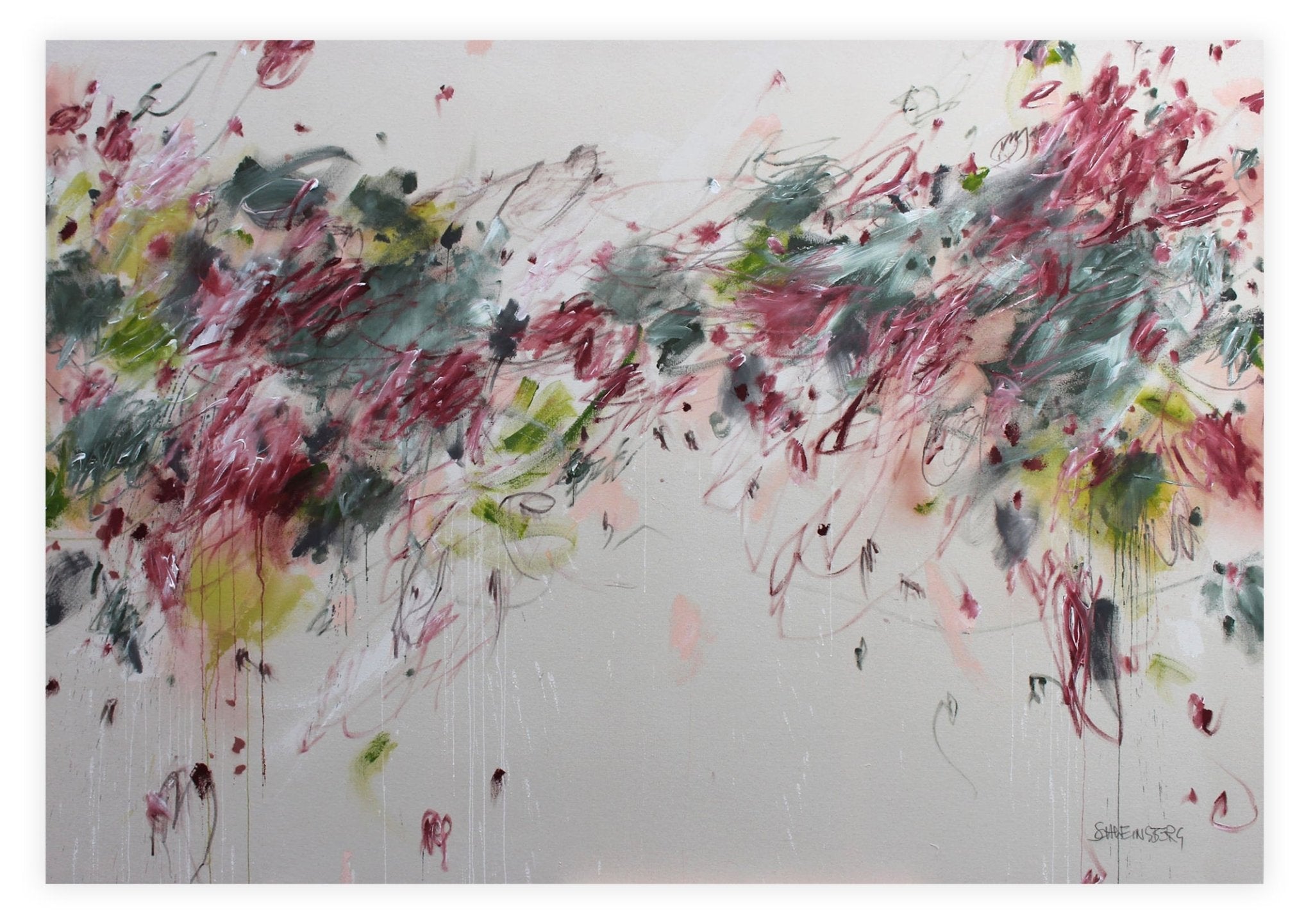
Daniela Schweinsberg is the thesis of this article compressed into one biography. She describes her work as extending the legacies of Tachisme, Lyrical Abstraction and Abstract Expressionism, in that order, and names Cy Twombly, Joan Mitchell and Georges Mathieu in the same breath. Mathieu and Mitchell. The Paris organiser of Véhémences confrontées and the American who moved to France. Her painting Pink Noise is subtitled Abstract Expressionism, which saves us the trouble of arguing the point.

Pink Noise Abstract Expressionism by Daniela Schweinsberg, 2020Daniela Schweinsberg, Pink Noise (Abstract Expressionism), 2020

Paul Landauer places himself in the tradition of Informal Art and Abstract Expressionism together, and his method is stranger than either. He counts. The marks, touches and graphic traces accumulate through repetition rather than through a single explosive act, which is Tapié's informel preoccupation with matter arriving at a conclusion Rosenberg's arena never reached. Untitled (No 5) shows it.

Untitled No 5 by Paul Landauer, 2020Paul Landauer, Untitled (No 5), 2020

Robert Niesse does not even bother with a metaphor. He titles the paintings Abstract informal, with the year and the serial number, and lets seventy years of French criticism sit in the label. Abstract informal 2024-2122-1 is from last year. The term Tapié coined in 1952 is still, in 2024, an accurate description of a painting being made in Germany.

Abstract informal 2024-2122-1 by Robert Niesse, 2024Robert Niesse, Abstract informal 2024-2122-1, 2024

Alain Clément, born in 1941, is the senior figure among the twelve and the closest to the source. He works from gestural freedom, physicality, experimentation and immediacy, and treats colour as a lyrical expression of gesture rather than as a thing applied to one. His titles are bare alphanumeric codes, which is its own argument: the painting is the event, and the event does not need a name. 20J1G-2020 is from the densely layered June series.

20J1G-2020 by Alain Clement, 2020Alain Clément, 20J1G-2020, 2020

And thirty-six more

Twelve is a selection, not a census. The rest of the roster falls into three bands, and the bands themselves tell you something about how completely this language has spread.

Those who name the inheritance outright. Seven more artists whose own statements invoke Abstract Expressionism, Art Informel or Action Painting by name: Adrienn Krahl, Carolina Alotus, Nikolaos Schizas, Karl Bielik, Robert Baribeau, Anthony Frost, Margaret Neill. Bielik is the useful outlier: a British painter who channels the energy of Abstract Expressionism with an almost punk sensibility, where intuition beats premeditation. The New York School would have found the word punk baffling and the attitude entirely familiar.

Smack by Karl Bielik, 2025Karl Bielik, Smack, 2025

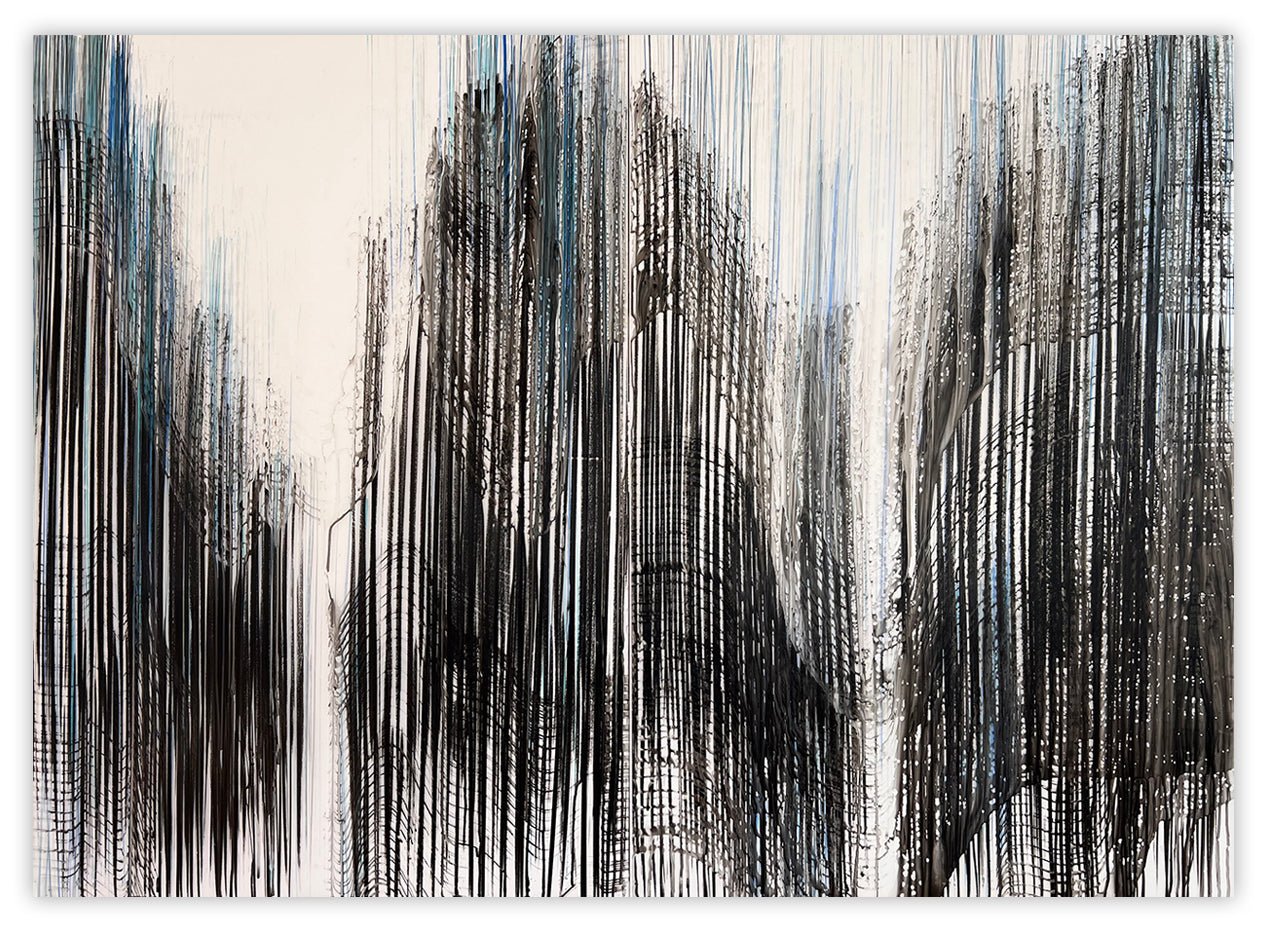
Those who work the gestural mark without pledging allegiance. Seventeen artists for whom the loaded brush, the drip, the calligraphic trace and the whole-body movement are simply the available means: Martin Reyna, Marcus Aitken, Gina Werfel, Anne Russinof, Jill Moser, Dana Gordon, Ludovic Dervillez, Emily Berger, Leon Phillips, Laura Newman, Tommaso Fattovich, Jaanika Peerna, Tracey Adams, Manuela Karin Knaut, Reiner Heidorn, Michael Barringer, and Harald Kröner. Werfel's painting is called Gesture, which is either very direct or very funny, and works either way.

Gesture by Gina Werfel, 2010Gina Werfel - Gesture - 2010

Those who set spontaneity against geometric structure. Twelve artists whose work is built on the friction between the controlled edge and the spontaneous mark, which is the argument between Mondrian and Pollock carried on inside a single canvas: Joanne Freeman, Susan Cantrick, Peter Soriano, Kim Uchiyama, Martina Nehrling, Antony Densham, Marcy Rosenblat, Xanda McCagg, Matthew Langley, Philippe Halaburda, Luuk de Haan, Fieroza Doorsen.

Forty-nine artists, born between 1941 and 1990, working in fifteen countries. Whatever ended in 1959, it was not this.


Conclusion: Better Than the Myth

We are not trying to take Pollock down. Autumn Rhythm is a great painting and nothing in the historical record makes it less so. The critique is not of the work; it is of the packaging.

What the packaging cost us was the shape of the thing. Abstract Expressionism was not a conquest launched from Manhattan. It was the American chapter of a transatlantic emergency, in which painters in New York, Paris, Milan, Montreal and Tokyo arrived at gesture and stain at roughly the same moment, looked hard at each other's work when given the chance, and were then sorted by critics and Cold War institutions into winners and footnotes.

The good news is that arguments, unlike conquests, can be reopened. That is what we, at IdeelArt, think collecting contemporary abstract expressionism today actually is: not buying a souvenir of a closed heroic age, but participating in a conversation that 1959 interrupted but never finished.

Frequently Asked Questions

What is Abstract Expressionism?

Abstract Expressionism is a tendency in painting that emerged in New York in the 1940s and 1950s, characterised by large scale, non-representational imagery, and an emphasis on the physical act of painting or on fields of colour as carriers of emotion. It was never a formal group with a manifesto, and many of the artists it names rejected the term.

When did Abstract Expressionism begin and end?

Conventionally, roughly 1943 to 1960, with the crucial years around 1947 to 1952. These dates are a convenience. Its methods did not stop being used in 1960 and its European counterparts follow a different chronology.

Who coined the term?

The critic Robert Coates applied it to American painting in The New Yorker in 1946, borrowing a phrase that had earlier been used of German Expressionism. Harold Rosenberg preferred "action painting" and Clement Greenberg preferred "American-Type Painting."

Who are the main Abstract Expressionist artists?

Most commonly named: Jackson Pollock, Willem de Kooning, Mark Rothko, Franz Kline, Barnett Newman, Clyfford Still, Robert Motherwell, Adolph Gottlieb, Lee Krasner, Joan Mitchell, Helen Frankenthaler, Grace Hartigan, Philip Guston and Arshile Gorky.

What is the difference between action painting and colour field painting?

Action painting emphasises the gesture and the trace of the body: Pollock, de Kooning, Kline. Colour field painting emphasises large uninterrupted expanses of colour and a more contemplative encounter: Rothko, Newman, Still. The split was largely imposed by critics; several artists sit awkwardly in both camps.

Was Abstract Expressionism really an American invention?

Only partly. Its central technique descends from Surrealist automatism, carried to New York by European artists in exile during the war. American painters transformed it decisively, particularly in scale, but the idea did not originate in the United States.

Did American and European abstract painters know each other's work?

Yes, and early. The Sidney Janis Gallery paired them one to one in Young Painters in U.S. and France in October 1950, and the Galerie Nina Dausset in Paris hung Pollock and de Kooning alongside Wols, Hartung, Mathieu and Riopelle in Véhémences confrontées in March 1951.

What was Véhémences confrontées?

An exhibition at the Galerie Nina Dausset in Paris, 8 to 31 March 1951, organised by Michel Tapié with Georges Mathieu. Its poster billed it as the first confrontation in France of the extreme tendencies of American, Italian and Parisian non-figurative painting.

How did Pollock's paintings first reach Paris?

Informally. Alfonso Ossorio, Pollock's friend and patron, brought canvases to Paris and showed them to Michel Tapié, who included Pollock in Véhémences confrontées and then gave him his first French solo exhibition at the Studio Paul Facchetti in 1952.

What is Art Informel, and how does it relate to Abstract Expressionism?

Art Informel is the European parallel: painting that abandons predetermined form in favour of matter, stain and gesture. Michel Tapié theorised it as Un Art Autre in 1952. It overlaps heavily with Abstract Expressionism in appearance and differs in emphasis, being more concerned with substance and less with the performing self.

What is Tachisme?

A French term, from tache (stain or blot), for painting built from marks and stains rather than drawn form. It is often used interchangeably with Art Informel and is closely associated with Wols, Mathieu, Hartung and Riopelle.

What is Lyrical Abstraction and where does it fit?

Lyrical Abstraction names the more fluid, poetic and colour-driven strand of European gestural painting from the late 1940s onward, later revived as an American term around 1970. We explore it in detail in our article on Lyrical Abstraction.

Why did so many American artists live in Paris after the war?

The GI Bill paid for veterans to study abroad, and more than 400 American artists took it to Paris between 1946 and 1953. Living costs were low and the city still carried enormous prestige. Sam Francis, Shirley Jaffe, Ellsworth Kelly and Jack Youngerman all formed their mature work there.

Was Joan Mitchell an American or a French painter?

Both, in practice. Born in Chicago and central to the second generation of Abstract Expressionists, she moved to France in the mid-1950s, lived with the Québécois painter Jean-Paul Riopelle from 1955, and spent her later career at Vétheuil, near Monet's garden.

Was Abstract Expressionism funded by the CIA?

The honest answer is nuanced. There is documented evidence that American cultural agencies and the Congress for Cultural Freedom promoted American abstraction abroad during the Cold War, and MoMA's International Program toured The New American Painting through eight countries in 1958 and 1959. The artists were not agents, were mostly on the political left, and were not taking instructions. The fair conclusion is that genuinely radical painting became politically useful, and that institutional money followed the usefulness.

What was The New American Painting?

A touring exhibition organised by MoMA's International Program, 81 paintings by 17 artists selected by Dorothy Miller with Frank O'Hara, shown across Basel, Milan, Madrid, Berlin, Amsterdam, Brussels, Paris and London in 1958 and 1959. It contained no European artists, which is precisely the point.

Why are the women of Abstract Expressionism less famous?

Because the movement was packaged around a small number of male figures at exactly the moment its reputation was being fixed, and because critics of the period wrote about painting in terms of virility and heroism. Lee Krasner, Joan Mitchell, Grace Hartigan, Elaine de Kooning, Helen Frankenthaler and Alma Thomas have all been substantially reassessed since the 1990s.

What is soak-stain painting?

A technique introduced by Helen Frankenthaler in 1952, in which thinned paint is poured onto unprimed canvas so that it soaks into the weave rather than sitting on top. It removes the distinction between mark and surface and directly enabled the work of Morris Louis and Kenneth Noland.

Is Abstract Expressionism still relevant to contemporary painting?

Yes, and not as nostalgia. Gestural abstraction remains one of the live languages of contemporary painting, practised worldwide by artists who inherit the methods without inheriting the mythology. See our overview of contemporary gestural abstraction.

Can I still collect work in this lineage today?

Yes. Original works by living artists working in the gestural and Abstract Expressionist tradition are considerably more accessible than the historical market suggests, and buying one supports a conversation that is still being had rather than a chapter that has closed.

Related Artworks

Explore 46 artworks, one by each of the contemporary artists represented by IdeelArt featured in this article, and discover how this transatlantic inheritance continues to evolve today.

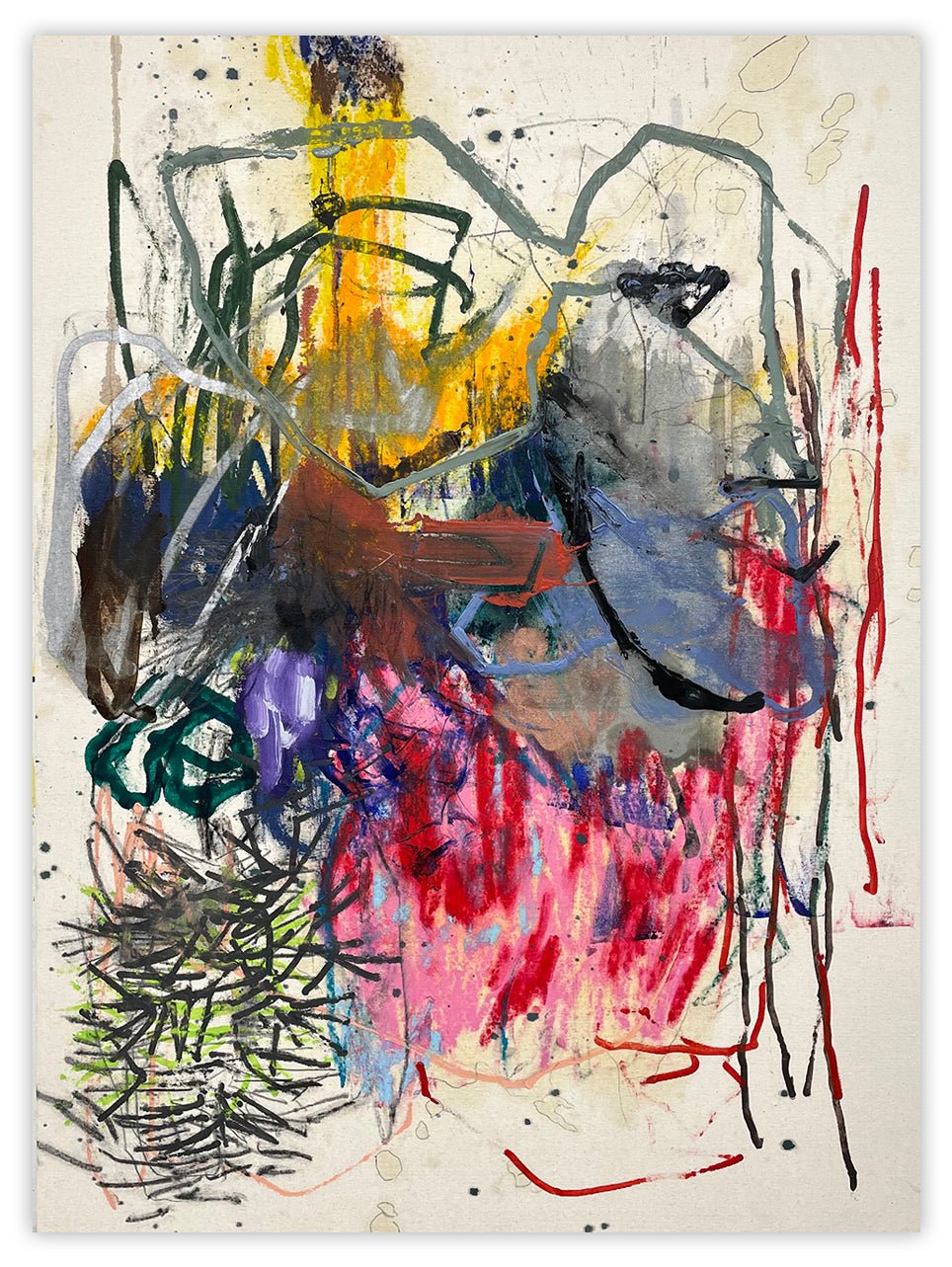
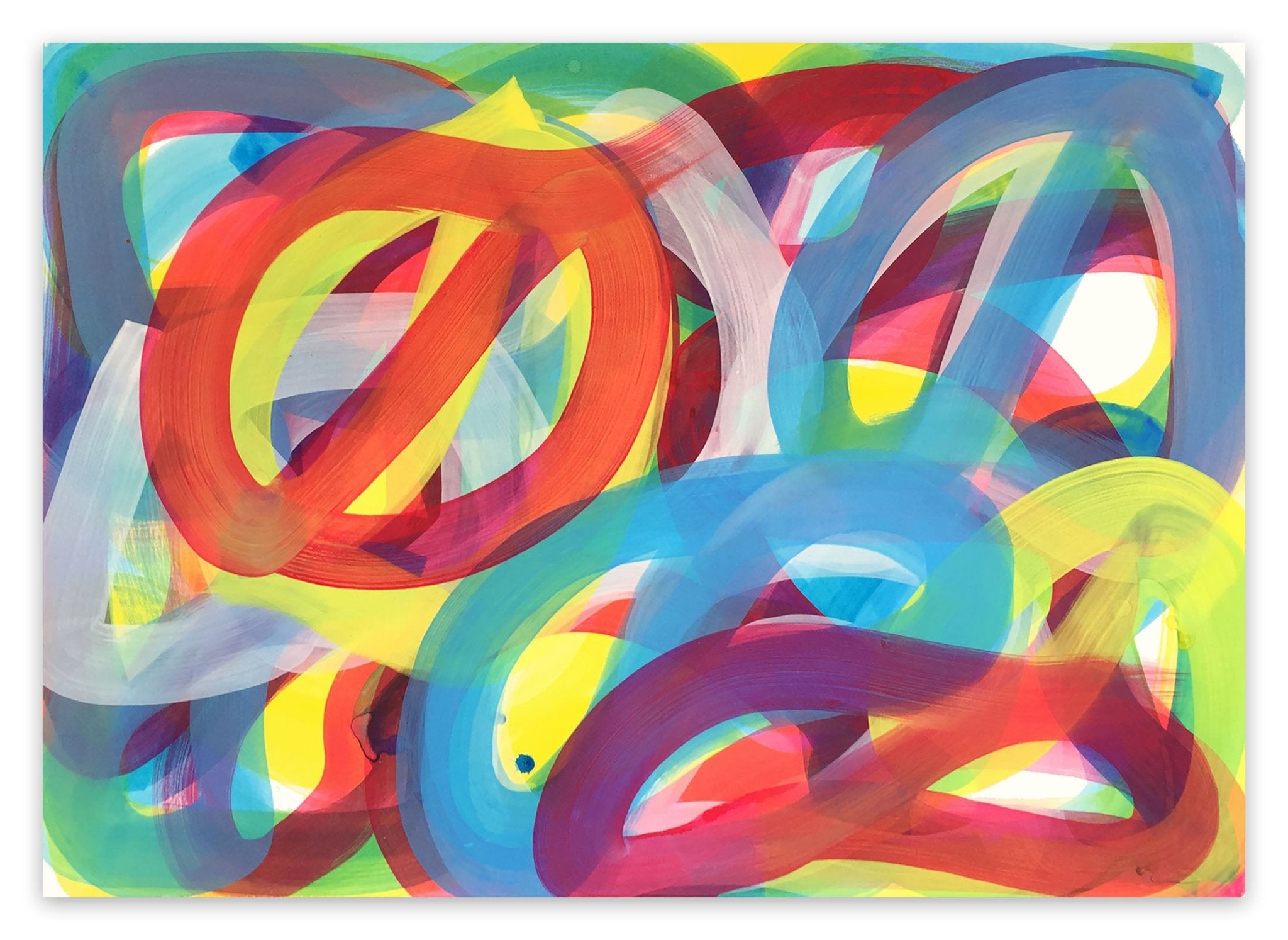
Ambassade 47 - Melissa Meyer - Abstract Painting - IdeelartAmbassade 47 - Melissa Meyer - Abstract Painting - Ideelart
Melissa Meyer
Ambassade 47
繪畫
50.8 X 81.3 X 0.0 cm 20.0 X 32.0 X 0.0 inch 促銷價£4,700.00
A Tumult of Needs - by Ashlynn Browning - Abstract Painting - IdeelartA Tumult of Needs - by Ashlynn Browning - Abstract Painting - Ideelart
Ashlynn Browning
A Tumult of Needs
Painting
111.8 X 101.6 X 5.1 cm 44.0 X 40.0 X 2.0 inch 促銷價£3,400.00
Jazz: Thinking Out Loud, Reaching for Song 13/14 - Ellen Priest - Abstract Painting - IdeelartJazz: Thinking Out Loud, Reaching for Song 13/14 - Ellen Priest - Abstract Painting - Ideelart
Ellen Priest
Jazz: Thinking Out Loud, Reaching for Song #13/14
繪畫
76.2 X 152.4 X 0.0 cm 30.0 X 60.0 X 0.0 inch 促銷價£7,200.00
A Quintet for Keith Jarrett (Paris) - Yari Ostovany - Abstract Painting - IdeelartA Quintet for Keith Jarrett (Paris) - Yari Ostovany - Abstract Painting - Ideelart
Yari Ostovany
A Quintet for Keith Jarrett (Paris)
繪畫
51.0 X 41.0 X 0.0 cm 20.1 X 16.1 X 0.0 inch 促銷價£1,350.00
A Crapshot of Luck - Macha Poynder - Abstract Painting - IdeelartA Crapshot of Luck - Macha Poynder - Abstract Painting - Ideelart
Macha Poynder
A Crapshot of Luck
繪畫
162.0 X 262.0 X 0.1 cm 63.8 X 103.1 X 0.0 inch 促銷價£13,800.00
Duo Triptych 01 - Emma Godebska - Abstract Painting - IdeelartDuo Triptych 01 - Emma Godebska - Abstract Painting - Ideelart
Emma Godebska
Duo Triptych 01
繪畫
50.0 X 65.0 X 0.1 cm 19.7 X 25.6 X 0.0 inch

Sold

Bodies and Gardens I - by Petra Schott - Abstract Painting - IdeelartBodies and Gardens I - by Petra Schott - Abstract Painting - Ideelart
Petra Schott
Bodies and Gardens I
Painting
125.0 X 155.0 X 0.1 cm 49.2 X 61.0 X 0.0 inch 促銷價£5,500.00
Mark Rothko - Danny Giesbers - Abstract Painting - IdeelartMark Rothko - Danny Giesbers - Abstract Painting - Ideelart
Danny Giesbers
Mark Rothko
繪畫
100.0 X 100.0 X 0.1 cm 39.4 X 39.4 X 0.0 inch 促銷價£4,900.00
I Want All the Roses - Daniela Schweinsberg - Abstract Painting - IdeelartI Want All the Roses - Daniela Schweinsberg - Abstract Painting - Ideelart
Daniela Schweinsberg
I Want All the Roses
繪畫
140.0 X 200.0 X 2.0 cm 55.1 X 78.7 X 0.8 inch 促銷價£6,400.00
Forever - by Paul Landauer - Abstract Painting - IdeelartForever - by Paul Landauer - Abstract Painting - Ideelart
Paul Landauer
Forever
Painting
190.0 X 200.0 X 0.1 cm 74.8 X 78.7 X 0.0 inch 促銷價£7,500.00
Abstract informal 2023 - 2070 - 4 - Robert Niesse - Abstract Painting - IdeelartAbstract informal 2023 - 2070 - 4 - Robert Niesse - Abstract Painting - Ideelart
Robert Niesse
Abstract informal 2023-2070-4
繪畫
190.0 X 140.0 X 0.1 cm 74.8 X 55.1 X 0.0 inch

Sold

14AV8G - 2014 - Alain Clément - Abstract Prints - Ideelart14AV8G - 2014 - Alain Clément - Abstract Prints - Ideelart
Alain Clément
14AV8G-2014
印刷
76.0 X 57.0 X 0.0 cm 29.9 X 22.4 X 0.0 inch

Sold

Gala Of Dandelions - Adrienn Krahl - Abstract Painting - IdeelartGala Of Dandelions - Adrienn Krahl - Abstract Painting - Ideelart
Adrienn Krahl
Gala Of Dandelions
繪畫
125.0 X 90.0 X 0.1 cm 49.2 X 35.4 X 0.0 inch 促銷價£2,550.00
Amelia - Carolina Alotus - Abstract Painting - IdeelartAmelia - Carolina Alotus - Abstract Painting - Ideelart
Carolina Alotus
Amelia
Painting
70.0 X 70.0 X 4.0 cm 27.6 X 27.6 X 1.6 inch 促銷價£1,200.00
1000 Sunsets - Nikolaos Schizas - Abstract Painting - Ideelart1000 Sunsets - Nikolaos Schizas - Abstract Painting - Ideelart
Nikolaos Schizas
1000 Sunsets
繪畫
140.0 X 180.0 X 0.1 cm 55.1 X 70.9 X 0.0 inch

Sold

Extractor - Karl Bielik - Abstract Painting - IdeelartExtractor - Karl Bielik - Abstract Painting - Ideelart
Karl Bielik
Extractor
繪畫
36.0 X 28.0 X 0.1 cm 14.2 X 11.0 X 0.0 inch 促銷價£500.00
Color Trac 26 - Robert Baribeau - Abstract Painting - IdeelartColor Trac 26 - Robert Baribeau - Abstract Painting - Ideelart
Robert Baribeau
Color Trac #26
繪畫
101.6 X 76.2 X 0.0 cm 40.0 X 30.0 X 0.0 inch 促銷價£5,500.00
Blue Jeans and Moonbeams - Anthony Frost - Abstract Painting - IdeelartBlue Jeans and Moonbeams - Anthony Frost - Abstract Painting - Ideelart
Anthony Frost
Blue Jeans and Moonbeams
繪畫
61.0 X 88.9 X 0.0 cm 24.0 X 35.0 X 0.0 inch 促銷價£6,500.00
Arietta 2 - Margaret Neill - Abstract Drawing - IdeelartArietta 2 - Margaret Neill - Abstract Drawing - Ideelart
Margaret Neill
Arietta 2
繪畫
76.2 X 101.6 X 0.0 cm 30.0 X 40.0 X 0.0 inch 促銷價£2,600.00
Bois de Boulogne 2 (Triptych) - by Martin Reyna - Abstract Painting - IdeelartBois de Boulogne 2 (Triptych) - by Martin Reyna - Abstract Painting - Ideelart
Martin Reyna
Bois de Boulogne 2 (Triptych)
Painting
150.0 X 300.0 X 0.1 cm 59.1 X 118.1 X 0.0 inch 促銷價£13,000.00
Alter04 - Marcus Aitken - Abstract Painting - IdeelartAlter04 - Marcus Aitken - Abstract Painting - Ideelart
Marcus Aitken
Alter04
繪畫
76.0 X 57.0 X 0.1 cm 29.9 X 22.4 X 0.0 inch 促銷價£900.00
Balance - Gina Werfel - Abstract Painting - IdeelartBalance - Gina Werfel - Abstract Painting - Ideelart
Gina Werfel
Balance
繪畫
63.5 X 48.2 X 0.1 cm 25.0 X 19.0 X 0.0 inch 促銷價£1,200.00
Accent Grave - Anne Russinof - Abstract Painting - IdeelartAccent Grave - Anne Russinof - Abstract Painting - Ideelart
Anne Russinof
Accent Grave
繪畫
101.6 X 76.2 X 0.0 cm 40.0 X 30.0 X 0.0 inch 促銷價£4,950.00
1.20 (Ref 09) - Jill Moser - Abstract Painting - Ideelart1.20 (Ref 09) - Jill Moser - Abstract Painting - Ideelart
Jill Moser
1.20 (Ref 09)
繪畫
76.2 X 57.15 X 0.0 cm 30.0 X 22.5 X 0.0 inch 促銷價£5,750.00
12 Shapes - Dana Gordon - Abstract Painting - Ideelart12 Shapes - Dana Gordon - Abstract Painting - Ideelart
Dana Gordon
12 Shapes
繪畫
76.2 X 101.6 X 0.1 cm 30.0 X 40.0 X 0.0 inch 促銷價£5,150.00
Chicken Man - Ludovic Dervillez - Abstract Painting - IdeelartChicken Man - Ludovic Dervillez - Abstract Painting - Ideelart
Ludovic Dervillez
Chicken Man
繪畫
130.0 X 97.0 X 0.1 cm 51.2 X 38.2 X 0.0 inch 促銷價£3,600.00
Every Rung - Emily Berger - Abstract Painting - IdeelartEvery Rung - Emily Berger - Abstract Painting - Ideelart
Emily Berger
Every Rung
繪畫
35.6 X 27.9 X 0.0 cm 14.0 X 11.0 X 0.0 inch 促銷價£1,500.00
Squirm 1 - Leon Phillips - Abstract Painting - IdeelartSquirm 1 - Leon Phillips - Abstract Painting - Ideelart
Leon Phillips
Squirm 1
繪畫
75.0 X 104.2 X 0.1 cm 29.5 X 41.0 X 0.0 inch 促銷價£1,600.00
Calligraph - Laura Newman - Abstract Painting - IdeelartCalligraph - Laura Newman - Abstract Painting - Ideelart
Laura Newman
Calligraph
繪畫
78.7 X 57.2 X 0.0 cm 31.0 X 22.5 X 0.0 inch 促銷價£2,700.00
All In Your Head - Tommaso Fattovich - Abstract Painting - IdeelartAll In Your Head - Tommaso Fattovich - Abstract Painting - Ideelart
Tommaso Fattovich
All In Your Head
繪畫
121.92 X 121.92 X 0.0 cm 48.0 X 48.0 X 0.0 inch

Sold

Big Blue Melt 14 - Jaanika Peerna - Abstract Drawing - IdeelartBig Blue Melt 14 - Jaanika Peerna - Abstract Drawing - Ideelart
Jaanika Peerna
Big Blue Melt 14
繪畫
132.0 X 182.3 X 0.0 cm 52.0 X 71.8 X 0.0 inch 促銷價£7,050.00
118.13 - Tracey Adams - Abstract Painting - Ideelart118.13 - Tracey Adams - Abstract Painting - Ideelart
Tracey Adams
118.13
繪畫
48.0 X 32.0 X 0.0 cm 18.9 X 12.6 X 0.0 inch 促銷價£1,300.00
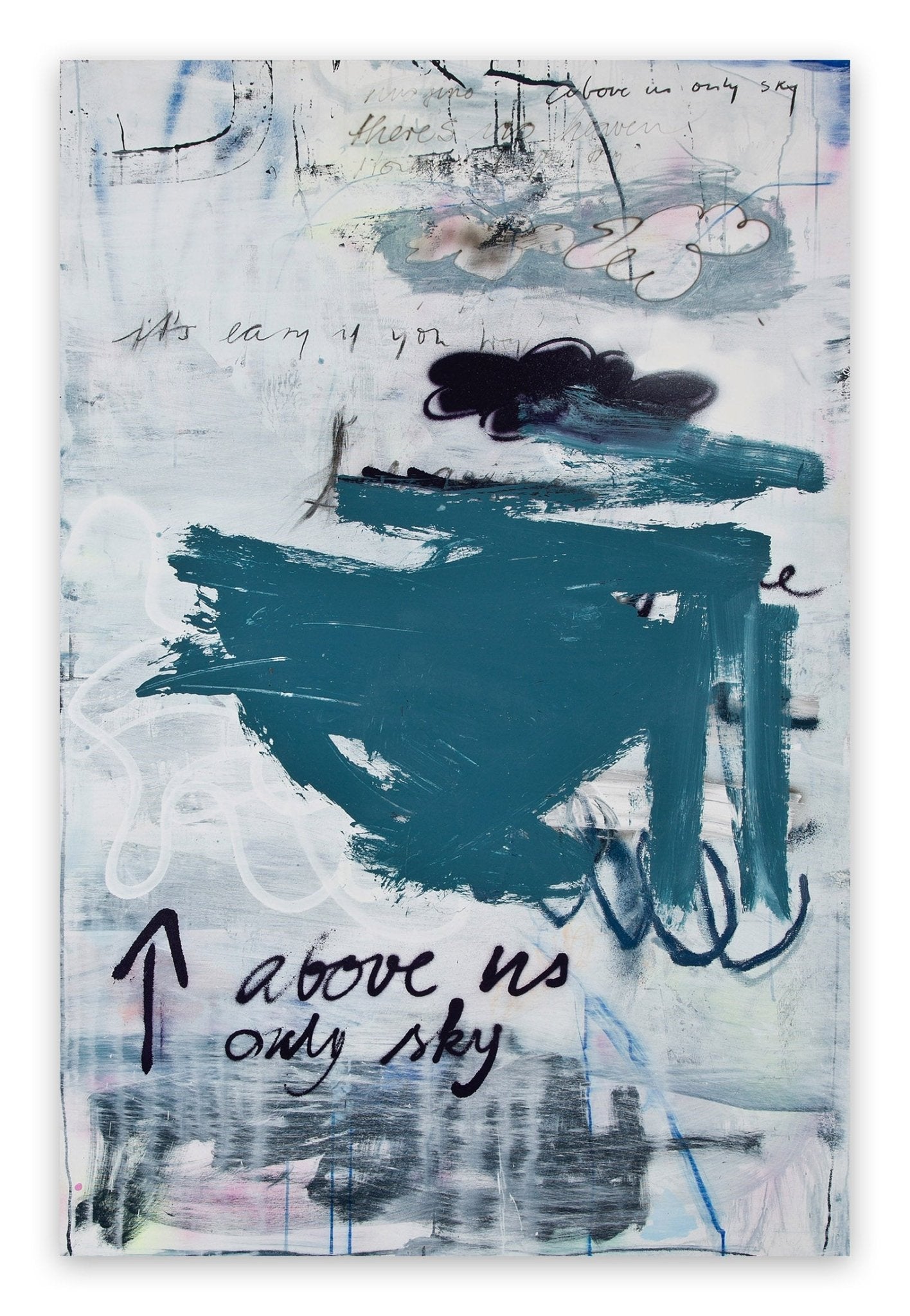
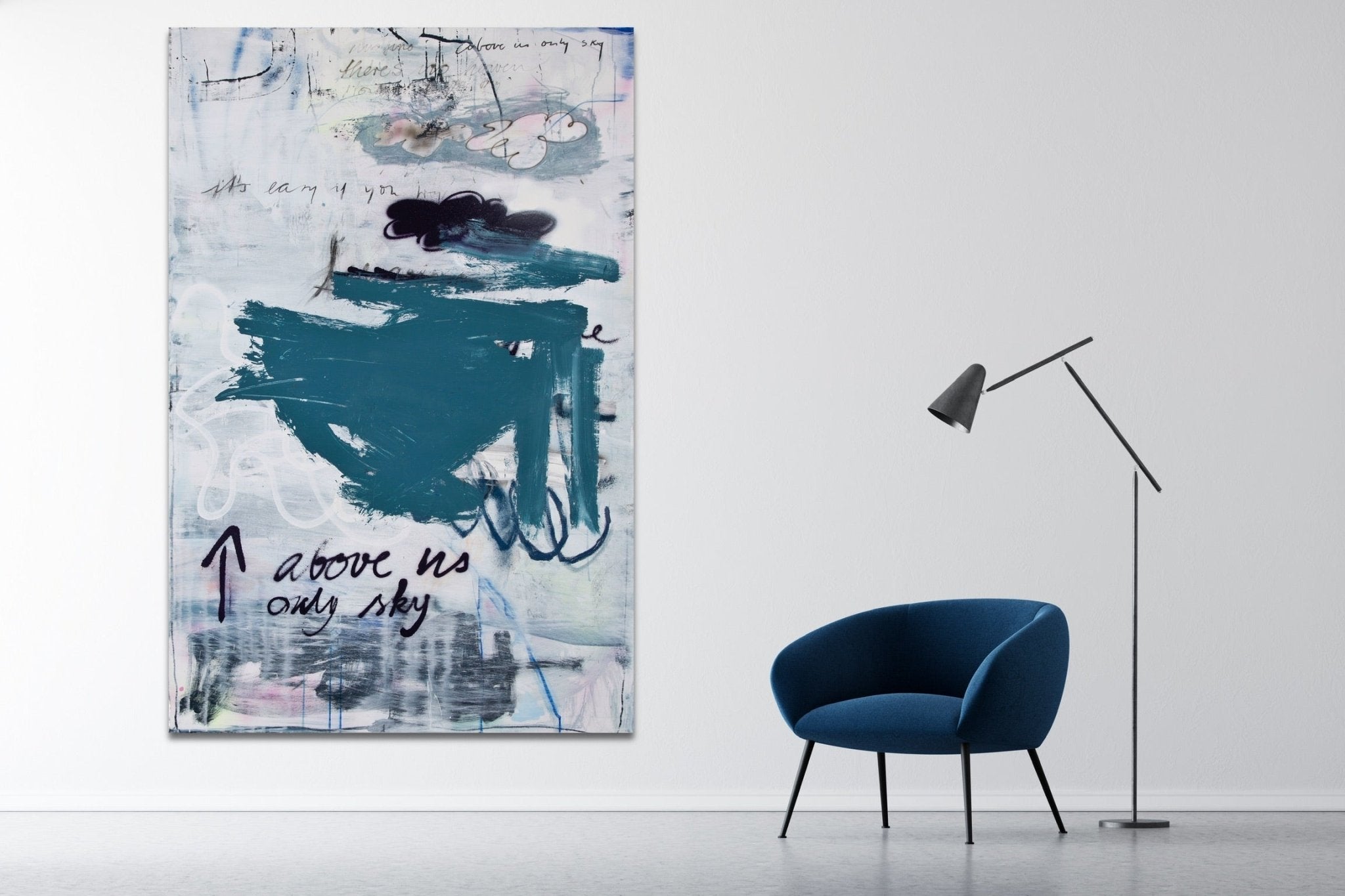
Above us only sky - Manuela Karin Knaut - Abstract Painting - IdeelartAbove us only sky - Manuela Karin Knaut - Abstract Painting - Ideelart
Manuela Karin Knaut
Above us only sky
繪畫
180.0 X 120.0 X 4.0 cm 70.9 X 47.2 X 1.6 inch 促銷價£4,500.00
A clear message - Reiner Heidorn - Abstract Painting - IdeelartA clear message - Reiner Heidorn - Abstract Painting - Ideelart
Reiner Heidorn
A clear message
Painting
190.0 X 240.0 X 3.0 cm 74.8 X 94.5 X 1.2 inch 促銷價£14,200.00
Ascension (blue) - Michael Barringer - Abstract Painting - IdeelartAscension (blue) - Michael Barringer - Abstract Painting - Ideelart
Michael Barringer
Ascension (blue)
繪畫
56.0 X 76.2 X 0.1 cm 22.0 X 30.0 X 0.0 inch 促銷價£2,900.00
12.06.10 - Harald Kröner - Abstract Painting - Ideelart12.06.10 - Harald Kröner - Abstract Painting - Ideelart
Harald Kröner
12.06.10
繪畫
15.0 X 16.8 X 2.0 cm 5.9 X 6.6 X 0.8 inch

Sold

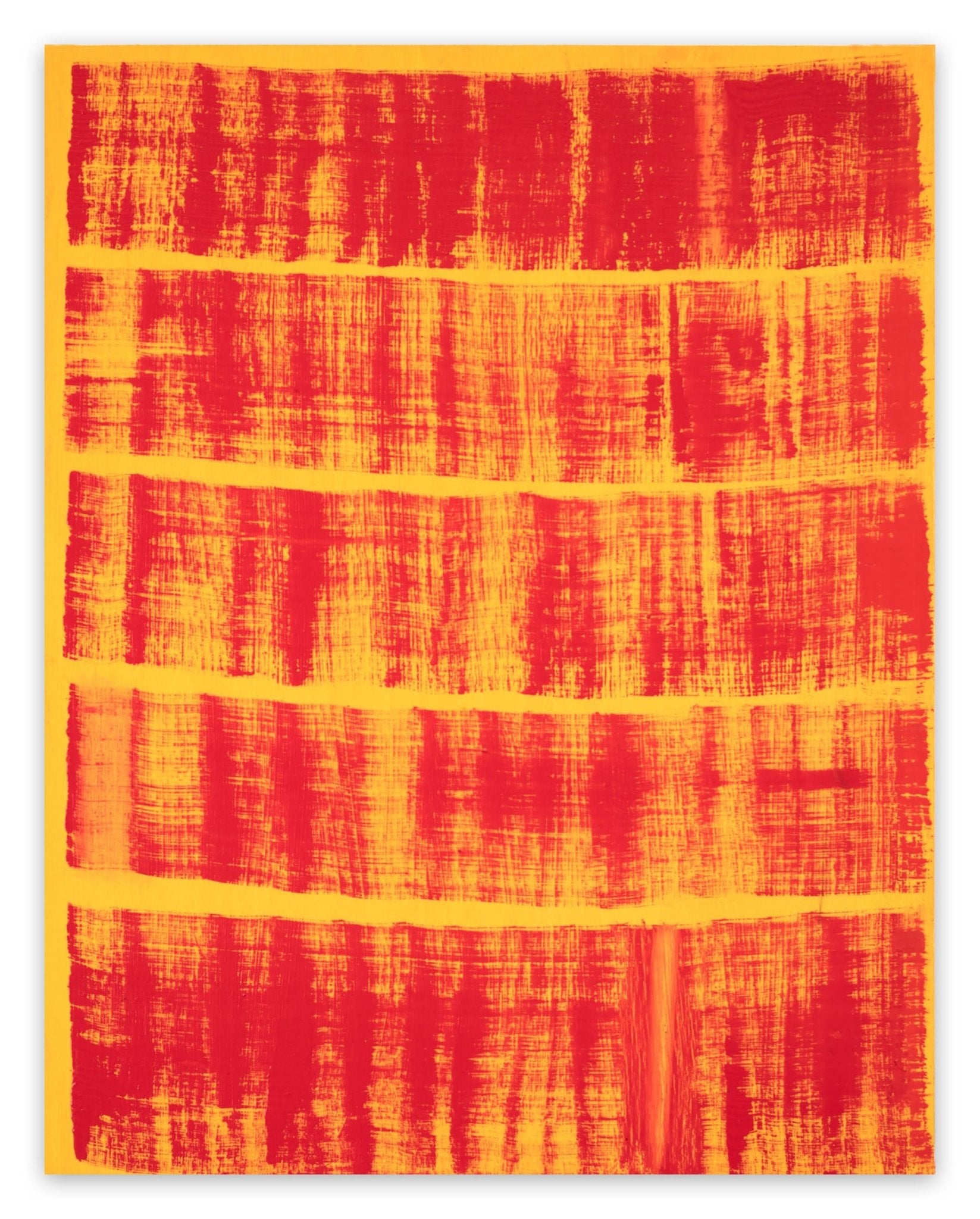
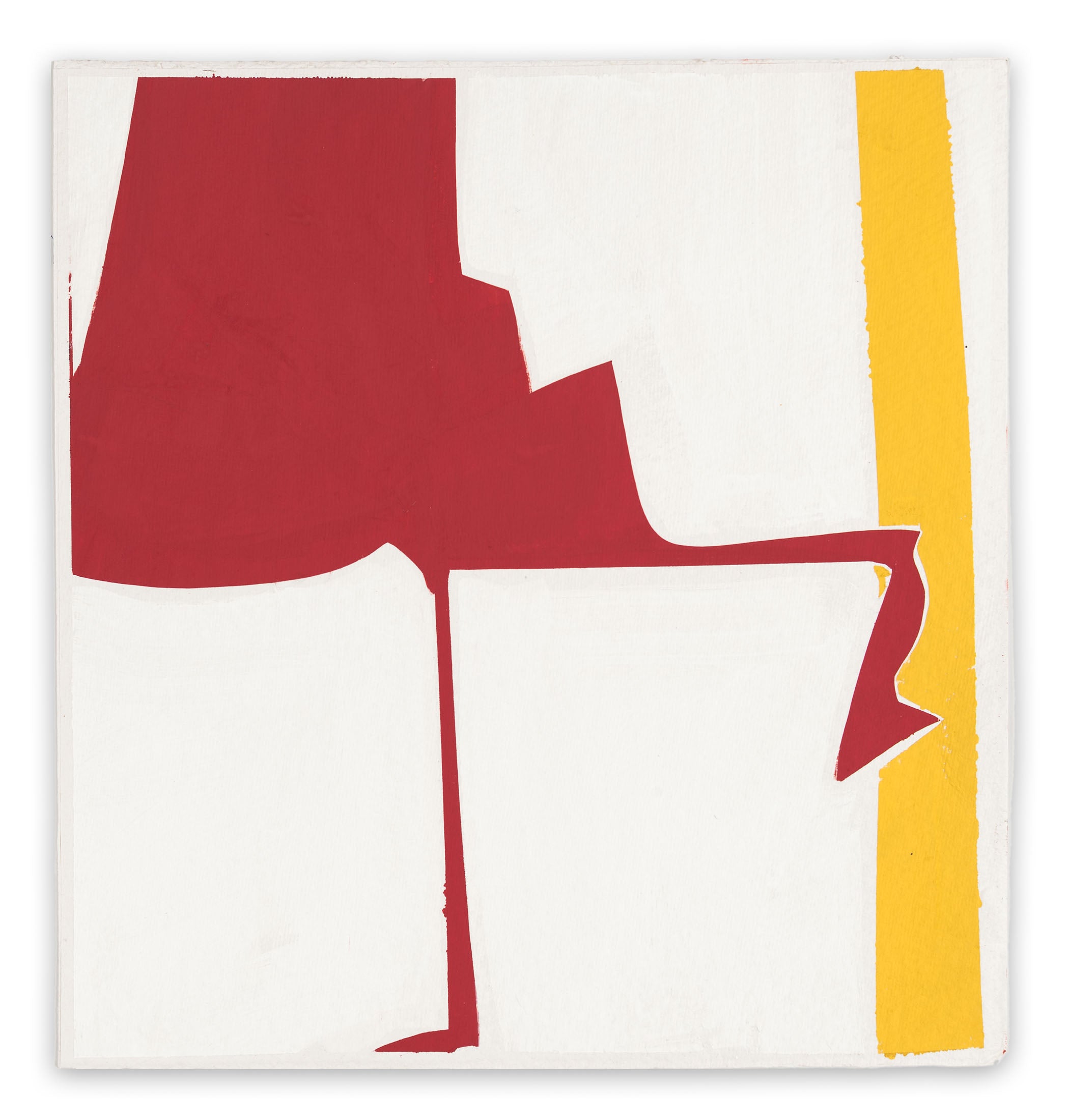
Covers 13 - Red Yellow - Joanne Freeman - Abstract Painting - IdeelartCovers 13 - Red Yellow - Joanne Freeman - Abstract Painting - Ideelart
Joanne Freeman
Covers 13 - Red Yellow
繪畫
33.0 X 33.0 X 0.0 cm 13.0 X 13.0 X 0.0 inch 促銷價£1,350.00
sbc 138 - Susan Cantrick - Abstract Painting - Ideelartsbc 138 - Susan Cantrick - Abstract Painting - Ideelart
Susan Cantrick
sbc 138
繪畫
114.0 X 146.0 X 0.0 cm 44.9 X 57.5 X 0.0 inch

Sold

Colby 10 - Peter Soriano - Abstract Mixed Media - IdeelartColby 10 - Peter Soriano - Abstract Mixed Media - Ideelart
Peter Soriano
Colby 10
混合媒體
94.0 X 125.5 X 0.0 cm 37.0 X 49.4 X 0.0 inch 促銷價£3,500.00
Cadence - Kim Uchiyama - Abstract Painting - IdeelartCadence - Kim Uchiyama - Abstract Painting - Ideelart
Kim Uchiyama
Cadence
繪畫
40.6 X 30.5 X 0.0 cm 16.0 X 12.0 X 0.0 inch

Sold

A Fey Mood - Martina Nehrling - Abstract Painting - IdeelartA Fey Mood - Martina Nehrling - Abstract Painting - Ideelart
Martina Nehrling
A Fey Mood
繪畫
61.0 X 45.7 X 0.0 cm 24.0 X 18.0 X 0.0 inch 促銷價£1,700.00
C12.2025 - Antony Densham - Abstract Painting - IdeelartC12.2025 - Antony Densham - Abstract Painting - Ideelart
Antony Densham
C12.2025
繪畫
75.0 X 75.0 X 3.5 cm 29.5 X 29.5 X 1.4 inch 促銷價£3,500.00
Blue Line and Stars - Marcy Rosenblat - Abstract Painting - IdeelartBlue Line and Stars - Marcy Rosenblat - Abstract Painting - Ideelart
Marcy Rosenblat
Blue Line and Stars
繪畫
91.0 X 91.0 X 0.0 cm 35.8 X 35.8 X 0.0 inch 促銷價£3,050.00
Untitled (Id. 1278) - Fieroza Doorsen - Abstract Painting - IdeelartUntitled (Id. 1278) - Fieroza Doorsen - Abstract Painting - Ideelart
Fieroza Doorsen
Untitled (Id. 1278)
繪畫
28.0 X 22.0 X 0.0 cm 11.0 X 8.7 X 0.0 inch 促銷價£1,250.00
Aligner Pellageiyia - Philippe Halaburda - Abstract Painting - IdeelartAligner Pellageiyia - Philippe Halaburda - Abstract Painting - Ideelart
Philippe Halaburda
Aligner Pellageiyia
繪畫
76.2 X 76.2 X 0.1 cm 30.0 X 30.0 X 0.0 inch 促銷價£4,050.00
15 RV - Xanda McCagg - Abstract Painting - Ideelart15 RV - Xanda McCagg - Abstract Painting - Ideelart
Xanda McCagg
15 RV
繪畫
30.5 X 46.0 X 0.1 cm 12.0 X 18.1 X 0.0 inch 促銷價£900.00

您可能喜歡的文章

Abstract Expressionism: Véhémences Confrontées
Abstract Expressionism

Abstract Expressionism: Véhémences Confrontées

The heroic version says New York invented Abstract Expressionism on its own. The gallery posters of 1950 and 1951 say something else: Pollock and de Kooning were hung beside Wols, Hartung and Mathi...

閱讀更多
The Ultimate Guide to Mark Rothko: The Master of Color in Search of The Human Drama - Ideelart
Category:Art History

馬克·羅斯科:尋找人類戲劇的色彩大師

作為抽象表現主義和色域繪畫的關鍵主角,馬克·羅斯科(1903 – 1970)是20世紀最具影響力的畫家之一,他的作品深刻地觸及人類的處境,至今仍然如此。羅斯科以色彩大師而聞名,他的畫作遠不僅僅是對純粹繪畫元素的探索。儘管基於他作品的形式特質有許多解釋,這位藝術家展開了一段旅程,旨在吸引觀眾,探討情感,並通過豐富的顏料、色域以及色彩之間建立的關係,在畫布上引發一種經驗,喚起與藝術作品之間深刻...

閱讀更多
Alexander Calder: The Ultimate Guide to the Master of Kinetic Art, Wire Drawing, and Sculpted Motion - Ideelart
Category:Art History

Alexander Calder: The Ultimate Guide to the Master of Kinetic Art, Wire Drawing, and Sculpted Motion

Editorial Note: On the Trail of the Master of Suspended Air "Walking through the halls of the landmark Alexander Calder retrospective in Paris, surrounded by the delicate hum of hanging sheet-me...

閱讀更多